
1. Global Market Overview
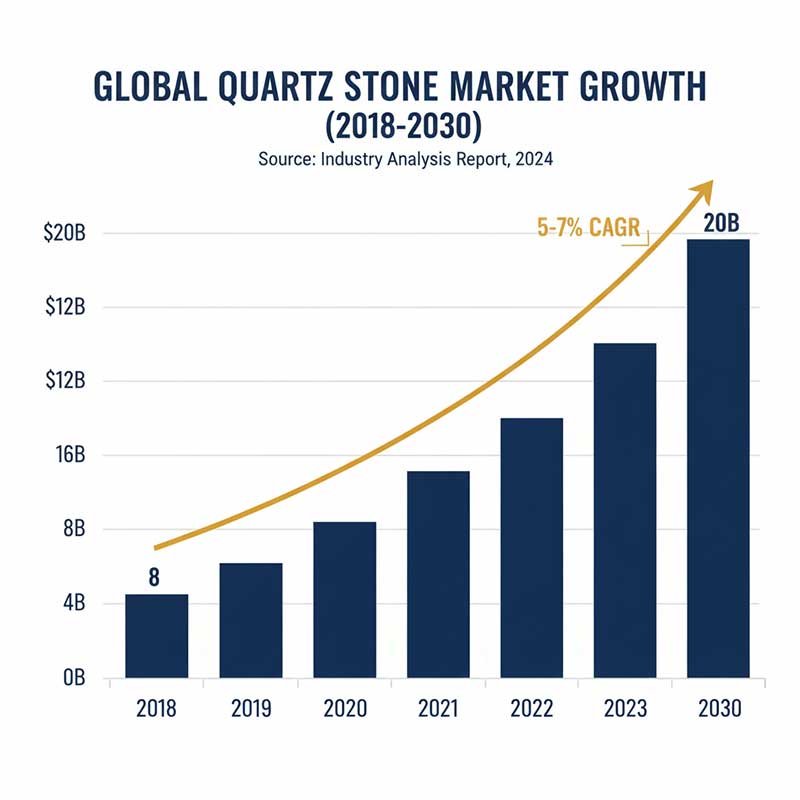
The global engineered quartz stone market has undergone a structural transformation over the past fifteen years. What was once considered a niche alternative to granite and natural marble has evolved into the dominant surface material for residential and commercial countertops in most developed economies. According to market research from Grand View Research, the global quartz surface market was valued at approximately USD 12–15 billion in 2024, with projections pointing toward sustained compound annual growth of 5–7% through the end of the decade.
The scale of this industry is best appreciated through its production geography. China remains, by a considerable margin, the world's largest producer and exporter of engineered quartz slabs, accounting for more than 60% of global manufacturing capacity. Major production clusters are concentrated in Guangdong province — particularly the cities of Foshan, Yunfu, and surrounding industrial zones — as well as in Fujian and Shandong provinces. Over the past decade, leading Chinese manufacturers have invested heavily in Italian-engineered press lines (primarily from Breton S.p.A.), automated polishing systems, and advanced quality-control infrastructure, closing the quality gap with European and Israeli competitors to a point where the differences are often indistinguishable to the end consumer.
Manufacturers like QuartzCrafts, which operate factory-direct export models from the heart of China's quartz manufacturing region, exemplify this evolution. By combining Breton-line production with comprehensive OEM/ODM capabilities and stringent quality certification (CE, NSF, SGS), they serve distributors, fabricators, and project developers across more than 60 countries — a supply model that simply did not exist at scale fifteen years ago.
The market's maturation is also reflected in product segmentation. While standard 20mm and 30mm polished slabs for kitchen countertops remain the volume backbone of the industry, an increasingly diverse product mix — including ultra-thin panels for wall cladding, large-format slabs for seamless island installations, textured matte finishes for commercial interiors, and zero-silica formulations for regulatory compliance — has expanded the addressable market well beyond the traditional countertop category.
2. Growth Drivers & Demand Dynamics
Understanding what propels the engineered quartz market forward requires looking beyond the headline growth number. Several interlocking forces are shaping demand at both the macro-economic and micro-consumer levels, and their relative importance varies considerably by region.
Residential Renovation Spending
The kitchen and bathroom renovation cycle is the single largest demand driver for quartz surfaces globally. In the United States alone, the remodeling market was estimated at over USD 450 billion in 2024, according to the Joint Center for Housing Studies of Harvard University. Quartz countertops have become the default upgrade choice for mid-range to premium kitchen remodels, having overtaken granite as the most-installed countertop material in the US around 2017–2018. The pattern is being replicated with a time lag in other developed markets: Western Europe, Australia, and increasingly urban China and India.
Commercial Construction Growth
Hospitality, healthcare, retail, and Class A office construction represent a significant and growing share of quartz demand. The material's non-porous surface, consistent color and veining (critical for large-scale projects that require visual uniformity across hundreds of slabs), and resistance to staining make it particularly well-suited to high-traffic commercial environments. The Middle East construction boom — particularly mega-projects in Saudi Arabia related to Vision 2030 — has created an outsized wave of commercial quartz demand that shows no sign of peaking before 2028 at the earliest.
Consumer Preference Shifts
A generational shift in consumer preferences is working in quartz's favor. Millennial and Gen-Z homeowners, who now represent the majority of first-time buyers in most Western markets, tend to prioritize low-maintenance living and are less drawn to the perceived prestige of natural stone than previous generations. The fact that engineered quartz requires no sealing, resists staining from wine, coffee, and cooking oils, and maintains its appearance for decades with minimal care is a powerful selling proposition that resonates strongly with time-pressed younger households. According to the Natural Stone Institute, even consumers who love the look of natural marble are increasingly choosing quartz for its maintenance advantages, particularly for kitchen applications.
Design Capability Expansion
Advances in manufacturing technology have expanded what engineered quartz can look like. The most successful designs of the past five years — hyper-realistic Calacatta marble replicas, bookmatched veining patterns, and textured concrete finishes — would have been technically impossible to produce at scale a decade ago. This design evolution has opened quartz to applications and consumer segments that previously defaulted to porcelain or natural stone.
3. Regional Demand Analysis
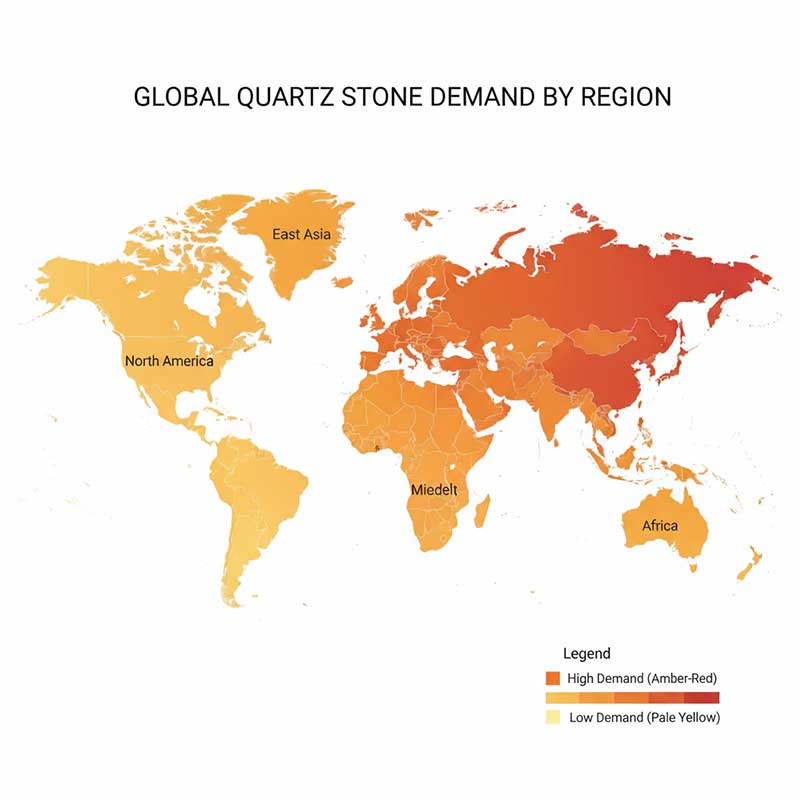
The global quartz market is far from homogeneous. Regional differences in construction activity, trade policy, design preferences, and economic conditions create distinct market environments that require tailored approaches from manufacturers and exporters. The following analysis breaks down the major consuming regions in detail.
North America
North America — primarily the United States and Canada — remains the world's largest consumption market for engineered quartz surfaces, accounting for an estimated 28–32% of global demand by value. The US market alone consumes millions of slabs annually, driven by a mature kitchen-and-bath renovation industry, a well-developed network of fabricators and installers, and deeply established consumer awareness of quartz as a material category.
However, the North American market has been profoundly reshaped by trade policy. Anti-dumping and countervailing duty orders on Chinese-origin quartz surface products, imposed by the U.S. International Trade Commission in 2019, have effectively priced most Chinese manufacturers out of the direct US export market. Combined with Section 301 tariffs of 25% on Chinese goods, total duty burdens on many Chinese exporters exceed 300%, making direct China-to-US shipment economically unviable for the vast majority of producers.
This has triggered a dramatic supply-source realignment. Indian manufacturers — particularly those clustered in Gujarat state — have rapidly scaled production to fill the vacuum, as have Turkish and Vietnamese producers. The quality of Indian quartz has improved noticeably since 2020, though industry participants note that consistency and color accuracy still trail the best Chinese and European manufacturers. For the Canadian market, similar anti-dumping measures have been in place since 2018, further constraining Chinese access to North American end consumers.
Despite these trade barriers, the underlying demand trajectory in North America remains positive. The aging US housing stock (median age of owner-occupied homes is approximately 40 years), a sustained preference for kitchen modernization, and strong real estate transaction volumes continue to support robust countertop replacement activity. The growth rate has moderated to approximately 3–4% annually, reflecting market maturity rather than any structural demand weakness.
Europe
The European market for quartz surfaces is the world's second largest by value, representing approximately 23–26% of global demand. However, it is a highly fragmented and complex market with significant variation between Western and Eastern Europe.
Western Europe benefits from strong domestic production capacity. Spain is home to Cosentino, the manufacturer of Silestone, one of the world's most recognized quartz surface brands. Italy's contribution comes primarily through Breton S.p.A., which manufactures the press technology used by the majority of the world's quartz producers, and through several Italian quartz slab brands that leverage Breton technology domestically. Germany, France, the UK, and Scandinavia are major consumption markets with well-established distribution and fabrication networks.
Chinese import penetration in Western Europe has historically been lower than in other regions, partly due to the strength of domestic brands and partly due to European anti-dumping investigations. The European Commission has examined Chinese quartz imports through its trade defence mechanism, and importers need to monitor the EU Official Journal for updated duty rates and compliance requirements.
Eastern Europe presents a different opportunity. Poland, Romania, Czech Republic, and the Baltic states have growing construction sectors and less established domestic production. Turkish manufacturers serve these markets actively, but Chinese exporters find competitive opportunities, particularly for mid-range products where price sensitivity is higher than in Western Europe. The growth rate for the broader European market is estimated at 2–4% annually, with Eastern European markets growing considerably faster than the mature Western European segment.
Asia Pacific
The Asia Pacific region is the fastest-growing quartz market globally, driven by two massive economies with fundamentally different market dynamics: China and India.
China's domestic quartz market is the world's largest single-country market by volume. The Chinese residential and commercial construction sector consumes enormous quantities of quartz surfaces, and domestic demand has been growing steadily even as the broader property sector has faced cyclical headwinds since 2021. The market is highly competitive, with hundreds of domestic manufacturers ranging from large-scale, export-certified producers to smaller regional operators serving local markets. Price competition is intense, which has pushed margins down but also driven continuous quality and efficiency improvements.
India is the region's standout growth story. Rapid urbanization, a booming housing sector (particularly in tier-1 and tier-2 cities), and an aspirational middle class that is increasingly adopting Western-style modular kitchens are driving double-digit growth rates for quartz surfaces. India is also developing significant domestic production capacity, with manufacturers in Gujarat and Rajasthan scaling rapidly. However, demand currently outpaces domestic supply, and imports from China remain an important part of the Indian market's supply structure — though this may be affected by ongoing anti-dumping investigations initiated by Indian domestic producers.
Southeast Asian markets — Thailand, Vietnam, Philippines, Indonesia, and Malaysia — are collectively growing at 7–10% annually. Tourism-driven hospitality construction is a major demand driver, and rising middle-class income levels are fueling residential demand. Vietnam occupies a unique dual role: it is both a growing domestic consumption market and an increasingly important manufacturing base for quartz intended for re-export to trade-restricted markets like the US.
Middle East & Africa
The Gulf Cooperation Council (GCC) countries — Saudi Arabia, UAE, Qatar, Kuwait, Bahrain, and Oman — represent the most concentrated demand pocket in the Middle East and Africa region. Saudi Arabia's Vision 2030 program alone is generating construction activity on an almost unprecedented global scale, with projects like NEOM, The Line, Jeddah Tower, and massive hospitality and entertainment developments creating sustained demand for quality surface materials. Dubai's role as a regional distribution hub (particularly through the Jebel Ali Free Zone) means that significant volumes of quartz slabs are imported into the UAE and subsequently re-distributed across the wider GCC, Levant, and East African markets.
North Africa — Egypt, Algeria, Morocco, Tunisia — is an emerging demand zone with growing residential construction and renovation activity. The region benefits from proximity to European design influences and relatively low trade barriers for Chinese imports. East Africa, led by Kenya and Ethiopia, represents a frontier market where quartz penetration is still in very early stages but where construction growth rates are among the highest in the world.
Latin America
Brazil and Mexico are the dominant markets in Latin America, together accounting for more than 60% of regional quartz demand. Brazil's large and sophisticated fabrication industry, combined with a consumer base that values kitchen aesthetics, makes it one of the most interesting markets globally for premium quartz designs. The annual Feicon trade show in São Paulo is a key event for quartz manufacturers seeking to establish or expand their Brazilian presence.
Colombia, Chile, Peru, and Argentina are all growing markets, though macroeconomic volatility in several Latin American economies can create year-to-year demand fluctuations. Central America — particularly Costa Rica, Guatemala, and Panama — is growing steadily, driven by tourism-related hospitality construction and residential demand from North American expatriates.
One of Latin America's key advantages for Chinese quartz exporters is the relative absence of anti-dumping barriers. Unlike North America and Europe, most Latin American countries have not imposed significant trade restrictions on Chinese quartz imports, making the region an important and growing component of China's export portfolio.
| Region | Est. Market Share | Growth Rate | Primary Driver | Trade Barrier Level |
|---|---|---|---|---|
| North America | ~30% | 3–4% | Kitchen renovation, countertop replacement | High (AD/CVD) |
| Europe | ~25% | 2–4% | Kitchen modernization, commercial projects | Moderate–High |
| Asia Pacific | ~25% | 7–10% | Urbanization, new construction, rising incomes | Low–Moderate |
| Middle East & Africa | ~11% | 6–9% | Mega-projects, hospitality, government investment | Low |
| Latin America | ~9% | 5–8% | Middle class growth, hospitality, modern housing | Low |
4. Design & Color Trends
Design is the arena where engineered quartz most directly competes with — and increasingly surpasses — natural stone. The ability to engineer consistent, reproducible, and endlessly varied surface aesthetics is one of the material's greatest commercial strengths. In 2024–2025, several interconnected design trends are shaping global demand patterns.
The Enduring Calacatta Phenomenon
Calacatta-inspired designs — characterized by a white or soft-white background with bold, flowing grey and gold veining — continue to dominate global order books, representing an estimated 30–40% of all quartz surface orders worldwide. The appetite for Calacatta shows no meaningful sign of declining. If anything, the trend is intensifying as manufacturing technology enables increasingly realistic, multi-dimensional veining that includes translucent depth effects, warm gold undertones, and subtle directional movement that faithfully replicates the geological character of natural Calacatta marble quarried from the Apuan Alps in Tuscany.
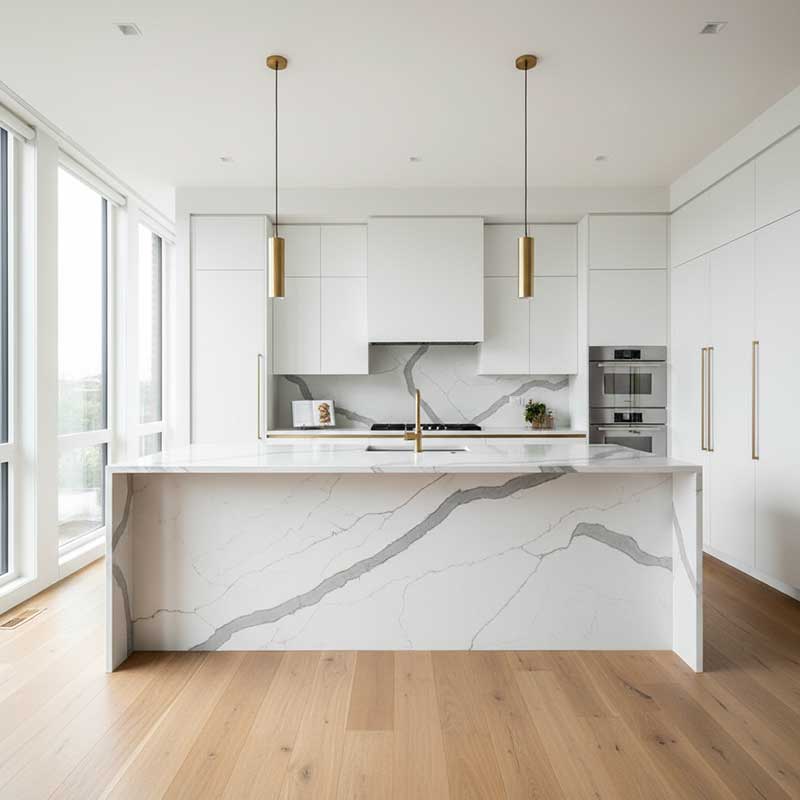
What has evolved within the Calacatta category is the breadth of interpretation. Soft, wispy Calacatta with minimal veining serves the Scandinavian minimalist market. Bold, high-contrast Calacatta with dramatic vein movement appeals to North American and Middle Eastern buyers. Warm-toned Calacatta with pronounced gold and amber veining is gaining traction in markets influenced by earth-tone design movements. Manufacturers with the design range to offer multiple Calacatta interpretations — such as QuartzCrafts, whose collection includes variants like Calacatta Classic, Calacatta Molten Gold, and Calacatta Amber — are better positioned to serve diverse global demand than those offering a single Calacatta SKU.
The Warm-Tone Revolution
The most significant color trend of 2024–2025 is the decisive shift from cool grey-white palettes toward warmer tones. After nearly a decade of cool-toned grey dominance in kitchen and bathroom design, the pendulum is swinging toward warm beige, cream, soft brown, taupe, and terracotta-influenced hues. This movement is closely connected to the broader "quiet luxury" and biophilic design trends in interior architecture, which emphasize natural materials, organic textures, and spaces that feel grounded and welcoming.
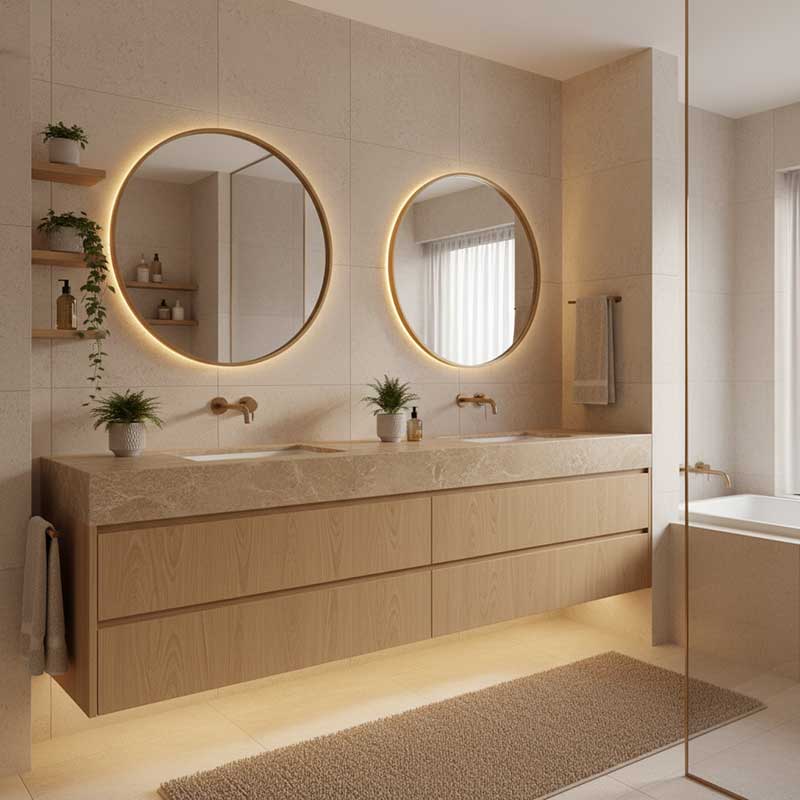
For manufacturers and distributors, this warm-tone shift has important inventory and design development implications. Collections that were heavily skewed toward cool grey and bright white may need rebalancing. The most successful product lines now include warm-toned versions of popular patterns: warm Calacatta with golden veining, warm concrete in sandstone-like tones, and warm solid colors in the cream-to-taupe spectrum.
Large-Format & Bookmatched Slabs
The demand for larger slab dimensions continues to grow. The standard 3200×1600mm slab has become a market expectation in many regions, and some manufacturers are now producing slabs up to 3400×1800mm to accommodate seamless installations on oversized kitchen islands. The aesthetic logic is straightforward: fewer seams mean a more luxurious, continuous visual effect, particularly when working with dramatic veining patterns that are disrupted by visible seam lines.
Bookmatched designs — where two adjacent slabs are mirror-imaged to create a symmetrical veining pattern — represent the premium end of the large-format trend. Bookmatching requires precise manufacturing control and careful logistics, but the visual impact is striking and commands significant price premiums, particularly in high-end residential and commercial applications.
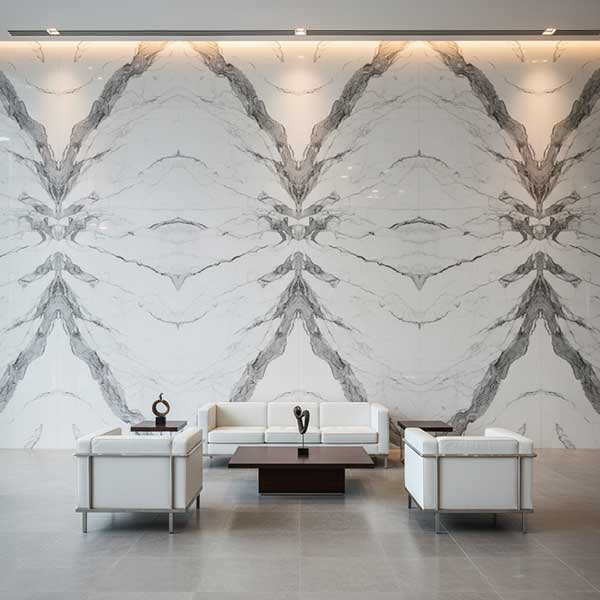
Matte, Honed & Textured Finishes
While the traditional polished (glossy) finish still accounts for approximately 55–60% of global orders, the market share of matte, honed, leathered, and other textured finishes is growing steadily — now representing roughly 25–30% of orders in design-forward markets like Scandinavia, Australia, and urban North America. Matte finishes offer practical advantages (they show fingerprints and water spots less than polished surfaces) and aesthetic advantages (they complement the contemporary design preference for understated, tactile materials). The Scandinavian and Japanese minimalist design movements, both globally influential, favor matte over high-gloss surfaces.
Concrete, Terrazzo & Industrial Looks
Concrete-look quartz has established itself as a durable trend rather than a passing fad. These designs replicate the appearance of polished or honed concrete with subtle grey variation and fine granular texture, while delivering the practical benefits of engineered quartz (non-porous, zero maintenance, consistent quality). Concrete-look quartz is particularly popular in commercial interiors, industrial-chic restaurants, and contemporary residential kitchens.
Terrazzo-inspired designs — featuring scattered aggregate patterns in both classic and contemporary colorways — are experiencing a revival after several years of declining interest. The revived terrazzo trend leans toward larger aggregate chips and more colorful, playful compositions than the neutral micro-terrazzo patterns that were briefly popular around 2019–2020.
5. Anti-Dumping & Trade Policy Developments
No discussion of the global quartz market is complete without a thorough examination of the anti-dumping and countervailing duty (AD/CVD) landscape. Trade policy actions against Chinese quartz imports represent the single most disruptive force in the industry over the past six years, fundamentally altering global supply chains, manufacturing investment patterns, and competitive dynamics.
United States: The Pivotal Case
The United States, the world's largest quartz consumption market, imposed anti-dumping and countervailing duties on Chinese-origin quartz surface products in 2019 following a petition from the domestic industry led by Cambria (a Minnesota-based manufacturer). The final duty determinations were severe: anti-dumping duty rates ranged from approximately 2% for cooperating respondents with the lowest margins to over 300% for non-cooperating companies subject to adverse facts available (AFA) rates. When combined with Section 301 tariffs of 25% on Chinese goods, the effective total duty burden made Chinese quartz prohibitively expensive for the US market in most cases.
Annual administrative reviews conducted by the U.S. Department of Commerce continue to adjust individual exporter rates, and new shippers can apply for review. The U.S. International Trade Commission (USITC) periodically assesses whether the orders should be continued or revoked. For the foreseeable future, however, the duties are expected to remain in effect.
Canada, EU & Other Jurisdictions
Canada's anti-dumping measures on Chinese quartz, in place since 2018, mirror the US situation and have similarly redirected trade flows. The European Union has investigated Chinese quartz imports through its trade defence instruments, and exporters shipping to the EU must carefully monitor the official journal of the European Commission for updated duty rates and compliance requirements.
India's domestic quartz industry has filed anti-dumping petitions against Chinese imports, and investigations are ongoing. If duties are imposed, it would represent a significant development given India's rapid market growth. Turkey has implemented safeguard measures to protect its growing domestic quartz manufacturing sector.
| Market | Status | Approximate Duty Impact | Effective Since | Current Status |
|---|---|---|---|---|
| 🇺🇸 United States | Active AD/CVD + Sec. 301 | 2% to 300%+ (AD) + 25% (301) | 2019 | Annual reviews ongoing |
| 🇨🇦 Canada | Active AD/CVD | Varies by exporter | 2018 | Periodic reviews |
| 🇪🇺 European Union | Under investigation / Measures in place | Varies; residual rates significant | Ongoing | Monitor EU Official Journal |
| 🇮🇳 India | Under investigation | To be determined | Petition filed | Investigation ongoing |
| 🇹🇷 Turkey | Safeguard measures | Additional import duties | Active | Protecting domestic industry |
Consequences for Global Trade Flows
The combined effect of these trade barriers has been a wholesale restructuring of global quartz trade routes. Chinese manufacturers that previously exported 40–50% of their output to the US and EU have been forced to diversify into less restricted markets: Latin America, the Middle East, Southeast Asia, Africa, and Central Asia now absorb volumes that once flowed to North American ports. This diversification has, paradoxically, accelerated market development in regions that might otherwise have taken years longer to reach their current demand levels.
6. Supply Chain Restructuring
The global quartz supply chain is undergoing its most significant restructuring since the industry's commercialization. Driven by trade barriers, geopolitical risk management, and strategic diversification, both manufacturers and buyers are fundamentally rethinking where quartz is produced, how it is shipped, and how procurement portfolios are structured.
Manufacturing Capacity Migration
The most visible manifestation of supply chain restructuring is the migration of manufacturing capacity from China to alternative locations. Vietnam has emerged as the most important alternative manufacturing destination for quartz surfaces, driven by several converging advantages: lower labor costs than China, favorable free trade agreements with the US (though origin requirements must be scrupulously met), geographic proximity to Chinese raw material and equipment suppliers, and an increasingly experienced industrial workforce.
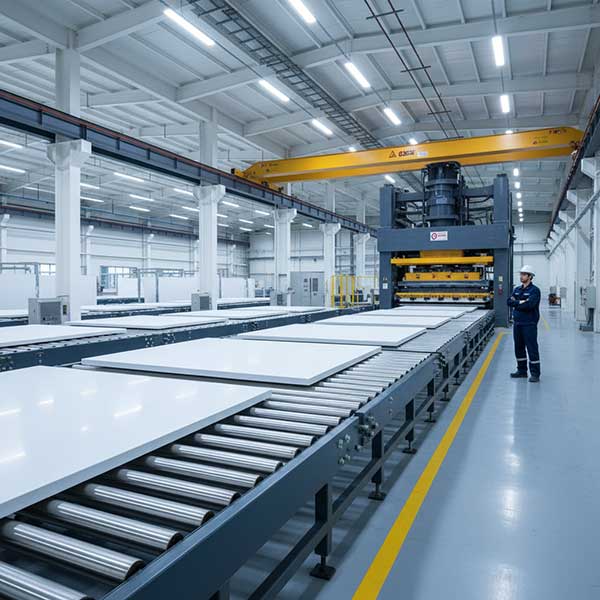
India is developing substantial quartz manufacturing capacity, particularly in Gujarat state, where a cluster of manufacturers is scaling rapidly. Indian producers benefit from growing domestic demand (which provides a baseload for production facilities), lower energy costs in some regions, and the ability to serve the US market without the punitive duties faced by Chinese exporters. However, Indian manufacturers are still in the process of climbing the quality and consistency curve, and raw material supply chains (particularly for high-purity quartz sand and specialty resins) are less developed than in China.
Turkey has invested in domestic production capacity and now serves both its own large construction market and neighboring European and Middle Eastern markets. Cambodia is emerging as another alternative manufacturing location, though its industry is still in a nascent stage.
Multi-Source Procurement Strategies
International distributors and project buyers are increasingly adopting multi-source procurement strategies rather than relying exclusively on a single country of origin. A typical mid-to-large distributor might now source standard white and grey designs from an Indian supplier for the US market, premium Calacatta and bookmatched designs from a Chinese manufacturer for non-restricted markets, and specialty products from a domestic or European producer for specific project requirements.
This diversification reduces exposure to trade policy risk, currency fluctuations, and supply disruptions. However, it also increases procurement complexity and requires buyers to manage multiple supplier relationships, quality standards, and logistics arrangements. Chinese manufacturers maintain significant competitive advantages in product variety, design innovation, production flexibility, and price competitiveness for markets without trade barriers, making China the default sourcing origin for the majority of the world's quartz-consuming countries.
Logistics & Freight Normalization
The extreme container shipping disruptions that plagued global supply chains from 2020 through 2022 have largely normalized. Container freight rates from Chinese ports to major global destinations have returned to levels closer to historical averages, though they remain above pre-pandemic lows. For quartz slab shipments — which are heavy, occupy significant container space, and require careful loading to prevent breakage — freight cost is a meaningful component of landed cost. The normalization of shipping rates has helped stabilize FOB-to-CIF spreads and has improved the predictability of import cost calculations.

7. Raw Material Pricing & Cost Structure
Understanding the cost structure of engineered quartz production helps buyers anticipate price movements, evaluate supplier pricing, and negotiate more effectively. While raw materials are only one component of total production cost, they influence pricing trends and manufacturer profitability.
Composition & Material Costs
A standard engineered quartz slab comprises approximately 88–94% ground natural quartz (silica sand and crushed quartz aggregate), 6–10% polymer binder (unsaturated polyester resin, or UPR), and 1–2% pigments, coupling agents, and functional additives. The quartz aggregate component is abundantly available globally and has maintained relatively stable pricing, as the raw material is essentially processed sand and crushed rock — geological resources that are not scarce in most producing regions.
Polyester resin (UPR), the polymer binder that holds the quartz aggregate together during the high-pressure pressing and curing process, is derived from petrochemical feedstocks (specifically, it is synthesized from propylene glycol and maleic/phthalic anhydride). Resin pricing is therefore correlated with crude oil and petrochemical intermediate prices, making it the most volatile cost component in quartz production. Crude oil price swings of 20–30% can translate into UPR price movements of 10–15%, which in turn affect slab production costs by approximately 1–3%.

| Raw Material | Composition % | 2024 Price Trend | 2025 Outlook | Key Pricing Factor |
|---|---|---|---|---|
| Quartz Sand / Aggregate | 88–94% | Stable | Stable | Abundant supply; localized mining and logistics costs |
| Polyester Resin (UPR) | 6–10% | Moderate fluctuation | Stable to +5% | Crude oil and petrochemical prices |
| Pigments & Colorants | 1–2% | Stable to slight increase | Stable | TiO₂ pricing; specialty pigment supply |
| Coupling Agents / Additives | <1% | Stable | Stable | Specialty chemical supply; minimal impact |
Beyond Raw Materials: Total Production Cost
Raw materials typically account for 35–45% of total slab production cost. The remaining cost components — energy (electricity for pressing, curing, and polishing is substantial), labor, equipment depreciation, factory overhead, quality control, and environmental compliance — collectively represent the majority of production cost. Rising energy costs in China (particularly in Guangdong province during peak-demand periods) and increasing environmental compliance requirements have been gradually pushing production costs upward since 2022, even when raw material prices have been stable. These factors underpin the modest price increases that the industry has experienced in recent years.
8. Sustainability & Regulatory Landscape
Sustainability and occupational health regulation have emerged as defining issues for the engineered quartz industry, with regulatory developments in several markets poised to reshape the competitive landscape in the coming years.
The Silicosis Crisis & Regulatory Response
The most consequential regulatory development facing the quartz industry is the growing global awareness of silicosis risk among stone fabricators. Crystalline silica dust, generated during the cutting, grinding, and polishing of quartz slabs, is a well-established occupational health hazard that can cause irreversible lung disease. Australia has been at the forefront of regulatory action: following a cluster of silicosis cases among young fabricators, Safe Work Australia recommended a nationwide ban on the use of engineered stone containing more than 40% crystalline silica, which took effect in several Australian states beginning in late 2024.
This regulatory action, while specific to Australia, has sent shockwaves through the global industry. The US Occupational Safety and Health Administration (OSHA) has also intensified enforcement of crystalline silica exposure standards for stone fabrication workshops. The European Union is reviewing its own occupational exposure limits. The direction of travel is clear: fabricator safety requirements will tighten globally, and the industry must adapt.
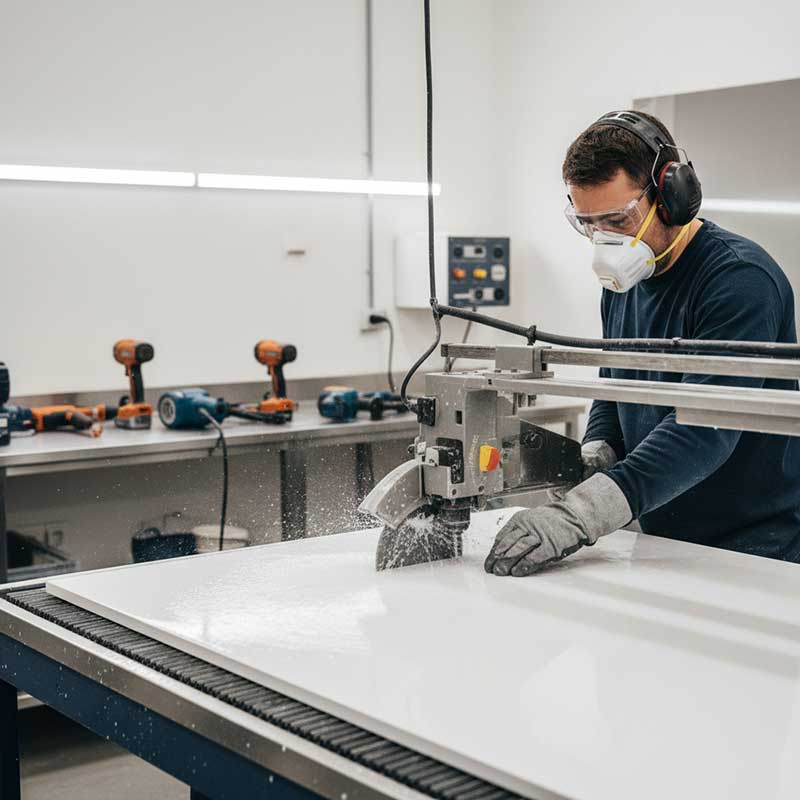
Zero-Silica & Low-Silica Innovation
The industry's response to the silicosis challenge has been the development of low-silica and zero-silica quartz formulations. These innovative products replace some or all of the crystalline silica content with alternative minerals and fillers while aiming to maintain the mechanical performance, aesthetic quality, and workability that fabricators and end consumers expect.
Several manufacturers are at the forefront of this transition. QuartzCrafts, for instance, has invested significantly in zero-silica product development, recognizing that fabricator health and regulatory compliance will be decisive competitive factors in the medium term. Their approach reflects a broader industry understanding that the market will increasingly reward manufacturers who can offer products that are both aesthetically compelling and demonstrably safer for the fabrication workforce. Cosentino's HybriQ+ technology for Silestone represents another significant industry response, replacing crystalline silica with a mix of mineral and recycled materials.
For buyers, the practical implication is straightforward: specifying low-silica or zero-silica quartz products mitigates regulatory risk, simplifies fabricator safety compliance, and increasingly resonates with end consumers who are becoming aware of the issue. For more insights on this evolving topic, the QuartzCrafts industry blog provides regular updates on material innovation and regulatory developments.
Environmental Manufacturing Standards
Beyond fabricator safety, broader environmental considerations are gaining importance. Chinese environmental regulators have progressively tightened emissions, wastewater, and solid waste standards for stone manufacturing facilities, leading to the closure or consolidation of non-compliant smaller producers. This environmental enforcement is a contributing factor to the industry consolidation trend discussed later in this analysis.
Lifecycle assessment (LCA) and environmental product declarations (EPDs) are becoming more common in commercial project specifications, particularly for LEED and BREEAM-certified buildings. Manufacturers who can provide documented environmental data for their products gain a competitive advantage in the commercial project specification channel.
🔑 Key Takeaway
Sustainability is transitioning from a "nice-to-have" to a market access requirement. Manufacturers who invest early in low-silica formulations, environmental compliance, and transparent sustainability reporting will be competitively advantaged as regulations tighten across global markets.
9. Technology & Manufacturing Innovation
Technological advancement is a critical competitive dimension in the engineered quartz industry. The manufacturers who invest in the latest production technology produce better products, achieve higher efficiency, and can offer the design innovation that drives consumer preference.
Digital Veining & Design Technology
The most transformative technology of the past five years has been the advancement of digital veining and design systems. Modern Breton-based production lines incorporate sophisticated digital design software that allows manufacturers to program precise vein patterns, color gradients, and textural effects into each slab. The latest generation of this technology enables multi-layer veining (where different vein patterns are applied at different depths within the slab), creating a sense of three-dimensional depth that was previously impossible to achieve and that closely replicates the geological layering found in natural marble.
Customization capability is another frontier. The ability to produce made-to-order designs, project-specific colorways, and branded exclusive patterns at production-line efficiency is becoming a competitive differentiator for manufacturers serving the OEM/ODM channel. This capability allows distributors and retailers to offer exclusive collections that cannot be found elsewhere in their market.
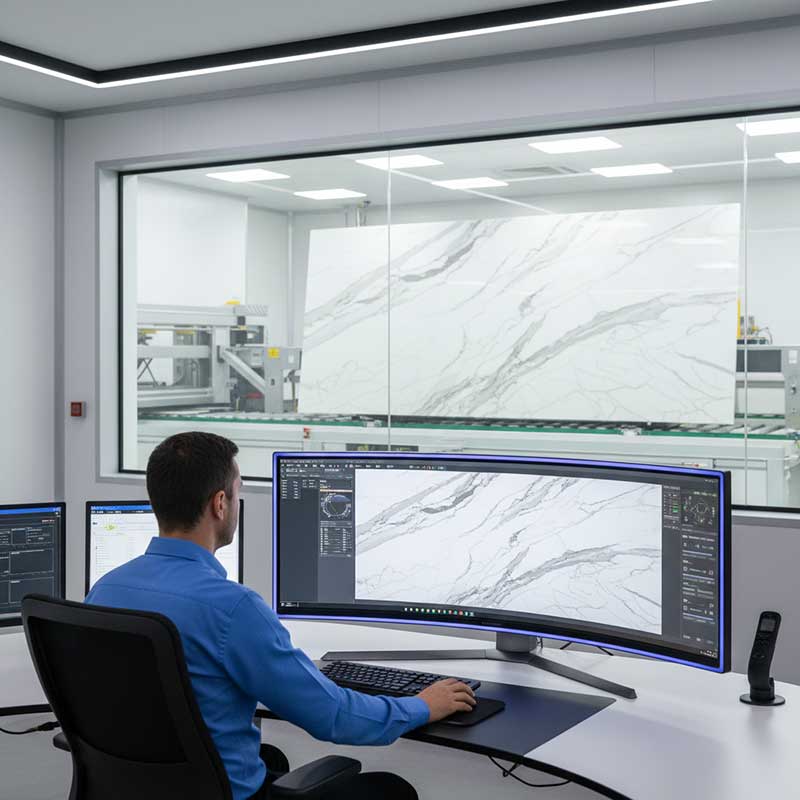
Automated Quality Control
Quality control has historically been a labor-intensive process in quartz manufacturing, relying heavily on visual inspection by trained operators. Increasingly, manufacturers are deploying automated optical inspection systems that use high-resolution cameras and machine-learning algorithms to detect surface defects, color inconsistencies, and dimensional irregularities at speeds and accuracy levels that exceed human capability. This technology investment improves consistency, reduces waste, and builds buyer confidence in product reliability.
Large-Format & Thin-Panel Production
The production of larger slab formats and thinner panels requires engineering solutions beyond simply scaling up existing equipment. Larger slabs require larger press capacities, longer curing ovens, more sophisticated handling and transport systems, and reinforced packing to withstand shipping loads. Thin panels (6–12mm) for wall cladding and furniture applications require modified formulations and pressing parameters to achieve structural integrity at reduced thickness. Manufacturers who have mastered these production capabilities can access higher-margin market segments that are inaccessible to producers limited to standard dimensions.
Smart Factory & Industry 4.0
Leading manufacturers are implementing Industry 4.0 principles: integrated production monitoring systems, real-time data analytics for process optimization, predictive maintenance for critical equipment, and digital traceability from raw material input to finished slab output. These investments reduce downtime, improve energy efficiency, and provide the data infrastructure needed for comprehensive quality documentation that commercial buyers increasingly require.
10. Emerging Market Opportunities
For Chinese quartz manufacturers seeking growth beyond the saturated or trade-restricted Western markets, several emerging regions offer compelling opportunities with high growth rates, low competitive intensity, and limited trade barriers.
Sub-Saharan Africa
Sub-Saharan Africa represents one of the most promising long-term growth frontiers for the quartz surface industry. Rapid urbanization — the World Bank estimates that Africa's urban population will double by 2050 — is driving construction activity at rates that outpace most other regions globally. Key markets include Kenya (particularly Nairobi's booming middle-class housing sector), Nigeria (Africa's largest economy with massive residential construction needs), Ghana, Tanzania, and Ethiopia.

Current per-capita quartz consumption in these markets is extremely low compared to mature markets, which means the upside potential is substantial. Market entry requires patience and adaptation: smaller initial order quantities, CIF pricing to simplify logistics for less experienced importers, on-the-ground relationship building, and product mixes that include mid-range price points alongside premium offerings. The annual Big 5 Construct Africa trade exhibition is a valuable platform for connecting with regional distributors and contractors.
Central Asia
Kazakhstan, Uzbekistan, and Turkmenistan are investing heavily in commercial and residential construction, supported by resource-wealth-driven government spending. These markets benefit from geographic proximity to China, simplified trade logistics through Belt and Road Initiative (BRI) connectivity, and growing demand for modern interior materials as construction standards rise. Chinese quartz manufacturers are well-positioned to serve Central Asian markets due to competitive freight costs, cultural familiarity, and the absence of trade barriers.
Southeast Asia Tier-2 Markets
Beyond the established markets of Thailand, Vietnam, and the Philippines, smaller Southeast Asian economies are emerging as quartz consumption markets. Cambodia, Myanmar (subject to political stability considerations), and Laos are all experiencing construction growth driven by tourism-related hospitality development, foreign direct investment in commercial real estate, and rising middle-class housing aspirations. These markets are small individually but collectively represent meaningful growth for manufacturers willing to invest in the distribution and relationship infrastructure needed to serve them.
Caribbean & Central America
The Caribbean and Central American region offers niche but profitable opportunities for quartz manufacturers. Tourism resort construction (hotels, resorts, and vacation rental properties) is a key demand driver, alongside residential development for North American and European expatriates and retirees. Markets like the Dominican Republic, Jamaica, Costa Rica, Panama, and Guatemala are growing steadily. The region's proximity to the US market means that design preferences are heavily influenced by North American trends, particularly the Calacatta and marble-look aesthetics that dominate US consumer preferences.
11. Competitive Landscape & Market Positioning
The global quartz surface industry's competitive landscape spans a wide spectrum from multinational branded manufacturers to hundreds of smaller Chinese and Indian producers serving regional and price-sensitive markets. Understanding this landscape helps buyers identify the right supplier tier for their market positioning and quality requirements.
Global Brand Tier
At the premium end, a small number of global brands dominate consumer awareness: Caesarstone (Israel-headquartered, publicly traded on NASDAQ), Cosentino's Silestone (Spain), Cambria (USA), and several other established brands with significant marketing investment and wide distribution networks. These brands command premium pricing and invest heavily in consumer marketing, design center partnerships, and product innovation. Their combined market share, while significant in mature Western markets, represents a minority of global production volume.
Major Chinese Manufacturer Tier
Below the global brands sits a tier of large-scale Chinese manufacturers who produce at world-class quality levels, operate modern Breton-line factories, hold comprehensive international certifications, and serve export markets across multiple continents. These manufacturers — which include companies like QuartzCrafts — typically offer OEM/ODM services, allowing their international customers to sell under their own brand names. This manufacturer tier offers what is arguably the best value proposition in the global market: premium quality at factory-direct pricing, with the flexibility to customize designs, dimensions, and specifications to specific market requirements.
The competitive dynamics within this tier are intensifying. As the number of Chinese manufacturers with genuine export capability and quality certification has grown, differentiation has become critical. Manufacturers who invest in design innovation, offer comprehensive customer service (including sample programs, technical support, and marketing collateral), maintain consistent quality across large orders, and pursue sustainability credentials are gaining share at the expense of undifferentiated competitors.
Regional & Emerging Producer Tier
Indian, Turkish, and Vietnamese manufacturers form a growing third tier of competitors. These producers have gained significant market share in specific regions — particularly in the US (India), Europe and Middle East (Turkey), and the US re-export channel (Vietnam). While their quality and design capabilities are improving rapidly, they generally do not yet match the breadth of product range, production flexibility, and price competitiveness offered by the best Chinese manufacturers for non-restricted markets.
Differentiation Strategies That Work
In an increasingly competitive global market, the manufacturers and exporters who are gaining share tend to share several characteristics: they invest continuously in design development and offer collections that are refreshed regularly; they maintain strict quality control and can demonstrate consistency across large production runs; they hold the certifications required by their target markets (CE, NSF, SGS, etc.); they offer genuine OEM/ODM capability with reasonable MOQs and lead times; and they prioritize customer relationships through responsive communication, transparent pricing, and reliable logistics. Commodity-level manufacturers who compete on price alone are finding it increasingly difficult to maintain margins and customer loyalty.
12. Future Outlook & Price Forecast
Looking ahead to 2025–2030, the engineered quartz stone industry is positioned for continued global growth, but the landscape will be shaped by several converging forces that present both opportunities and challenges for all market participants.
Market Growth Trajectory
The consensus among industry analysts is that global quartz surface demand will continue growing at 5–7% CAGR through 2030, driven by the fundamental forces outlined in this analysis: residential renovation cycles, commercial construction, consumer preference for low-maintenance surfaces, and expanding design capabilities. The market is projected to reach USD 18–22 billion by 2030. Growth will be unevenly distributed: mature Western markets will grow at 2–4% annually, while emerging markets in Asia, Middle East, Africa, and Latin America will grow at 6–12%.
Industry Consolidation
The Chinese quartz manufacturing sector, currently fragmented among hundreds of producers of varying scale and quality, is entering a period of consolidation. Tightening environmental regulations, rising quality and certification standards, increasing capital requirements for competitive production equipment, and growing customer expectations for consistency and service are raising barriers to entry and operation. Smaller, undercapitalized manufacturers will face increasing difficulty competing, while larger, better-resourced producers will gain share. This consolidation is expected to improve average industry quality, reduce the price-undermining effect of low-end producers, and stabilize pricing.
The Sustainability Imperative
By 2030, sustainability credentials will likely be a market access requirement rather than a competitive advantage. Low-silica and zero-silica products will represent a growing share of the market, particularly in regions influenced by Australian, European, and North American regulatory trends. Manufacturers who delay investment in reformulation and environmental compliance will find themselves locked out of the most valuable market segments.
Technology as a Competitive Moat
The gap between technologically advanced manufacturers and lagging competitors will widen. Advanced digital design capabilities, automated quality control, large-format and bookmatching production, and Industry 4.0 factory management will increasingly separate the competitive tier from the commodity tier. Buyers should assess their suppliers' technology investment trajectory as a leading indicator of future product quality and innovation capability.
2025 Price Forecast
FOB prices for standard Chinese-manufactured quartz slabs (3200×1600×20mm, polished, common designs) are expected to remain relatively stable in 2025, with modest increases of 3–5% driven by rising energy costs, environmental compliance investments, and marginal raw material adjustments. Premium products — large-format, ultra-thin, bookmatched, zero-silica, and custom-design slabs — will command growing price premiums as differentiation becomes more important in competitive markets. Buyers who commit to longer-term supply agreements with quality-certified manufacturers are likely to secure more favorable pricing and priority allocation during peak-demand periods.
| Product Category | 2024 FOB Range (est.) | 2025 Forecast | Notes |
|---|---|---|---|
| Standard solid colors (20mm) | $15–22 /sqm | Stable to +3% | Highly competitive segment; margin pressure |
| Standard marble-look (20mm) | $18–30 /sqm | Stable to +3% | Volume backbone; pricing depends on design complexity |
| Premium Calacatta / complex veining | $28–45 /sqm | +3–5% | Strong demand; design capability is differentiator |
| Bookmatched / ultra-large format | $40–65 /sqm | +5–8% | Growing premium segment; limited manufacturer capability |
| Zero-silica / low-silica formulations | $25–50 /sqm | +5–10% | Emerging category; R&D costs reflected in pricing |
| Thin panel (6–12mm wall cladding) | $22–40 /sqm | +3–5% | Niche but growing; commercial applications |
🔑 Strategic Conclusion
The global engineered quartz stone market is entering a phase of maturation characterized by regional diversification, regulatory complexity, and technological differentiation. For international buyers, the optimal strategy combines sourcing from quality-certified, design-forward manufacturers with the ability to adapt to local market requirements. For manufacturers, sustained investment in design innovation, sustainability, and customer service will determine competitive position in an increasingly discerning global market. Understanding these dynamics — from anti-dumping duty landscapes to emerging market entry strategies — is the foundation of informed sourcing and supply chain decision-making.
This market analysis is provided for informational purposes and is based on publicly available industry data, trade statistics, and expert assessment as of January 2025. Market conditions, trade policies, and pricing are subject to change. For specific sourcing inquiries and current pricing, contact a qualified manufacturer or your trade advisor directly.