Engineered Quartz Stone
Knowledge Center
Deep-dive technical guides covering every aspect of engineered quartz stone — from raw material science and manufacturing to performance testing and material comparisons. Written for importers, distributors, fabricators, and specifiers who demand data, not just marketing.
Why Technical Knowledge Matters
Informed Buyers Make Better Sourcing Decisions
The engineered quartz stone market is vast, with hundreds of manufacturers offering products that may look similar on the surface but vary enormously in quality, durability, and long-term performance. The difference between a premium slab and a substandard one often lies in details invisible to the naked eye — raw material purity, resin formulation, compression pressure, and curing protocols.
Our Knowledge Center was created specifically for B2B professionals who need to go beyond marketing claims. Whether you’re evaluating a new supplier, specifying materials for a major hospitality project, or advising clients on the right surface for their climate zone, these guides give you the technical foundation to ask the right questions and make confident decisions.
Every article is grounded in industry data, manufacturing experience, and the practical realities of global trade in engineered stone. No fluff — just the information you need.
Start with the Fundamentals
These four cornerstone guides cover the essential knowledge every B2B quartz buyer should master. Each article is comprehensive, data-rich, and written from a manufacturer's perspective.
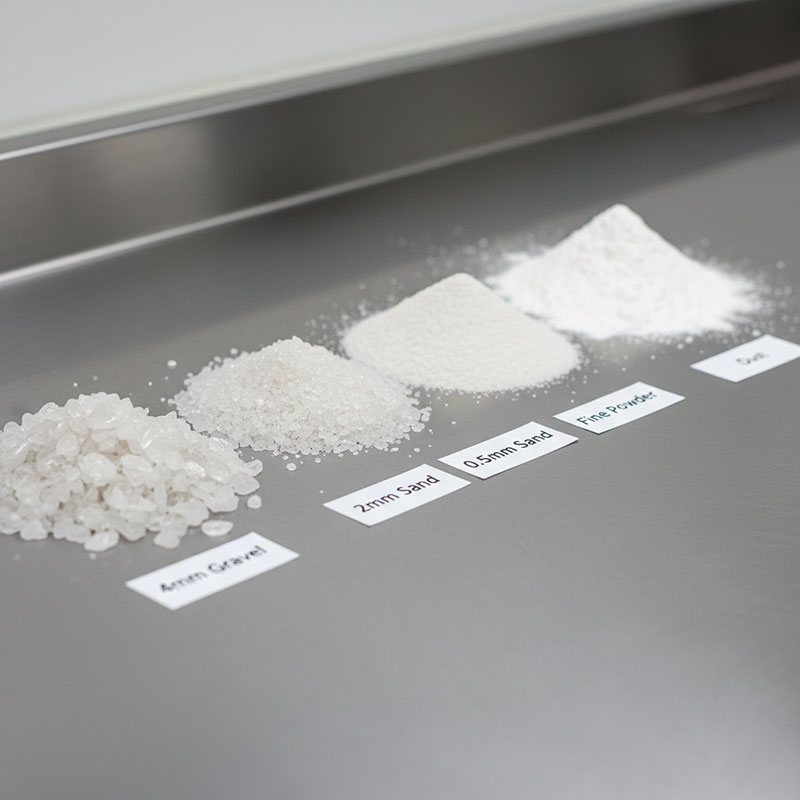
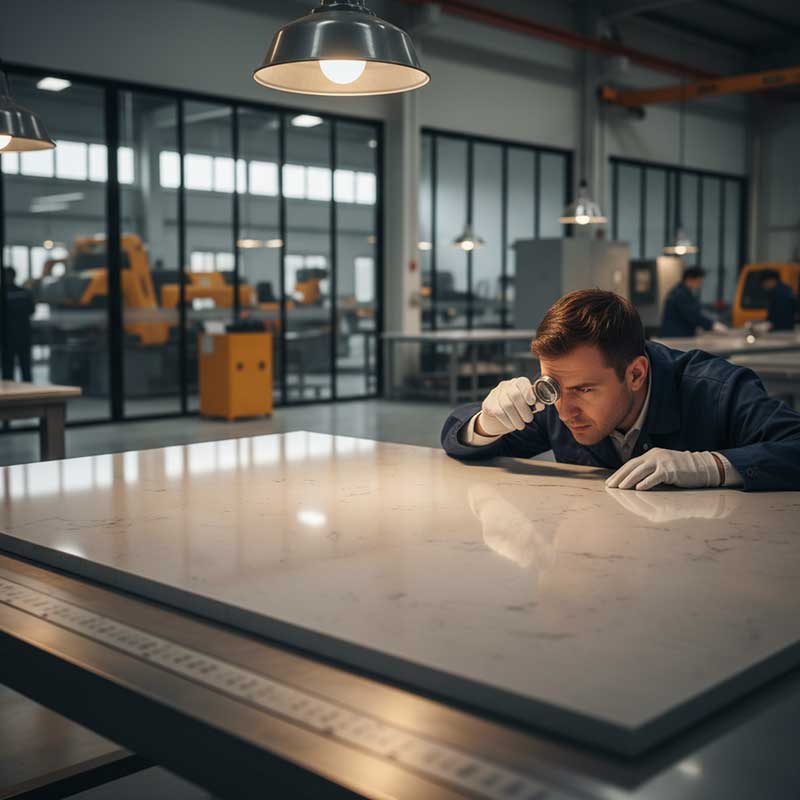
How Engineered Quartz Stone Is Made: The Complete Manufacturing Process
A step-by-step walkthrough of the entire quartz slab manufacturing process — from raw quartz crystal sourcing and particle grading through mixing, vibro-compression under vacuum, high-temperature curing, calibration, polishing, and final quality inspection.
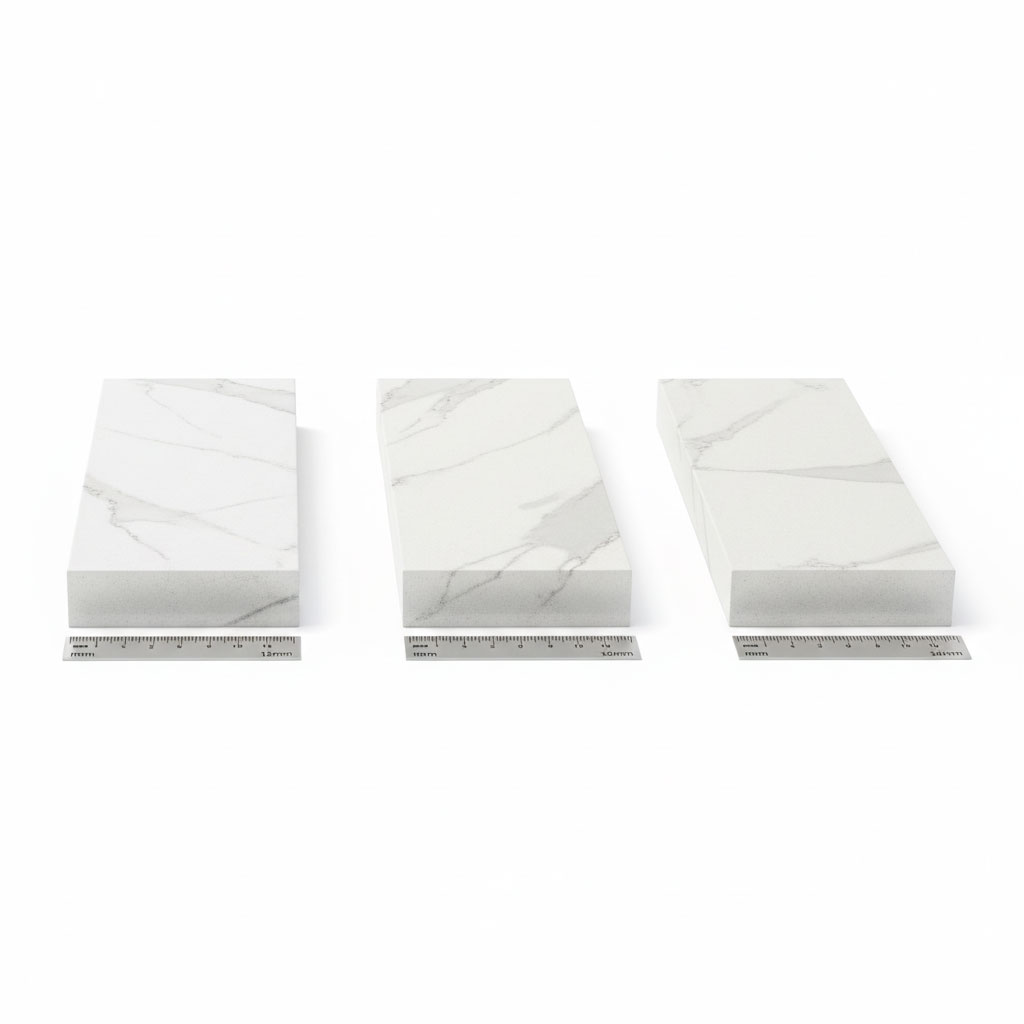
Understanding Quartz Stone Thickness: 12mm vs 20mm vs 30mm
A complete specification guide comparing all standard quartz slab thicknesses across different applications. Includes weight calculations, structural support requirements, and cost-per-square-meter analysis.
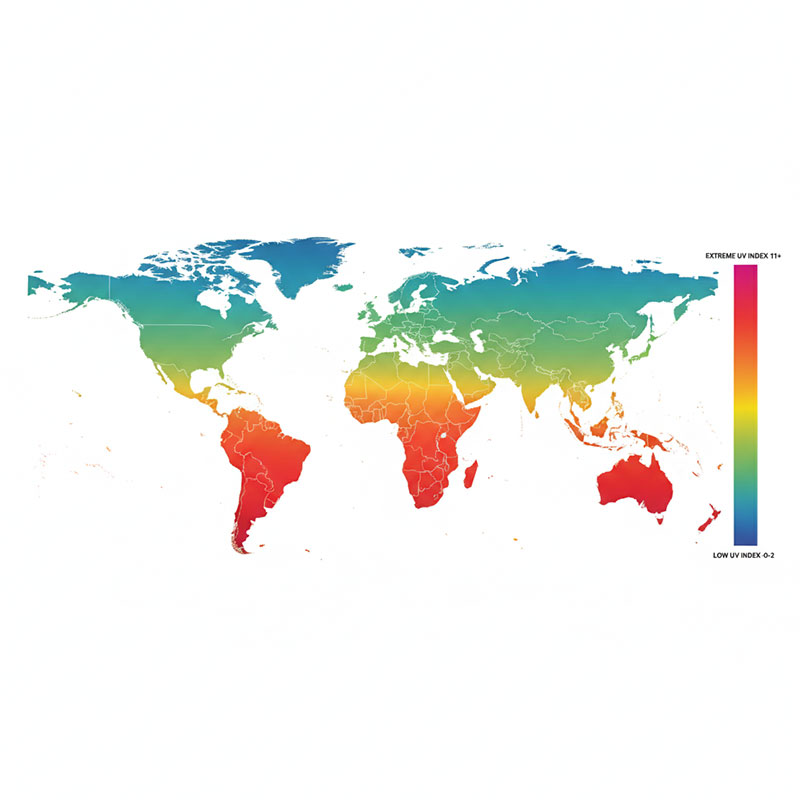
How Climate and Temperature Affect Quartz Stone Performance
An essential guide for buyers in tropical, desert, and high-altitude regions. Explores how UV radiation, extreme heat, humidity, and thermal cycling impact engineered quartz surfaces over time.
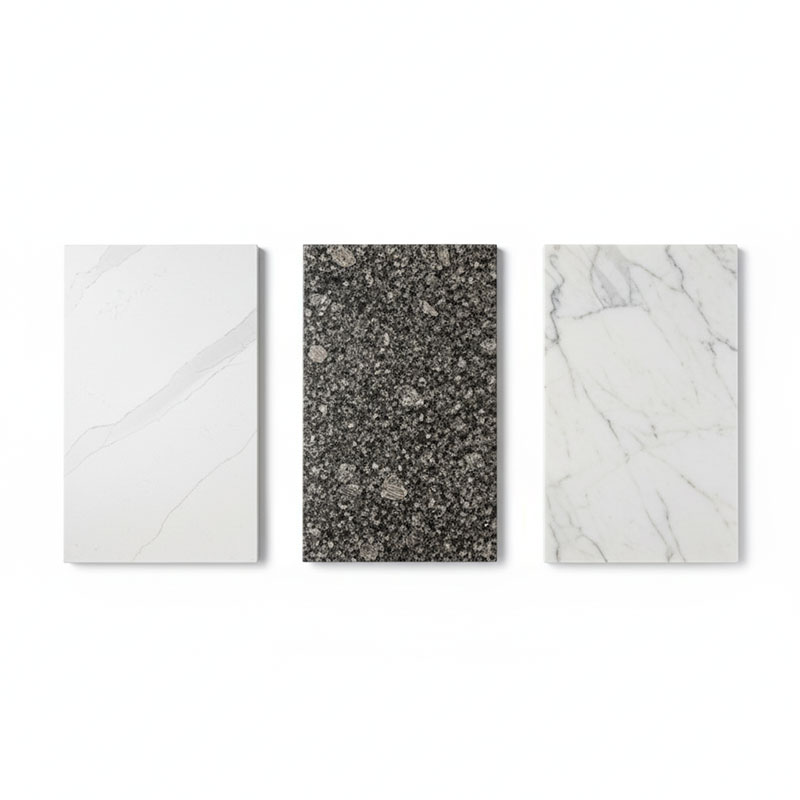
Engineered Quartz vs. Natural Stone: A Complete Data-Driven Comparison
The definitive side-by-side comparison of engineered quartz with natural granite, marble, and quartzite. Covers hardness, porosity, flexural strength, stain resistance, maintenance, and total cost of ownership.
Key Technical Specifications at a Glance
Before you dive into the full guides, here's a quick-reference summary of the most important technical data points for premium engineered quartz stone.
Hardness
Harder than glass (5.5) and most knife blades (5.5–6.5). Highly resistant to scratching.
Water Absorption
Virtually non-porous. Prevents bacterial growth and staining without sealing.
Flexural Strength
2–4× stronger than natural granite. Allows larger overhangs and thinner profiles.
Heat Resistance
Withstands brief contact up to 150°C. Trivets recommended for hot pots.
Density
Consistent density ensures uniform weight distribution and predictable fabrication.
Compressive Strength
Exceptional resistance to compression, suitable for high-traffic commercial installations.
Standard Slab Size
Jumbo slab format for larger countertop sections with fewer seams.
Available Finishes
Polished, honed, leathered, sandblasted, concrete-look, and brushed finishes.
Topics Covered in Our Knowledge Center
Each guide is structured to answer the real questions B2B buyers face when sourcing, specifying, and selling engineered quartz stone.
Material Science
Understand the role of quartz crystal purity (SiO₂ content), resin types (polyester vs. acrylic), coupling agents, and pigment systems in determining final slab quality.
Production Technology
Explore the Bretonstone process, vacuum vibro-compression mechanics, curing temperature protocols, and how production variables affect slab density and porosity.
Thickness & Surface Finishes
Detailed comparison of 12mm, 15mm, 20mm, and 30mm options. Plus a complete guide to surface finishes — polished, honed, leathered, concrete, and more.
Climate & Environmental Factors
How does quartz perform in tropical humidity, desert heat, or high-altitude UV exposure? Regional performance data to guide specification in any climate zone.
Material Comparisons
Data-driven head-to-head comparisons between engineered quartz and natural granite, marble, quartzite, sintered stone, and solid surface materials.
Quality Control & Testing
Understand the testing standards (EN 15286, ASTM C1722, NSF/ANSI 51) that separate premium quartz from inferior products. Learn what to ask during factory audits.
Who Is the Knowledge Center For?
Importers & Distributors
Evaluate supplier quality, understand material specifications, and make data-backed purchasing decisions for your inventory.
Fabricators & Installers
Gain deeper knowledge of material properties that affect cutting, edging, joining, and installation best practices.
Architects & Specifiers
Access the technical data needed to specify engineered quartz with confidence in commercial and residential projects.
Project Developers
Compare surface materials and understand total cost of ownership for large-scale development projects.