
Understanding Quartz Stone Import Requirements in 2025
The global trade of engineered quartz stone has expanded dramatically over the past decade, with annual international shipments now exceeding USD 8 billion according to the International Trade Centre's Trade Map. As the market grows, so does the complexity of navigating each country's unique combination of import duties, product certification mandates, customs documentation protocols, and non-tariff barriers. For B2B importers — whether distributors, fabricators, contractors, or project developers — a miscalculation on HS code classification, an overlooked anti-dumping duty, or a missing certificate of conformity can transform a profitable shipment into a costly problem.
This guide is designed as a single, definitive reference for anyone importing engineered quartz stone (also referred to as artificial quartz, agglomerated stone, or reconstituted quartz) from China or other manufacturing origins into markets across Latin America, the Middle East, Europe, North America, Asia-Pacific, and Africa. Every section includes specific duty rates, applicable taxes, required certifications, and practical advice drawn from our decades of export experience to over 60 countries. We strongly recommend verifying all tariff rates with the destination country's official customs authority or a licensed customs broker before finalizing any purchase order, as rates are subject to change following trade policy adjustments, annual tariff reviews, and free trade agreement negotiations.
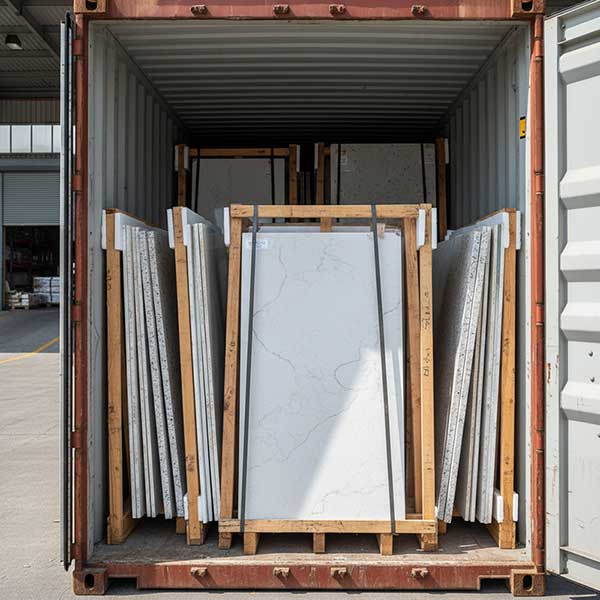
Each section of this guide addresses a specific region or topic. If you are targeting a particular market, use the table of contents on the left to jump directly to the relevant section. For questions about any specific country not covered here, or for a customized tariff and certification report for your upcoming import, contact our trade compliance team directly.
1. HS Code Classification for Engineered Quartz Stone
The Harmonized System (HS) is the international nomenclature developed by the World Customs Organization (WCO) to classify traded products. It serves as the foundation for customs tariff schedules worldwide. The first six digits of the HS code are internationally standardized — meaning "6810.19" means the same product category whether you are importing into Brazil, Saudi Arabia, or the Netherlands. Beyond six digits, individual countries add their own extensions (typically to eight or ten digits) for more granular tariff differentiation.
For engineered quartz stone — products manufactured by combining approximately 90–94% crushed natural quartz crystals with 6–10% polymer resins (typically unsaturated polyester) and pigments through a vacuum vibro-compression process (known as the Breton technology process) — the correct HS heading is 6810, which covers "Articles of cement, concrete or artificial stone, whether or not reinforced." This heading is used because engineered quartz is technically an artificial stone: a manufactured composite that does not occur naturally.
| HS Code | Official Description | Applicable Quartz Products | Notes |
|---|---|---|---|
| 6810.19 | Tiles, flagstones, bricks and similar articles of artificial stone | Quartz slabs, quartz tiles, quartz wall panels in standard dimensions | Most commonly used code for slab exports worldwide |
| 6810.91 | Prefabricated structural components for building or civil engineering | Pre-cut countertops, fabricated vanity tops, custom-dimensioned pieces with cutouts | Used when products have been fabricated to project-specific dimensions |
| 6810.99 | Other articles of artificial stone | Decorative quartz items, custom-shaped products, non-construction applications | Catch-all for products not fitting 6810.11–6810.91 |
| 6810.11 | Building blocks and bricks of artificial stone | Rarely applicable to quartz products | Primarily for concrete blocks; avoid using for quartz slabs |

Common Misclassification Risks
One of the most frequent and costly mistakes in quartz stone importation is HS code misclassification. Customs authorities in some countries may challenge the declared HS code and attempt to reclassify engineered quartz under alternative headings that carry different (often higher) duty rates. The two most common incorrect classifications are HS 6802 ("Worked monumental or building stone") and HS 2506 ("Quartz; quartzite"). Understanding why these are incorrect is essential for defending your classification if challenged.
HS 6802 applies exclusively to natural stone that has been cut, sawn, or polished but remains a naturally occurring material — granite slabs, marble tiles, travertine panels. Engineered quartz, despite its visual similarity to natural stone, is a manufactured composite and does not qualify under this heading. The WCO's Explanatory Notes to heading 68.10 explicitly include "artificial stone" products made from aggregates bound with resins.
HS 2506 applies to quartz in its raw mineral form — unprocessed quartz crystals, quartzite rock, silica sand. This classification is completely inappropriate for finished engineered quartz products, which have undergone extensive manufacturing including crushing, mixing with resins, vacuum pressing at high pressure, curing, and surface polishing.
Country-Specific HS Code Extensions
While the six-digit HS code 6810.19 is internationally harmonized, many countries use eight-digit or ten-digit extensions that create more specific tariff sub-lines. For example, the European Union uses the TARIC system with ten-digit codes, while the United States uses the HTSUS (Harmonized Tariff Schedule of the United States) with ten-digit codes maintained by the US International Trade Commission (USITC). Always confirm the complete tariff code (all eight or ten digits) with the destination country's customs authority or your customs broker before generating the commercial invoice, because the extended digits can affect the applied duty rate, anti-dumping duty applicability, and eligibility for preferential trade agreements.
As a practical step, we recommend requesting a Binding Tariff Information (BTI) ruling (or equivalent advance tariff ruling) in your target market before committing to large-volume shipments. Most major customs administrations offer this service, and the ruling is legally binding for a specified period — typically three years in the EU and five years in the US.
2. Latin America Import Tariffs & Requirements
Latin America represents one of the most dynamic and fastest-growing markets for Chinese-manufactured engineered quartz stone. According to ITC Trade Map data, combined imports of HS 6810 products into Latin American countries have grown at a compound annual rate of approximately 12–15% over the past five years, driven by expanding residential construction, a rising middle class investing in kitchen and bathroom upgrades, and a growing preference for engineered stone's consistency, durability, and lower maintenance compared to natural granite or marble.
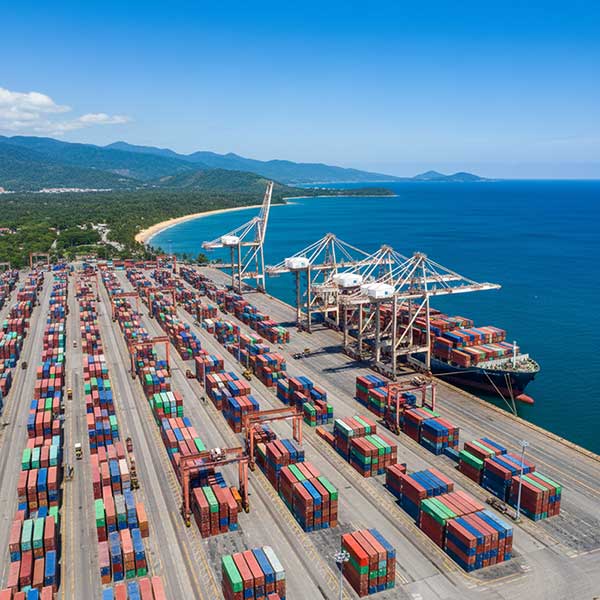
The tariff landscape across the region is highly varied. Countries with Free Trade Agreements (FTAs) with China — most notably Chile and Peru — offer significantly lower or zero import duties, while others, such as Brazil, Argentina, and Ecuador, impose complex multi-layered tax structures that can push the total landed cost well above FOB prices. Understanding these differences is critical for pricing strategy and market prioritization.
| Country | Import Duty | VAT / IVA | Additional Taxes | FTA with China | Key Notes |
|---|---|---|---|---|---|
| 🇧🇷 Brazil | 12–14% | ICMS 12–18% | IPI 5%; PIS/COFINS 11.75% | No | Most complex tax system in LatAm; total taxes may exceed 60% of CIF value |
| 🇲🇽 Mexico | 10–15% | IVA 16% | DTA 0.8% | No | Port of Manzanillo preferred; USMCA re-export opportunities |
| 🇨🇴 Colombia | 10–15% | IVA 19% | — | No | Port of Cartagena; growing luxury residential market |
| 🇨🇱 Chile | 0–6% | IVA 19% | — | Yes | China-Chile FTA: 0% duty for qualifying products with Form F CoO |
| 🇵🇪 Peru | 0–6% | IGV 18% | IPM 2% | Yes | China-Peru FTA: preferential rate; Lima port of Callao |
| 🇦🇷 Argentina | 14–16% | IVA 21% | Statistical fee 3%; income tax advance 6% | No | Currency controls & SIRA import licenses complicate market access |
| 🇪🇨 Ecuador | 15–20% | IVA 15% | FODINFA 0.5%; safeguard surcharge possible | No | Safeguard duties have been applied intermittently; verify before shipping |
| 🇵🇦 Panama | 5–10% | ITBMS 7% | — | No | Colón Free Trade Zone allows duty-free import for re-export |
| 🇩🇴 Dominican Republic | 8–14% | ITBIS 18% | — | No | Growing hospitality/resort construction drives demand |
| 🇬🇹 Guatemala | 10–15% | IVA 12% | — | No | Largest Central American economy; port of Puerto Quetzal |
| 🇨🇷 Costa Rica | 5–14% | IVA 13% | — | China-Costa Rica FTA | FTA benefits may apply for select HS codes; confirm with customs |
Brazil — Navigating the World's Most Complex Import Tax System
Brazil is the largest market for engineered quartz stone in Latin America and the third-largest in the Western Hemisphere, behind only the United States and Canada. However, it also has what many international trade professionals consider the most complex import tax system in the world. The total tax burden on imported quartz stone in Brazil can reach 60–80% of the CIF value when all applicable federal, state, and municipal taxes are factored in.
The key taxes applicable to quartz stone imports into Brazil include the Import Duty (Imposto de Importação, or II) at 12–14%, the Excise Tax (Imposto sobre Produtos Industrializados, or IPI) at approximately 5%, the federal social contributions PIS and COFINS (combined approximately 11.75% on imports), and the state-level ICMS (Imposto sobre Circulação de Mercadorias e Serviços) which ranges from 12% to 18% depending on the destination state. Critically, several of these taxes are calculated on a cascading basis — meaning each subsequent tax is applied to a base that includes prior taxes — which amplifies the total tax burden significantly beyond the sum of the individual rates.
For Brazilian importers, a number of practical strategies can help manage costs. Importing through states with lower ICMS rates (such as Santa Catarina's special import regime, which offers a reduced effective ICMS rate for qualifying importers) can reduce the total tax burden by several percentage points. Working with an experienced despachante aduaneiro (licensed customs broker) who specializes in building materials is essential, as is maintaining meticulous documentation — Brazilian customs (Receita Federal) is known for thorough document audits. The Brazilian standards body INMETRO may require compliance documentation for certain building materials, and while enforcement varies for quartz slabs specifically, pre-fabricated countertops may fall under more stringent requirements.

Mexico — Strategic Gateway to the Americas
Mexico is the second-largest Latin American importer of Chinese quartz stone, with imports concentrated through the Pacific port of Manzanillo (Colima state) due to significantly shorter transit times from Chinese ports (typically 18–22 days versus 35+ days to Atlantic coast ports). The import duty rate for HS 6810.19 products ranges from 10% to 15%, with a 16% Value Added Tax (IVA) and a 0.8% Customs Processing Fee (Derecho de Trámite Aduanero, or DTA) applied on top.
Mexico's strategic importance extends beyond its domestic market. As a member of the USMCA (United States-Mexico-Canada Agreement, the successor to NAFTA), Mexico offers potential as a value-added processing and re-export hub for the North American market. However, importers and manufacturers considering this route must carefully evaluate the USMCA's rules of origin requirements. Simply importing Chinese quartz slabs into Mexico and re-exporting them to the United States does not qualify for USMCA tariff preferences — the product must undergo a "substantial transformation" in Mexico. This typically means fabrication (cutting to specific dimensions, edge profiling, sink cutout installation) rather than mere repackaging or transshipment. US Customs and Border Protection (CBP) actively investigates potential circumvention of this type, and the penalties for non-compliance are severe.
Mexico also has a network of Special Economic Zones (Zonas Económicas Especiales) and IMMEX (Maquiladora) programs that can offer duty deferrals or exemptions for materials imported for manufacturing and subsequent export. Quartz fabrication operations serving both the Mexican domestic market and US/Canadian export markets may benefit from these programs.
Chile & Peru — Free Trade Agreement Advantages
Chile and Peru stand out as the most tariff-friendly Latin American markets for Chinese quartz exports, thanks to bilateral Free Trade Agreements with China. The China-Chile FTA, in effect since 2006 and upgraded in 2019, provides for zero or near-zero duty on most HS 6810 products. The China-Peru FTA, effective since 2010, similarly offers preferential rates that can reduce the standard 6% MFN duty to 0% for qualifying products.
To claim preferential tariff rates under these FTAs, the shipment must be accompanied by the correct Certificate of Origin issued by an authorized body in China (typically the China Council for the Promotion of International Trade, or CCPIT, or the local branch of the General Administration of Customs). For the China-Chile FTA, the required document is a Form F Certificate of Origin. For the China-Peru FTA, a specific FTA Certificate of Origin is required. These documents must be requested by the exporter before shipment and must accurately describe the goods and confirm Chinese origin. Our export documentation team prepares these certificates as a standard service for all Chile- and Peru-bound shipments.
Argentina — Import Controls and Currency Challenges
Argentina presents unique challenges beyond its relatively high tariff rates (14–16% import duty plus 21% VAT, 3% statistical fee, and a 6% income tax advance payment). Since 2019, the Argentine government has maintained various forms of import controls, including the SIRA (Sistema de Importaciones de la República Argentina) licensing system, which requires pre-approval for most imports. Processing times for SIRA approvals can range from weeks to months, creating significant unpredictability in supply chains. Additionally, Argentina's periodic currency controls and restrictions on foreign exchange access mean that importers may face difficulty remitting payment to Chinese suppliers in US dollars. Despite these obstacles, Argentina's large domestic market and limited local quartz production create opportunities for persistent exporters who develop strong local partnerships.
3. Middle East Import Tariffs & Requirements
The Middle East — and the Gulf Cooperation Council (GCC) countries in particular — represents one of the most attractive regional markets for engineered quartz stone, combining relatively low import tariffs, zero or low VAT in several countries, massive ongoing construction activity, and a strong cultural preference for premium interior finishes. The GCC (comprising Saudi Arabia, UAE, Qatar, Kuwait, Bahrain, and Oman) operates a unified customs tariff, which means the standard import duty rate of 5% applies uniformly across all six member states for most HS 6810 products. However, each country maintains its own VAT rate, product certification requirements, and customs procedures.
| Country | Import Duty | VAT | Certification Required | Key Notes |
|---|---|---|---|---|
| 🇦🇪 UAE | 5% | 5% | ECAS / Emirates Quality Mark (select products) | Jebel Ali FZ: 0% duty for re-export; region's primary distribution hub |
| 🇸🇦 Saudi Arabia | 5–12% | 15% | SASO / SABER mandatory | Largest GCC market; Vision 2030 mega-projects; PCoC + SCoC required |
| 🇶🇦 Qatar | 5% | 0% | QS / MMUP standards for construction materials | No VAT; strong hospitality and residential demand |
| 🇰🇼 Kuwait | 5% | 0% | KUCAS conformity for some building materials | No VAT; public sector projects dominate |
| 🇧🇭 Bahrain | 5% | 10% | GCC conformity framework | Smaller market; often served via UAE distributors |
| 🇴🇲 Oman | 5% | 5% | DGSM standards | Growing infrastructure investment; Port of Sohar expanding |
| 🇮🇶 Iraq | 5–20% | Varies by region | Varies; Kurdistan region has different requirements | Reconstruction-driven demand; complex logistics; use experienced freight forwarders |
| 🇯🇴 Jordan | 10–20% | 16% | JSMO standards compliance | Aqaba SEZ offers reduced tariffs; gateway to Levant markets |
| 🇱🇧 Lebanon | 5–10% | 11% | LIBNOR standards (limited enforcement) | Market recovery post-crisis; port of Beirut rebuilding |
| 🇮🇱 Israel | 6–12% | 17% | SII (Standards Institution of Israel) approval for construction products | High-quality market; preference for premium products |
UAE as the Middle East's Primary Quartz Distribution Hub
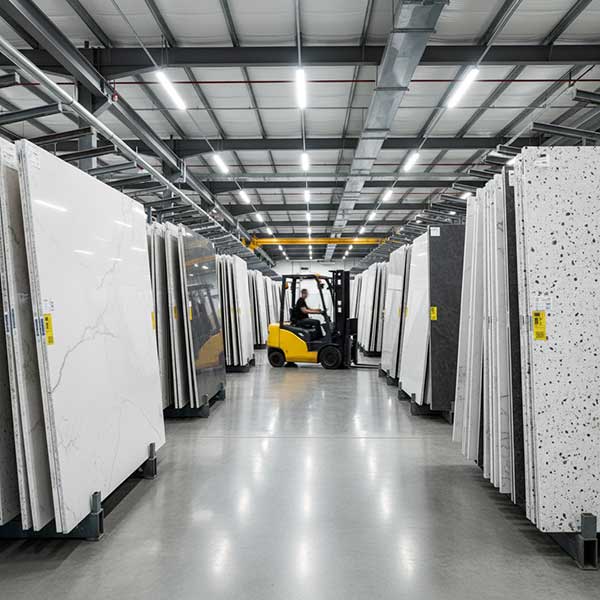
The United Arab Emirates — particularly the Emirate of Dubai and its flagship Jebel Ali Free Zone (JAFZA) — functions as the primary distribution hub for engineered quartz stone across the broader Middle East, East Africa, and parts of South Asia. The logistics economics are straightforward: rather than shipping smaller quantities directly to multiple GCC and regional markets, Chinese exporters and large regional distributors import full container loads into Jebel Ali, where goods can be stored duty-free in bonded warehouses, and then re-exported in smaller lots to Saudi Arabia, Iraq, Qatar, Kuwait, Bahrain, Oman, Jordan, and East African markets (Kenya, Tanzania, Ethiopia, Djibouti) without ever incurring UAE domestic import duties.
JAFZA offers several key advantages for quartz distribution operations: zero corporate tax for entities operating within the free zone, zero import/re-export duties for goods that do not enter the UAE domestic customs territory, modern warehousing infrastructure, excellent connectivity to global shipping lines (Dubai's Jebel Ali Port is the world's largest man-made harbor and the busiest port in the Middle East), and a stable regulatory environment. Many of our distribution partners operate from JAFZA or the adjacent Dubai South Logistics District.
Saudi Arabia — SASO/SABER Certification in Detail
Saudi Arabia is the largest individual market within the GCC for engineered quartz stone, driven by the massive construction activity associated with Saudi Vision 2030 mega-projects including NEOM, The Red Sea Project, AMAALA, Diriyah Gate, and the Jeddah Tower. However, Saudi Arabia also imposes the most rigorous product certification requirements in the region through the Saudi Standards, Metrology and Quality Organization (SASO) and its electronic conformity assessment platform, SABER.
The SABER system requires a two-stage process for every product imported into Saudi Arabia. First, the exporter must obtain a Product Certificate of Conformity (PCoC) by registering the product, submitting technical documentation and test reports, and undergoing review by a SASO-accredited conformity assessment body (such as TÜV, SGS, Intertek, or Bureau Veritas). The PCoC is valid for one year and covers the product type. Second, for each individual shipment, a Shipment Certificate of Conformity (SCoC) must be obtained through the SABER platform before the goods are shipped from the origin port. Attempting to ship goods to Saudi Arabia without a valid SCoC will result in the shipment being held at the port and potentially refused entry entirely.
Step 2: Submit a complete product technical file including: product description, composition data, manufacturing process overview, and third-party test reports (flexural strength per EN 14617-2, water absorption per EN 14617-1, abrasion resistance, fire reaction classification, and chemical resistance).
Step 3: An accredited conformity assessment body reviews the submission, may request additional testing or factory inspection, and issues the Product Certificate of Conformity (PCoC). Typical timeline: 2–4 weeks.
Step 4: For each shipment, the exporter applies for a Shipment Certificate of Conformity (SCoC) through SABER, referencing the PCoC and providing shipment-specific details (container numbers, quantities, invoice value). The SCoC is typically issued within 1–3 business days.
Step 5: The SCoC must be obtained and printed before the vessel departs from the origin port. The Saudi consignee will need it for customs clearance at the destination.
Our factory maintains an active SASO registration and valid PCoC for our full product range. We handle the SCoC application process for every Saudi-bound shipment as a standard service.
Qatar — Zero VAT Advantage
Qatar stands out within the GCC for its combination of the standard 5% GCC import duty and zero VAT — making it one of the most cost-efficient markets in the region for quartz stone imports. Qatar's construction and interior fit-out market is driven primarily by mega-projects, luxury residential developments, and the expansion of the hospitality sector that accelerated during and after the 2022 FIFA World Cup infrastructure buildout. The Public Works Authority (Ashghal) and the Ministry of Municipality and Urban Planning (MMUP) enforce building material standards that may require product testing reports and compliance documentation, though the specific requirements for engineered stone are generally less onerous than Saudi Arabia's SABER system.
Iraq — Reconstruction-Driven Demand
Iraq represents a significant growth market driven by post-conflict reconstruction activity, particularly in the Kurdistan Region of Iraq (KRI). Import procedures differ between the KRI (which operates its own customs administration through ports of entry at Ibrahim Khalil and Bashmakh) and the federal Iraqi customs system. Tariff rates range from 5% to 20% depending on the specific classification and current policy. Logistics into Iraq are more complex than into GCC countries, often requiring overland transport from Turkish or Jordanian ports. Working with a freight forwarder experienced in Iraqi customs procedures is essential. Despite the logistical challenges, the scale of reconstruction activity and the relatively limited local manufacturing capacity make Iraq a high-potential market for competitively priced quartz products.
4. European Union Regulations
The European Union is one of the world's largest and most sophisticated markets for engineered quartz stone, but also one of the most complex from a regulatory perspective. EU import regulations combine standard customs duties, potentially significant anti-dumping duties on Chinese-origin products, mandatory CE marking under the Construction Products Regulation (CPR), chemical safety compliance under REACH, and emerging occupational health regulations related to crystalline silica content. Successfully navigating all of these requirements simultaneously is essential for any Chinese exporter targeting the EU market.
| Aspect | Details |
|---|---|
| Standard Import Duty (MFN) | 2.7% ad valorem for HS 6810.19 products (verify via EU TARIC database) |
| Anti-Dumping Duty (China) | Varies by manufacturer: individual rates from 0% to 50%+; non-cooperating companies face residual rate (highest). Currently under active investigation/enforcement for Chinese-origin engineered stone. Check EU Official Journal for latest amendments. |
| VAT (by member state) | Germany 19% | France 20% | Italy 22% | Spain 21% | Netherlands 21% | Belgium 21% | Poland 23% | Sweden 25% |
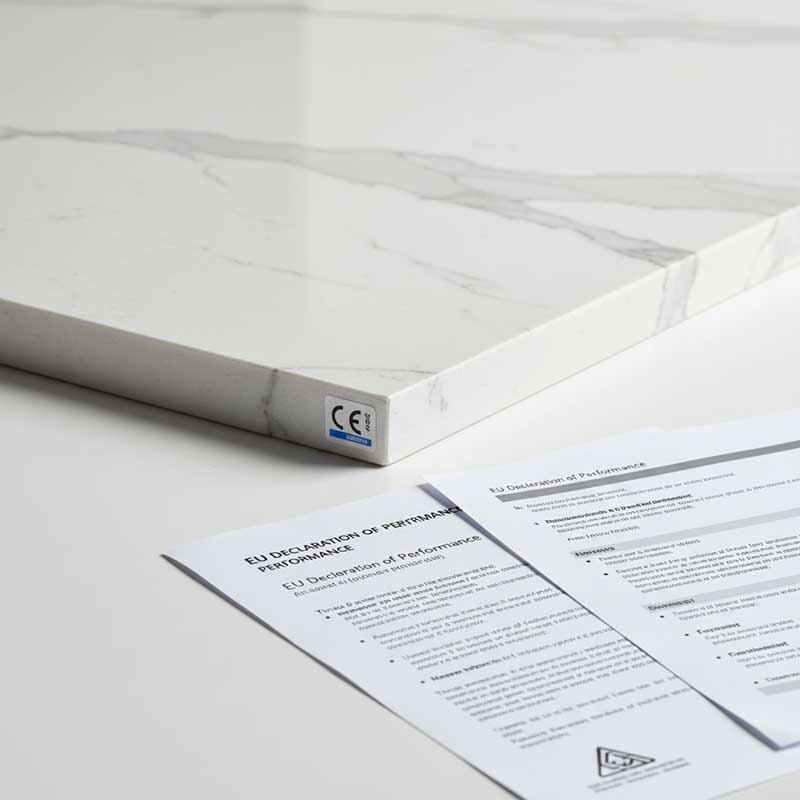
| CE Marking | Mandatory for construction products under CPR 305/2011. Harmonized standard: EN 14618 (Agglomerated stone — terminology and classification). Declaration of Performance (DoP) required. |
| REACH Compliance | Products must comply with EU REACH Regulation. No SVHC (Substances of Very High Concern) above 0.1% by weight. Safety Data Sheet may be requested. |
| Silica Content Scrutiny | EU OSHA reviewing occupational exposure limits for respirable crystalline silica (RCS). Some member states considering restrictions on high-silica engineered stone. Monitor EU-OSHA guidance. |
Anti-Dumping Duties — The Dominant Cost Factor
The most critical trade barrier for Chinese quartz exporters targeting the EU is the anti-dumping duty regime. The European Commission has investigated allegations that Chinese engineered stone producers sell products in the EU at prices below normal value (dumping), causing material injury to EU domestic producers. Anti-dumping duties, when imposed, are charged in addition to the standard 2.7% MFN duty and can dramatically alter the economics of importing Chinese quartz.
Anti-dumping duty rates are assigned on a company-specific basis. Manufacturers who cooperate fully with the European Commission's investigation — providing detailed cost data, pricing information, and production data — may receive an individual duty rate that reflects their specific dumping margin, which can be relatively low or even zero. Manufacturers who do not cooperate, or whose cooperation is deemed insufficient, are assigned the residual duty rate, which is typically the highest rate applied and can exceed 50% ad valorem. The residual rate functions as a deterrent against non-cooperation and effectively blocks non-cooperating companies from the EU market.
For importers considering EU market entry with Chinese-origin quartz, the first essential step is to verify the current anti-dumping duty rate applicable to the specific Chinese manufacturer whose products you intend to import. This information is published in the Official Journal of the European Union (EUR-Lex) and can be checked through the TARIC database by entering the product code and country of origin. Our factory cooperated fully with the EU investigation and can provide our current assigned individual anti-dumping duty rate upon request.
CE Marking — Detailed Requirements
Under the EU Construction Products Regulation (CPR) No. 305/2011, engineered stone products placed on the EU market for use in construction must bear the CE mark and be accompanied by a Declaration of Performance (DoP). The harmonized European standard for agglomerated stone is EN 14618:2009, which establishes the terminology, classification, and testing requirements for these products.
To obtain CE marking, the manufacturer must have the product tested by an accredited Notified Body for the relevant performance characteristics specified in the standard. These include fire reaction classification (EN 13501-1), flexural strength (EN 14617-2), water absorption (EN 14617-1), abrasion resistance (EN 14617-4), and where applicable, slip resistance (EN 14231) and chemical resistance (EN 14617-10). The manufacturer then prepares a Declaration of Performance (DoP) documenting the declared performance values, and applies the CE mark to the product, its label, or accompanying documentation.
Our factory maintains CE certification for our full product range, tested by a recognized EU Notified Body, and we supply the DoP document with every EU-bound shipment. If you are an EU-based importer acting as the "importer" under the CPR framework, you also have responsibilities: you must ensure that the CE marking and DoP are present and correct, that the product is accompanied by the required instructions and safety information in the language(s) required by the destination member state, and that you maintain copies of the DoP and can make them available to market surveillance authorities for a minimum of ten years.
United Kingdom (Post-Brexit)
Following Brexit, the United Kingdom operates its own customs regime separate from the EU. The UK has introduced the UKCA mark (UK Conformity Assessment) to replace the CE mark for products placed on the UK market, though during an extended transition period, CE marking continues to be accepted for most product categories. As of early 2025, the UK government has further extended the acceptance of CE marking for construction products, but long-term planning should account for the eventual requirement to obtain UKCA marking. UK import duties on HS 6810.19 are generally aligned with former EU MFN rates (approximately 2.7%), but the UK's anti-dumping duty positions may diverge from the EU's over time. UK VAT is 20%. The UK's Global Tariff database is the definitive source for current UK duty rates.
5. North America (United States & Canada)
The United States and Canada are the world's two largest national markets for engineered quartz countertops by value, collectively accounting for an estimated 40% of global consumption. However, both countries have imposed substantial trade remedies on Chinese-origin quartz products, creating the highest tariff barriers that Chinese quartz exporters face anywhere in the world.
United States — Multi-Layered Trade Barriers
| Duty Type | Rate | Legal Basis | Status (as of January 2025) |
|---|---|---|---|
| Standard Import Duty (MFN) | 3.7% | HTSUS Column 1 General | Active |
| Section 301 Tariff (China) | 25% | Trade Act of 1974, Section 301 | Active — applies to all Chinese-origin goods under covered HTSUS subheadings |
| Anti-Dumping Duty (AD) | Varies by exporter: individual rates from ~2% to 300%+; China-wide rate often above 200% | Title VII of the Tariff Act of 1930; USITC/USDOC investigation | Active since 2019; annual administrative reviews by US Dept. of Commerce |
| Countervailing Duty (CVD) | Varies by exporter: individual rates assigned based on investigated subsidy programs | Title VII of the Tariff Act of 1930 | Active since 2019; annual reviews |

The practical impact of these layered duties is that most Chinese quartz manufacturers are effectively priced out of the US market for direct export. A manufacturer subject to the China-wide anti-dumping rate of over 200%, plus the 25% Section 301 tariff, plus the standard 3.7% duty, plus countervailing duties, could face a total duty burden exceeding 300% of the entered value. Even manufacturers with favorable individual AD rates face the 25% Section 301 tariff as an irreducible minimum on top of the base duty.
The US anti-dumping and countervailing duty orders on quartz surface products from China were issued in 2019 following a petition by the American quartz industry coalition. The US Department of Commerce (Enforcement & Compliance division) conducts annual administrative reviews to assess and potentially adjust individual company duty rates. Companies that did not participate in the original investigation or subsequent reviews are assigned the China-wide rate, which is typically the highest rate. Our company participated in the original investigation and maintains active engagement with all review proceedings — contact our trade team for our current assigned rates.
Canada — Similar Trade Remedy Landscape
Canada's trade remedy landscape for Chinese quartz closely mirrors the US approach, though administered by the Canada Border Services Agency (CBSA) and the Canadian International Trade Tribunal (CITT). Canada has imposed both anti-dumping and countervailing duties on certain quartz surface products from China. Duty rates are exporter-specific and subject to periodic re-investigation (typically every five years for the continuation/expiry of the order, and annual or periodic reviews for the duty rates themselves).
Unlike the US, Canada does not have an equivalent of the Section 301 tariff, so the base tariff burden is somewhat lower — consisting of the MFN duty (approximately 3.5% for HS 6810.19.00), the anti-dumping duty (individual or all-others rate), and the countervailing duty (if applicable). Canadian GST of 5% and applicable provincial sales taxes are assessed on the duty-paid value at import but are generally recoverable for registered businesses through the Input Tax Credit mechanism.
For Chinese exporters with favorable individual anti-dumping duty rates in Canada, the Canadian market remains commercially viable. The key is to ensure accurate and consistent pricing that aligns with the normal values established during the CBSA's investigation or review. Contact the CBSA or a Canadian customs broker specializing in trade remedies to verify the applicable rates before committing to shipments.
NSF/ANSI 51 Certification for North American Markets
While not legally required for all applications, NSF/ANSI 51 certification has become a de facto market requirement for quartz countertops sold in the United States and Canada for food-contact applications (kitchen countertops, commercial food service surfaces). NSF International, an independent public health organization, tests and certifies materials that come into contact with food to ensure they do not leach harmful substances. NSF/ANSI 51 certification tests for extraction of lead, cadmium, and other heavy metals, as well as organic compound migration.
Most major US distributors and fabricators require NSF/ANSI 51 certification documentation from their quartz slab suppliers as a condition of purchase. Our factory maintains current NSF/ANSI 51 certification for our full product range, and NSF certificates are provided with every North American shipment. Additionally, Greenguard Gold certification (for low VOC emissions and indoor air quality) is increasingly requested by specifiers targeting LEED-certified building projects in North America.
6. Asia-Pacific Markets
The Asia-Pacific region offers a diverse range of market opportunities for Chinese quartz stone exports, from large and rapidly growing markets like India and Indonesia to mature, high-value markets like Australia, Japan, and South Korea. Many ASEAN countries benefit from the ASEAN-China Free Trade Agreement (ACFTA), which can reduce or eliminate import duties for qualifying products. The Regional Comprehensive Economic Partnership (RCEP), the world's largest free trade agreement, provides additional preferential access across the broader region.
| Country | Import Duty | GST / VAT | FTA Benefits | Key Considerations |
|---|---|---|---|---|
| 🇮🇳 India | 10–20% BCD + Social Welfare Surcharge 10% | 18% GST | RCEP (India withdrew); APTA limited preferences | Massive market; anti-dumping investigation risk; BIS standards under development |
| 🇦🇺 Australia | 5% (MFN); 0% under ChAFTA | 10% GST | ChAFTA (China-Australia FTA) | Engineered stone silica ban effective July 2024 — major market disruption |
| 🇹🇭 Thailand | 0–5% | 7% VAT | ACFTA; RCEP | Growing domestic market; Bangkok hospitality sector |
| 🇻🇳 Vietnam | 0–5% | 10% VAT | ACFTA; RCEP | Both importer and growing manufacturing competitor |
| 🇵🇭 Philippines | 3–7% | 12% VAT | ACFTA; RCEP | Strong residential construction; Manila NCR main market |
| 🇮🇩 Indonesia | 5–10% | 11% VAT | ACFTA; RCEP | Largest ASEAN economy; Jakarta, Bali, Surabaya key markets |
| 🇲🇾 Malaysia | 0–10% | SST 10% | ACFTA; RCEP | Well-developed distribution network; Kuala Lumpur hub |
| 🇸🇬 Singapore | 0% | 9% GST | ACFTA; RCEP; China-Singapore FTA | Zero tariff on virtually all goods; high-end market |
| 🇰🇷 South Korea | 8% (MFN); 0% under China-Korea FTA phased reduction | 10% VAT | China-Korea FTA; RCEP | Quality-conscious market; K-Mark certification for some applications |
| 🇯🇵 Japan | 3.9% | 10% CT | RCEP | Extremely quality-conscious; JIS standards; preference for premium products |
| 🇳🇿 New Zealand | 5% | 15% GST | NZ-China FTA (0% for most goods) | Small but high-value market; follows Australia on silica regulations |
India — Asia's Largest Growth Opportunity
India represents arguably the single largest untapped growth opportunity for engineered quartz stone globally. With a population exceeding 1.4 billion, a rapidly urbanizing middle class, and a construction boom encompassing residential, commercial, and hospitality sectors, India's demand for premium surface materials is expanding at double-digit annual rates. The import duty for HS 6810.19 products is typically 10–20% Basic Customs Duty (BCD), plus a 10% Social Welfare Surcharge on the BCD amount, plus 18% GST on the combined CIF + duty value. While India withdrew from RCEP and does not have a comprehensive FTA with China, limited tariff preferences may be available under the Asia-Pacific Trade Agreement (APTA) for certain product categories.
Importers should be aware that the Indian Directorate General of Trade Remedies (DGTR) has conducted anti-dumping investigations on various Chinese building material products, and there is always potential for a similar investigation targeting engineered quartz. Maintaining competitive but fair pricing — avoiding pricing that could be considered predatory or below normal value — is prudent. The Bureau of Indian Standards (BIS) is also developing standards for engineered stone that may eventually require BIS certification for market access, similar to the mandatory BIS certification already required for cement, steel, and other building materials.

Australia — Engineered Stone Silica Ban
Australia has taken the most aggressive global regulatory position regarding crystalline silica in engineered stone products. Following a comprehensive review by Safe Work Australia documenting high rates of accelerated silicosis among stone fabrication workers, several Australian states and territories implemented bans or severe restrictions on the use, cutting, and fabrication of engineered stone products containing more than a specified threshold of crystalline silica (generally above 40% by weight). The federal government announced a national ban on the importation, supply, and processing of engineered stone with more than 1% crystalline silica, effective from 1 July 2024, under amendments to the model Work Health and Safety Regulations.
This regulatory development represents a fundamental market disruption for the Australian engineered stone industry and has significant implications for Chinese exporters. Traditional quartz formulations typically contain 85–94% crystalline quartz (silica), which far exceeds the 1% threshold. To maintain access to the Australian market, manufacturers must develop and certify low-silica or silica-free formulations — products that use alternative minerals such as feldspar, recycite, or sintered porcelain technology to achieve the aesthetic properties of traditional quartz while reducing crystalline silica content below regulatory thresholds.
ASEAN Markets — FTA Benefits Under ACFTA and RCEP
The ten ASEAN member states collectively represent a large and growing market for engineered quartz stone. The ASEAN-China Free Trade Agreement (ACFTA), which has been in effect since 2010 and has been progressively upgraded, provides for reduced or zero import duties on a wide range of Chinese-origin products, including HS 6810 products, when accompanied by a Form E Certificate of Origin. The RCEP agreement, which entered into force in 2022, provides an additional or alternative preferential framework. In practice, for most ASEAN countries, the ACFTA rate is more favorable than the RCEP rate for HS 6810 products, but this should be verified on a country-by-country basis.
To claim ACFTA preferential rates, the shipment must be accompanied by a valid Form E Certificate of Origin issued by the China Council for the Promotion of International Trade (CCPIT) or the authorized local branch of the General Administration of Customs. The Form E must be issued before or at the time of shipment, and the product must meet the ACFTA rules of origin (typically, at least 40% of the product value must be added in China, which is easily satisfied for quartz products manufactured entirely in Chinese factories).
Japan & South Korea — Premium Quality Requirements
Japan and South Korea are mature, highly quality-conscious markets that demand premium product quality, exceptional consistency, and meticulous attention to packaging and documentation standards. Japan's JIS (Japanese Industrial Standards) framework may require compliance testing for certain construction material applications, and the market strongly favors products with third-party quality certifications (ISO 9001, SGS test reports). South Korea's market increasingly favors products with environmental certifications and low-VOC documentation, reflecting the country's strong emphasis on indoor air quality in residential and commercial buildings. Both markets offer attractive per-unit margins but require significant investment in quality assurance and relationship building.
7. Africa & Emerging Markets
African markets for engineered quartz stone are still in early development stages but growing rapidly, driven by urbanization, an expanding middle class, and increasing investment in commercial, hospitality, and high-end residential construction — particularly in Sub-Saharan Africa's major economic centers.
| Country / Region | Import Duty | VAT | Key Notes |
|---|---|---|---|
| 🇿🇦 South Africa | 10–20% | 15% | Largest African market for premium surfaces; SARS customs administration; SABS product standards may apply |
| 🇳🇬 Nigeria | 20–35% | 7.5% | Largest African economy by GDP; Lagos main market; complex customs clearance; use experienced clearing agents |
| 🇰🇪 Kenya | 25% | 16% | East African Community (EAC) common external tariff; Mombasa port serves broader East Africa |
| 🇹🇿 Tanzania | 25% | 18% | EAC tariff; Dar es Salaam port; growing hospitality sector (Zanzibar) |
| 🇪🇹 Ethiopia | 20–30% | 15% | Rapid construction growth; Addis Ababa hub; Djibouti port for most imports |
| 🇬🇭 Ghana | 10–20% | 15% + NHIL 2.5% + GETFund 2.5% | West African hub; Tema port; growing demand from hospitality sector |
| 🇲🇦 Morocco | 10–25% | 20% | Gateway to North Africa; Tangier Med port; China-Morocco trade growing rapidly |
| 🇪🇬 Egypt | 20–40% | 14% | Large construction market; import controls and currency restrictions; local manufacturing emerging |
Market entry strategies for Africa often involve initial trial shipments through UAE-based distributors who already maintain logistics networks into East African ports (Mombasa, Dar es Salaam, Djibouti). South Africa and Nigeria are typically served through direct ocean freight from Chinese ports, with Cape Town, Durban, and Lagos (Apapa/Tin Can Island) as the primary entry points. Certification requirements in most African markets are less stringent than in the EU, North America, or the GCC, though South Africa's SABS (South African Bureau of Standards) and Nigeria's SONCAP (Standards Organisation of Nigeria Conformity Assessment Programme) may require product testing or pre-shipment inspection certificates.
For a detailed overview of which quartz countertop styles and thickness specifications are most popular in emerging markets, see our dedicated product guides.
8. Required Certifications — Comprehensive Guide
Product certifications serve as the gateway to market access in regulated economies and as a competitive differentiator in less regulated ones. Having the correct certifications in place before approaching distributors, submitting project tenders, or shipping goods prevents delays, rejected shipments, and lost revenue. Below is a comprehensive overview of every major certification relevant to engineered quartz stone in global trade.
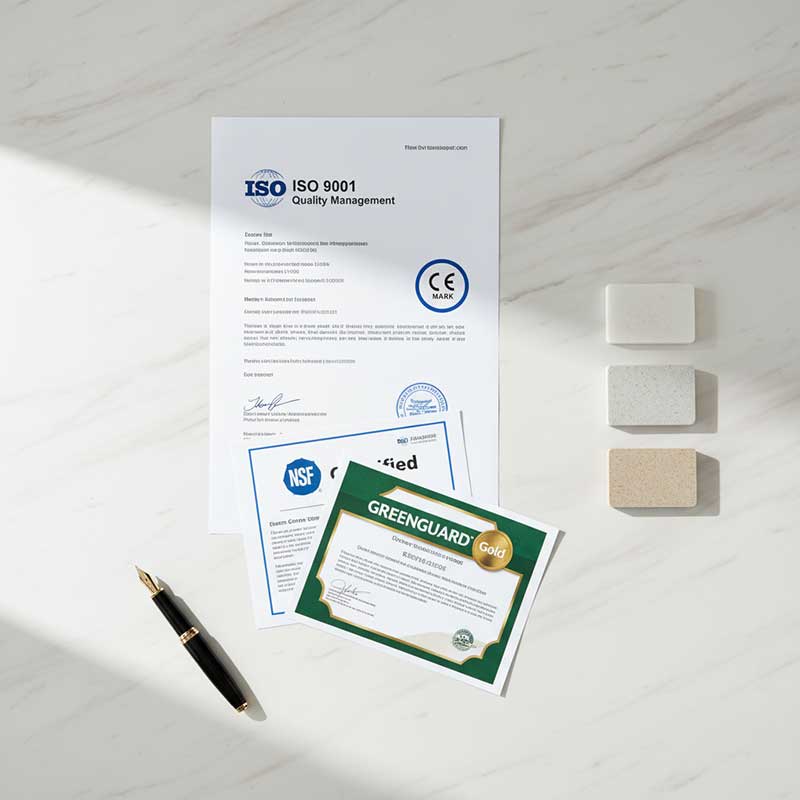
| Certification | Markets | What It Covers | Issuing Body | Validity | Our Status |
|---|---|---|---|---|---|
| CE Marking (EN 14618) | EU, EEA, Turkey, Switzerland | Construction product performance — fire reaction, mechanical strength, water absorption, slip resistance | EU Notified Body (e.g., TÜV, Bureau Veritas) | Continuous (with annual surveillance) | ✅ Certified |
| UKCA Mark | United Kingdom | Equivalent to CE for UK market post-Brexit | UK Approved Body | Continuous | ✅ In preparation |
| NSF/ANSI 51 | USA, Canada | Food equipment materials — tests for leaching of heavy metals and organic compounds | NSF International | Annual renewal + periodic testing | ✅ Certified |
| Greenguard Gold (UL 2818) | USA, Global | Low chemical emissions — VOCs, formaldehyde, total particles — for indoor air quality | UL (Underwriters Laboratories) | Annual renewal | ✅ Certified |
| SASO / SABER (PCoC + SCoC) | Saudi Arabia | Product conformity to Saudi technical regulations for building materials | SASO-accredited bodies (SGS, TÜV, Intertek) | PCoC: 1 year; SCoC: per shipment | ✅ Registered & Active |
| ISO 9001:2015 | Global | Quality management system — process control, customer satisfaction, continual improvement | Accredited registrar | 3-year cycle with annual surveillance | ✅ Certified |
| ISO 14001:2015 | Global | Environmental management system — waste reduction, emissions control, environmental compliance | Accredited registrar | 3-year cycle | ✅ Certified |
| ISO 45001:2018 | Global | Occupational health & safety management system | Accredited registrar | 3-year cycle | ✅ Certified |
| SGS / Intertek / BV Test Reports | Global | Third-party material property verification (hardness, flexural strength, chemical resistance, UV stability) | SGS, Intertek, Bureau Veritas, TÜV | Per test batch | ✅ Available on request |
| Radioactivity Test — Class A (GB 6566) | China, Asia, Middle East | Radioactive substance content (Ra-226, Th-232, K-40) within Class A limits for unrestricted interior use | China national testing laboratory | Per batch | ✅ Class A Compliant |
| EPD (Environmental Product Declaration) | EU, Nordics, USA (LEED) | Life-cycle environmental impact — carbon footprint, energy consumption, resource depletion | EPD programme operator (e.g., EPD International) | 5 years | 🟡 In development |
CE Marking — The Key to European Market Access
The CE marking process for engineered quartz stone involves systematic product testing, quality control documentation, and a Declaration of Performance (DoP) that communicates the product's performance characteristics to specifiers, contractors, and building authorities across the European Economic Area. The relevant harmonized standard is EN 14618:2009 (Agglomerated stone — Terminology and classification), and the corresponding test methods are drawn from the EN 14617 series (Test methods for agglomerated stone).
Key performance characteristics that must be declared include reaction to fire (typically tested to EN 13501-1, with most quartz products achieving A1 or A2-s1,d0 classification due to their mineral-dominant composition), water absorption at atmospheric pressure (EN 14617-1), flexural strength (EN 14617-2), abrasion resistance (EN 14617-4), and — where the product is intended for flooring — slip resistance. The DoP must reference a unique product identification code, the intended use, the harmonized technical specification (EN 14618), and the declared performance values for each essential characteristic.
NSF/ANSI 51 — Food Contact Safety for North America
The NSF/ANSI 51 standard ("Food Equipment Materials") establishes health effects criteria for materials used in commercial food service equipment, including countertop surfaces. Testing involves extracting samples in various food-simulating solutions (acidic, alkaline, organic) and analyzing the extracts for heavy metals (lead, cadmium, antimony, arsenic, among others) and organic migrants. Products that pass all extraction tests are certified as safe for use in food contact applications and can bear the NSF certification mark. For kitchen countertop applications in North America, NSF/ANSI 51 certification is virtually essential from a commercial perspective, even where not legally mandated.
Greenguard Gold — Indoor Air Quality Certification
UL's Greenguard Gold certification tests products for total VOC emissions, formaldehyde emissions, and total chemical emissions to ensure they meet stringent indoor air quality standards suitable for sensitive environments such as schools, hospitals, and offices. This certification is increasingly important for projects seeking LEED (Leadership in Energy and Environmental Design) credits under the US Green Building Council framework. Greenguard Gold certified quartz products contribute to LEED v4 credits in the Materials & Resources and Indoor Environmental Quality categories.
9. Landed Cost Calculation Guide
Understanding the full landed cost of imported quartz stone is essential for import business profitability. The "landed cost" represents the total cost of a product from the factory door in China to the buyer's warehouse in the destination country, including all transportation, insurance, customs duties, taxes, port charges, and inland logistics. Many first-time importers focus exclusively on the FOB or CIF price quoted by the supplier, only to discover that duties, taxes, and logistics costs can add 30–100% (or more, in extreme cases like Brazil or the US) to the product cost.

Landed Cost Formula
The general formula for calculating the landed cost of imported quartz stone is as follows. Start with the FOB price (the product cost at the origin port in China). Add ocean freight (typically USD 1,500–4,500 per 20-foot container depending on origin/destination route and current market rates), marine insurance (typically 0.2–0.5% of CIF value), and origin charges (terminal handling, documentation, container loading — typically USD 200–500 per container) to arrive at the CIF value at the destination port.
Next, apply the import duty on the CIF value (or the declared customs value, depending on the country's valuation method). In many countries, the customs value for duty assessment is the CIF value, though the United States and a few other countries use the FOB value (known as "transaction value"). Then apply any additional duties (anti-dumping duty, countervailing duty, safeguard duty, Section 301 tariff, etc.) on the applicable base. Then calculate VAT/GST on the combined CIF + duty value (in many countries, VAT is calculated on the duty-inclusive value, creating a compounding effect). Finally, add destination charges including terminal handling, customs broker fees, port storage, container drayage, and inland trucking to the final warehouse.
Example Calculation: Importing Quartz Slabs into Colombia
Consider a scenario where an importer in Bogotá, Colombia purchases one 20-foot container of 3cm quartz slabs at a FOB Xiamen price of USD 8,000. Ocean freight from Xiamen to Cartagena is approximately USD 3,200. Marine insurance is approximately USD 35. This gives a CIF Cartagena value of USD 11,235. Colombia's import duty for HS 6810.19 is approximately 10% (USD 1,124). Colombia's IVA (VAT) of 19% is applied on the CIF + duty value (USD 11,235 + USD 1,124 = USD 12,359), yielding IVA of approximately USD 2,348. Destination charges (port handling, customs broker, inland transport Cartagena → Bogotá) are approximately USD 1,800. The total landed cost in Bogotá is therefore approximately USD 15,507, representing a 94% premium over the FOB price. This example illustrates why accurate landed cost modeling is essential for setting competitive market prices while maintaining adequate margins.
10. Complete Documentation Checklist
Incomplete or incorrect documentation is the single most common cause of customs clearance delays, demurrage charges, and shipment rejection worldwide. The specific documents required vary by destination country, but the following checklist represents the comprehensive set of documents that should be prepared for every international quartz stone shipment. Ensuring that all documents are accurate, consistent (matching quantities, values, and descriptions across all documents), and available before the vessel arrives at the destination port is critical for smooth clearance.
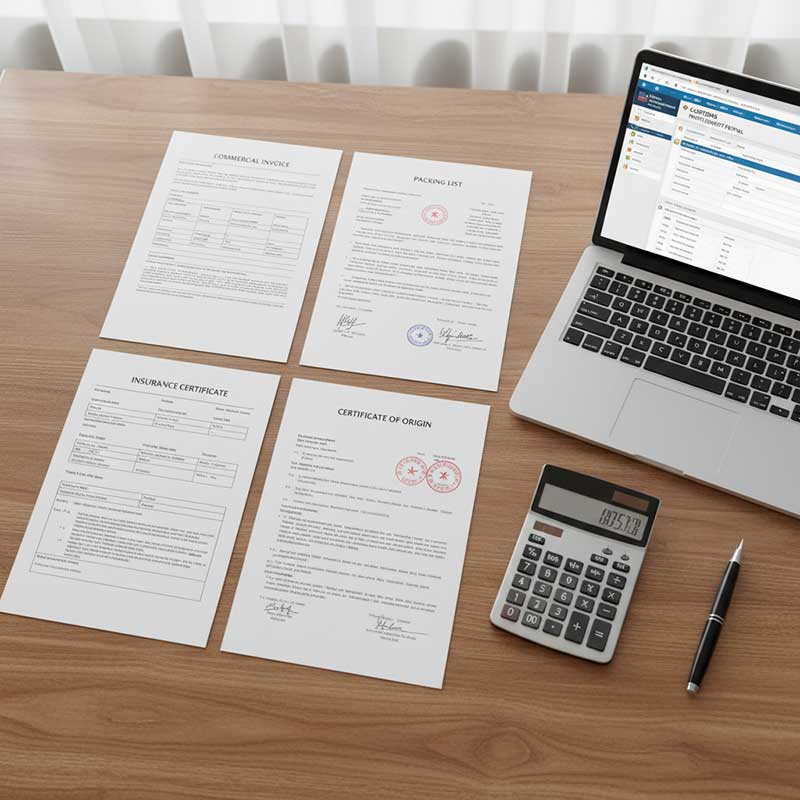
Commercial Documents (Required for All Shipments)
Commercial Invoice: The primary document for customs valuation. Must include seller and buyer names, addresses, and tax identification numbers; detailed product description including product name, color/design codes, HS code, and material composition; quantity (number of slabs, total square meters, and total pieces); unit price and total value in the agreed currency (typically USD); Incoterms (FOB, CIF, CFR, etc.) with named port; payment terms; and the invoice date and number. Some countries (e.g., Brazil, Argentina) have specific format requirements for commercial invoices — verify with the consignee before issuance.
Packing List: Details the physical packaging of the shipment. Must include the number of bundles/crates, dimensions and weight of each bundle, slab sizes within each bundle (length × width × thickness), gross weight and net weight per bundle, total gross and net weight of the entire shipment, and container number(s). The packing list must correspond exactly to the commercial invoice — any discrepancy will trigger customs scrutiny.
Bill of Lading (B/L): The transport document issued by the ocean carrier, serving as a receipt for goods, evidence of the contract of carriage, and — for original B/L — a document of title. Shipments can be released under original B/L (consignee must present original documents to collect goods), telex release (electronic release, more common for established trading relationships), or sea waybill (non-negotiable, fastest release). Ensure the consignee name and address on the B/L match the buyer's customs registration exactly.
Certificate of Origin (CoO): Required for claiming preferential tariff rates under free trade agreements, and often required for standard clearance as well. Non-preferential CoO (proving Chinese origin without FTA benefits) is issued by CCPIT. Preferential CoO forms include Form E (ACFTA for ASEAN), Form F (China-Chile FTA), China-Peru FTA CoO, China-Australia FTA CoO (ChAFTA), RCEP CoO, and others specific to each agreement. Always specify the correct form when requesting CoO issuance from CCPIT or the local customs authority.
Insurance Certificate: Required if goods are shipped on CIF or CIP terms. Must cover the shipment for at least 110% of the CIF value per UCP 600 / Incoterms convention. If the buyer arranges their own insurance (FOB or CFR terms), this document is not provided by the seller.
Compliance & Technical Documents
Material Test Report: Third-party laboratory test report (issued by SGS, Intertek, Bureau Veritas, TÜV, or equivalent accredited body) documenting the physical and mechanical properties of the quartz stone. Key tested properties include Mohs hardness (typically 6–7 for quartz), water absorption rate (typically <0.03%), flexural strength (typically >35 MPa for 20mm thickness), density (approximately 2.3–2.5 g/cm³), abrasion resistance, and scratch resistance. This report is requested by importers for quality verification and may be required by some customs authorities as supporting documentation.
Radioactivity Test Report: Certificate confirming the product meets Class A radioactivity limits per Chinese national standard GB 6566-2010 (Limits of Radionuclides in Building Materials). Class A products are approved for unrestricted use in all interior environments. This report is commonly requested for shipments to Asia, Middle East, and some European markets.
CE Declaration of Performance (DoP): Required for all shipments entering the EU/EEA for construction use. Must be in the language(s) of the destination member state(s).
NSF/ANSI 51 Certificate: Required/expected for US and Canadian shipments for food-contact surface applications.
SASO SABER Certificate (SCoC): Mandatory for every individual shipment to Saudi Arabia. Must be obtained before the vessel departs the origin port.
Fumigation Certificate (ISPM 15): Required when wooden packaging (crates, pallets, dunnage) is used. All wooden packaging must be heat-treated or methyl bromide-treated and bear the ISPM 15 stamp per the International Plant Protection Convention (IPPC) standards. Non-compliance can result in quarantine, re-treatment at the destination port (costly), or rejection of the entire shipment.
Optional but Recommended Documents
Pre-Shipment Inspection (PSI) Report: Independent third-party inspection at the factory before loading, verifying product quality, quantity, and packing against the purchase order specifications. Recommended for first-time buyers or large-value orders. Our factory welcomes PSI by any buyer-nominated inspection agency.
Factory Audit Report: Documentation from a third-party audit of the manufacturing facility (e.g., BSCI, SMETA, or custom audit by buyer's QC team). Provides assurance of manufacturing capability, quality management systems, and ethical practices.
Product Warranty Certificate: Formal warranty document specifying the warranty period (typically 10–15 years for residential use, 5–10 years for commercial use), covered defects, warranty claim process, and exclusions.
Installation & Care Manual: End-user documentation in the local language, covering installation guidelines, daily care and cleaning instructions, stain prevention, and do's and don'ts. Providing this document adds value for distributors and fabricators who serve end consumers.