
If you've ever had a quartz slab held up at customs because of a paperwork hiccup — or worse, discovered an unexpected 25% surcharge you didn't budget for — you already know that the "import" side of this business can be just as tricky as the "sales" side. Duty rates, HS code confusion, anti-dumping measures, mandatory product certifications… the list is long, and the stakes are real.
I put this guide together after years of fielding the same questions from distributors, contractors, and project developers across different markets. The goal is simple: give you a single, detailed reference that covers every major importing country so you can plan procurement with clarity rather than guesswork.
A quick disclaimer before we dive in: tariff rates and trade regulations change. What you're reading here reflects the best available information as of early 2025. Before you finalize any purchase, run the specific numbers by your customs broker. Think of this guide as your starting map — not a replacement for professional customs advice.
What This Guide Covers
- HS Code Classification — Getting It Right the First Time
- Anti-Dumping Duties — The Elephant in the Room
- Latin America — Brazil, Mexico, Colombia, Chile, Argentina, Peru
- Middle East & GCC — UAE, Saudi Arabia, Qatar, Kuwait, Oman
- Europe — EU (27 Members), United Kingdom, Turkey
- North America — United States, Canada
- Asia Pacific — Australia, India, Indonesia, Thailand, Philippines
- Africa — South Africa, Nigeria, Kenya, Egypt
- Certification Standards Explained in Plain Language
- The Documentation Checklist You'll Actually Use
- Practical Ways to Reduce Your Landed Cost
- Frequently Asked Questions
HS Code Classification — Getting It Right the First Time
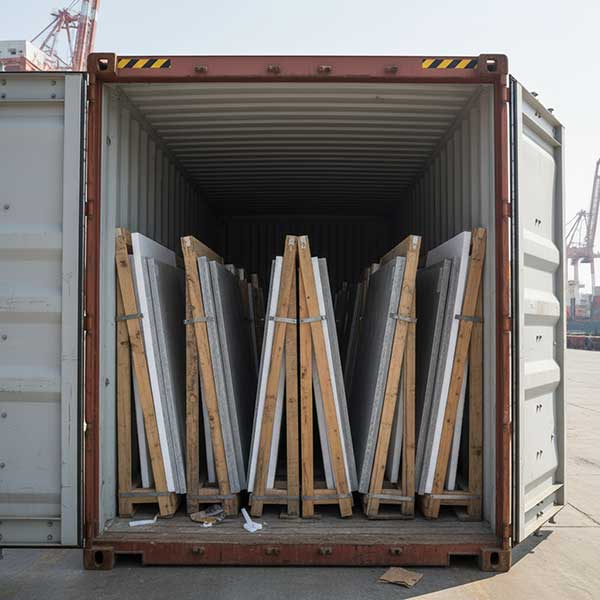
This is the part that trips people up more often than you'd expect. Engineered quartz stone — sometimes called agglomerated stone, composite quartz, or quartz surface — is made from roughly 90–94% crushed natural quartz crystals bonded together with 6–10% polymer resin, along with pigments and trace additives. That resin content is the key detail, because it pushes the product out of the "natural stone" category and into "artificial stone."
Under the Harmonized System (HS) maintained by the World Customs Organization, the correct heading is 6810 — "Articles of cement, of concrete or of artificial stone, whether or not reinforced." The specific subheading most commonly used for quartz slabs worldwide is:
Now, here's where it gets slightly messy. Different countries extend the HS code with additional digits for national classification. In the United States, for example, the full code is 6810.99.0010 — a statistical suffix that U.S. Customs introduced specifically to track quartz surface product imports in the context of anti-dumping enforcement. Brazil uses the NCM code 6810.99.00. China's export classification is 6810.99.0000. The first six digits (6810.99) are internationally harmonized; everything after that is country-specific.
Why does this matter to you? Because an incorrect HS code can trigger the wrong duty rate. I've seen cases where customs officers tried to classify quartz slabs under HS 6802 (worked monumental or building stone) or even HS 3920 (other plates/sheets of plastics), both of which can carry substantially different duty rates. If your broker classifies the product under 6802, you might end up paying a higher tariff in some countries — or a lower one in others, which sounds great until customs audits your import records and hits you with back-duties plus penalties.
The safest move: before your first shipment to any new market, get a binding tariff classification ruling from the destination country's customs authority. In the EU, this is called a Binding Tariff Information (BTI) ruling. In the U.S., you can request a ruling from U.S. Customs and Border Protection (CBP). These rulings are legally binding and eliminate ambiguity.
Anti-Dumping Duties — The Elephant in the Room
No discussion of quartz stone import costs is complete without addressing anti-dumping and countervailing duties. These are penalty tariffs that a government imposes when it determines that imported goods are being sold at prices below their fair market value (that's the "dumping" part) or benefit from unfair government subsidies (the "countervailing" part).
For engineered quartz, anti-dumping measures have fundamentally reshaped global trade patterns since 2018. Here's the current state of play:
United States — The Most Severe Measures Globally
In 2019, the U.S. International Trade Commission (USITC) imposed anti-dumping duties on quartz surface products from China after determining that Chinese imports were causing material injury to the domestic industry. The rates are staggeringly high:
U.S. Countervailing Duty on Chinese Quartz: 45.32% to 190.99%, on top of the anti-dumping duty.
Section 301 Tariff: An additional 25% tariff applies to Chinese quartz under the U.S.-China trade war measures (List 3).
Combined, the total duty burden for most Chinese quartz entering the U.S. exceeds 350% of the declared value.
To put that in perspective: a quartz slab with a CIF value of $30 per square meter would face additional duties of over $100 per square meter before it clears U.S. customs. This has, for all practical purposes, closed the U.S. market to direct Chinese quartz imports.
The ripple effects have been enormous. Indian quartz manufacturers — who face no anti-dumping duties in the U.S. — have massively expanded production capacity. Vietnam, Turkey, and Malaysia have also emerged as alternative supply sources for the American market. Some Chinese companies have invested in manufacturing facilities in these countries to maintain access to U.S. buyers, though CBP closely scrutinizes such arrangements for signs of circumvention.
European Union — Investigation in Progress
The European Commission launched an anti-dumping investigation into Chinese-origin quartz surface products. As of early 2025, the investigation is ongoing and provisional measures could be imposed. If the EU follows a similar trajectory to the U.S., provisional anti-dumping duties could range from 15% to 40% or higher, though the exact rates won't be known until the Commission publishes its preliminary findings.
For buyers who source Chinese quartz for European distribution, this is a development worth watching very closely. Some importers have been building up inventory ahead of any potential provisional measures, which is a sensible hedging strategy if you have the warehouse capacity and cash flow to support it.
Australia — Active Measures, Variable Rates
The Australian Anti-Dumping Commission has imposed measures on Chinese quartz surface products. Unlike the U.S., where rates are effectively prohibitive, Australia's rates vary significantly by exporter. Some cooperative Chinese manufacturers received lower individual rates that still allow commercially viable import, while non-cooperating exporters face higher residual rates. Check the Australian Anti-Dumping Commission database for the specific rate applicable to your supplier.
Countries Without Anti-Dumping Measures
The important thing to understand is that the vast majority of the world's quartz-importing markets have no anti-dumping measures on Chinese quartz. The entire Middle East, all of Latin America, most of Africa, Canada, and most of Southeast Asia remain fully open to Chinese quartz at normal tariff rates. These markets are where the growth opportunity lies for Chinese manufacturers, and where buyers can access the most competitive pricing globally.
Latin America
 Brazil
HS Code (NCM)
6810.99.00
Import Duty (Imposto de Importação)
10.8% — Mercosul Common External Tariff
IPI (Federal Excise Tax)
5%
ICMS (State Sales Tax)
17%–19% depending on state
PIS/COFINS (Federal Social Contributions)
11.75% combined
Anti-Dumping Duty
None
Required Certifications
ANVISA (food contact surfaces), INMETRO (product quality marking)
Transit Time from China
30–35 days to Santos or Paranaguá
ANVISA certification is non-negotiable if the product will be used in kitchens, restaurants, or any food preparation context. Your supplier should be able to provide test reports covering heavy metal migration that meet ANVISA Resolution RDC 105/99 requirements. Also, all documentation accompanying the shipment (invoices, packing lists, certificates) must be in Portuguese or accompanied by sworn translations — this is a requirement that catches first-time exporters to Brazil off guard every time.
One more practical tip: the port of Santos handles the majority of building material imports into Brazil. If your final destination is São Paulo or the southeastern region, Santos is the logical choice. For southern states like Paraná or Santa Catarina, Paranaguá may offer better inland logistics.
 Mexico
HS Code
6810.99.99
Import Duty (IGI)
10%
VAT (IVA)
16%
Anti-Dumping Duty
None
Required Certifications
NOM labeling compliance, COFEPRIS (food contact)
Transit Time from China
25–30 days to Manzanillo or Lázaro Cárdenas
NOM (Norma Oficial Mexicana) compliance focuses primarily on labeling. All product packaging must include Spanish-language markings that identify the product type, material composition, country of origin, and the name and address of the Mexican importer. This isn't difficult to comply with, but your packaging needs to be set up correctly before the container ships — you can't easily relabel slabs at the Mexican port.
For first-time imports, be prepared for the "previo" process — a physical customs inspection that Mexican authorities routinely require for initial shipments from a new supplier. This can add 3–5 business days to your clearance timeline. After you've established an import history, subsequent shipments typically clear faster.
Mexico's geographic proximity to the United States has also made it a strategic distribution hub. Some importers bring Chinese quartz into Mexico and then distribute it into Central American markets.

 Colombia
HS Code
6810.99.00.00
Import Duty
10% — CAN Common Tariff
VAT (IVA)
19%
Anti-Dumping Duty
None
Transit Time from China
28–32 days to Buenaventura or Cartagena
Buenaventura on the Pacific coast is the natural port for Chinese goods. Cartagena on the Caribbean side is an alternative, especially if your end market is in the northern part of the country. Inland logistics in Colombia can be challenging due to mountainous terrain, so factor in domestic freight costs when comparing CIF prices between ports.
Colombia is a member of the Andean Community (CAN), which means goods imported into Colombia can potentially be re-exported to Ecuador, Peru, or Bolivia under preferential terms.
 Chile
Chile
HS Code
6810.9900
Import Duty (MFN Rate)
6%
Import Duty with China-Chile FTA
0% — with valid Form F Certificate of Origin
VAT (IVA)
19%
Anti-Dumping Duty
None
Transit Time from China
25–30 days to San Antonio or Valparaíso
The catch: you must have a valid Form F Certificate of Origin. This document is issued by Chinese customs authorities (specifically, the local customs office where the exporter is registered). Without the Form F, Chilean customs will apply the standard 6% MFN rate instead. Make sure your Chinese supplier applies for the Form F well before the shipment date — processing usually takes 3–5 business days.
Chile's construction market is sophisticated and quality-conscious. Buyers here expect quartz that meets international standards, so having CE or NSF test reports (even if not legally required in Chile) can strengthen your market position.
 Argentina
Import Duty
10.8% — Mercosul CET
Statistical Tax (Tasa Estadística)
3%
VAT (IVA) + Advance VAT
21% + 20% advance perception
Advance Income Tax Perception
6%
Anti-Dumping Duty
None
Transit Time from China
35–40 days to Buenos Aires
On top of the already-high tax stack (import duty + statistical tax + IVA + advance perceptions can push the total cost premium to 70–80% above CIF), the volatile exchange rate between the Argentine peso and the U.S. dollar creates pricing uncertainty. Many Argentine importers negotiate pricing in USD and try to lock in exchange rates in advance.
That said, the market itself is real. Buenos Aires has a strong kitchen renovation culture, and quartz has been gaining traction over granite. If you can work with a local importer who knows how to navigate the bureaucratic and financial complexities, Argentina can be a profitable market.
 Peru
Peru
Import Duty (MFN Rate)
6%
Import Duty with China-Peru FTA
0% — with preferential Certificate of Origin
VAT (IGV)
18%
Anti-Dumping Duty
None
Transit Time from China
28–32 days to Callao
Latin America Summary Table
| Country | Import Duty | FTA with China | VAT | Anti-Dumping |
|---|---|---|---|---|
| Brazil | 10.8% | No | 17–19% ICMS + others | None |
| Mexico | 10% | No | 16% | None |
| Colombia | 10% | No | 19% | None |
| Chile | 0% (FTA) | Yes — Form F | 19% | None |
| Argentina | 10.8% | No | 21% + perceptions | None |
| Peru | 0% (FTA) | Yes | 18% | None |
Middle East & GCC

 Saudi Arabia
HS Code
6810.99
Import Duty
5% — GCC Unified Customs Tariff
VAT
15%
Anti-Dumping Duty
None
Mandatory Certifications
SASO Certificate of Conformity (CoC) via SABER platform
Transit Time from China
18–22 days to Jeddah Islamic Port or Dammam
The certification process is the main area where importers need to plan carefully. Since 2019, Saudi Arabia has required all regulated products to go through the SABER digital platform. The process works like this: (1) the exporter registers the product on SABER and uploads supporting documentation including lab test reports; (2) an accredited Conformity Assessment Body reviews the submission and issues a Product Certificate (PC); (3) for each shipment, a Shipment Certificate (SC) is issued through SABER. Without a valid SC, the shipment will be rejected at the Saudi port.
The entire SABER/SASO process typically takes 7–15 business days once all documentation is ready. I'd recommend starting the process at least three weeks before your planned shipping date. The accredited inspection bodies that can issue SASO CoC for building materials include SGS, Intertek, Bureau Veritas, TÜV, and several others.
One more detail: Saudi Arabia's 15% VAT is the highest in the GCC, so factor that into your pricing when comparing the Saudi market against UAE or Qatar.
 United Arab Emirates
Import Duty
5% — GCC Unified Customs Tariff
VAT
5%
Anti-Dumping Duty
None
Key Certifications
ECAS (Emirates Conformity Assessment Scheme), ESMA product registration
Transit Time from China
15–18 days to Jebel Ali
The UAE's 5% VAT (introduced in 2018) is the lowest in the GCC, which makes the total landed cost very competitive: 5% duty + 5% VAT means roughly a 10–12% premium over CIF. For goods transiting through Jebel Ali Free Zone (JAFZA) that are destined for re-export, no customs duty is assessed — a major advantage for regional distribution strategies.
The Emirates Authority for Standardization and Metrology (ESMA) oversees product quality standards. While ECAS certification requirements are generally less onerous than Saudi Arabia's SABER system, building material importers should verify whether their specific product category requires an ECAS certificate before shipment.
 Qatar
Qatar
Import Duty
5% — GCC Unified Customs Tariff
VAT
None (as of early 2025)
Anti-Dumping Duty
None
Key Certifications
QS (Qatar Standards) compliance mark
Transit Time from China
16–20 days to Hamad Port
 Kuwait
Import Duty
5% — GCC Unified Customs Tariff
VAT
None (as of early 2025)
Anti-Dumping Duty
None
Transit Time from China
18–22 days to Shuwaikh Port
 Oman
Oman
Import Duty
5% — GCC Unified Customs Tariff
VAT
5%
Anti-Dumping Duty
None
Transit Time from China
16–20 days to Sohar Port or Sultan Qaboos Port
GCC Summary Table
| Country | Import Duty | VAT | Key Certification | Anti-Dumping |
|---|---|---|---|---|
| Saudi Arabia | 5% | 15% | SASO/SABER (mandatory) | None |
| UAE | 5% | 5% | ECAS/ESMA | None |
| Qatar | 5% | None | QS mark | None |
| Kuwait | 5% | None | KSQC | None |
| Oman | 5% | 5% | Oman Standards | None |
| Bahrain | 5% | 10% | BQA | None |
Europe
European Union (27 Member States)
HS Code
6810 99 00
Import Duty (MFN)
3.7%
VAT
19%–27% depending on member state
Anti-Dumping Duty (China origin)
Under investigation — provisional measures possible
Mandatory Certifications
CE marking (EN 15286), REACH compliance
Transit Time from China
30–35 days to Rotterdam, Hamburg, or Piraeus
The cloud on the horizon is the anti-dumping investigation. The European Commission's Directorate-General for Trade initiated proceedings based on a complaint from EU-based quartz manufacturers. If the investigation results in the imposition of provisional anti-dumping duties, these could add anywhere from 15% to 40%+ to the cost of Chinese quartz. The timeline for provisional measures is typically 6–9 months from the initiation of the investigation. Buyers who rely heavily on Chinese quartz for the European market should be developing contingency plans.
CE marking is mandatory. Under the Construction Products Regulation (CPR), any agglomerated stone product placed on the EU market for construction use must carry CE marking based on testing to EN 15286:2013 — the harmonized European standard for agglomerated stone slabs and tiles. The testing covers flexural strength, water absorption, abrasion resistance, frost resistance (if the product will be used outdoors), and dimensional tolerances. The manufacturer must prepare a Declaration of Performance (DoP) for each product type and affix the CE mark to the product, its packaging, or the commercial documents. Testing should be conducted by a notified body recognized under the CPR.
REACH compliance: The EU's REACH regulation requires that any substance of very high concern (SVHC) present in the product above 0.1% by weight must be disclosed. For quartz surfaces, the primary concern relates to respirable crystalline silica dust generated during fabrication — this is more of a workplace safety issue than an import customs issue, but European buyers increasingly request REACH compliance documentation as part of their procurement process. A well-prepared MSDS (Material Safety Data Sheet) covering the quartz slab composition satisfies most buyers' due diligence requirements.
Major entry ports: Rotterdam (Netherlands) handles the highest volume of Chinese quartz imports into Europe. Hamburg (Germany) and Piraeus (Greece) are also significant. Piraeus has become increasingly important since the Chinese company COSCO acquired a majority stake in the port, leading to expanded capacity and competitive container handling fees.

 United Kingdom
Import Duty
3.7% — UK Global Tariff (UKGT)
VAT
20%
Anti-Dumping Duty
None — UK is independent of EU trade defense measures
Key Certifications
UKCA marking (or CE marking during transition period)
Transit Time from China
32–37 days to Felixstowe or Southampton
On the certification side, the UK has been transitioning from CE to UKCA (UK Conformity Assessment) marking. However, the UK government has repeatedly extended the deadline for accepting CE marking on construction products. As of early 2025, CE marking based on EU harmonized standards remains accepted. Verify the current status with the UK government's UKCA guidance page before shipping.
The UK is a large and mature quartz market — one of Europe's biggest by value. London, the Southeast, and the major metro areas drive demand. The market is competitive, with supply from China, India, Spain, Turkey, and domestic UK fabricators.
 Turkey
Import Duty
4.2% (MFN)
VAT (KDV)
20%
Anti-Dumping Duty
None
Key Certifications
TSE (Turkish Standards Institute) compliance, CE accepted
Transit Time from China
22–28 days to Mersin or Ambarlı (Istanbul)
North America
 United States
HS Code
6810.99.0010
Base Import Duty (MFN)
3.7%
Section 301 Tariff (China origin)
25%
Anti-Dumping Duty (China origin)
265.81% – 336.69%
Countervailing Duty (China origin)
45.32% – 190.99%
Key Certifications
NSF/ANSI 51 (food contact), UL GREENGUARD (indoor air quality)
Transit Time from China
18–25 days to Long Beach; 30–35 days to Savannah/Newark
U.S. Customs and Border Protection has an entire enforcement unit dedicated to quartz surface products. They use country-of-origin audits, factory verification visits, import pattern analysis, and intelligence sharing with other agencies to detect circumvention. Multiple enforcement actions have been taken against importers and intermediaries found to be routing Chinese quartz through third countries.
For Chinese manufacturers who want to participate in the U.S. market, the only legitimate paths are: (1) establishing genuine manufacturing operations in a non-affected country such as India, Vietnam, Turkey, or Malaysia; or (2) licensing technology and designs to independent manufacturers in those countries. Several large Chinese quartz companies have already taken this route.
NSF/ANSI 51 certification is the de facto standard for quartz countertops in the U.S. food-contact context. While it's not a federal import requirement, virtually all major distributors, fabricators, and commercial buyers expect it. NSF International conducts the testing and certification, which includes evaluation of the quartz surface's potential to leach harmful substances when in contact with food. The certification requires annual factory audits and periodic re-testing.
UL GREENGUARD certification evaluates indoor air quality impact — whether the quartz slab emits volatile organic compounds (VOCs) above acceptable thresholds. This is increasingly important for LEED-certified green building projects and for high-end residential specification.
 Canada
Import Duty (MFN)
3.5%
GST
5%
Provincial Sales Tax
0%–10% depending on province (or HST applies)
Anti-Dumping Duty
None currently in effect
Key Certifications
CSA standards (voluntary), NSF/ANSI 51 (recommended)
Transit Time from China
15–18 days to Vancouver; 30–35 days to Montreal or Toronto (via Panama)
However, Canadian importers should be aware that the Canada Border Services Agency (CBSA) monitors Chinese quartz import volumes closely, and a domestic industry petition could trigger an anti-dumping investigation at any time. If the Canadian Quartz Surface Products Alliance or a similar industry group files a complaint, the CBSA would be obligated to investigate. This is not imminent as of early 2025, but it's a risk factor worth monitoring.
Vancouver is the fastest and most economical port for Chinese quartz on the West Coast — transit times of 15–18 days are common. For eastern Canadian destinations (Ontario, Quebec, Atlantic provinces), goods can be routed through the Panama Canal to Montreal, or shipped to Vancouver and moved by rail across the country. The Vancouver-to-Toronto rail option typically takes 5–7 days and is competitive with the all-water route through Panama.
Asia Pacific
 Australia
Import Duty (MFN)
5%
Import Duty with ChAFTA
0% — with China-Australia FTA Certificate of Origin
GST
10%
Anti-Dumping Duty (China origin)
Active — variable rates by exporter
Key Certifications
Compliance with AS/NZS standards; WaterMark for wet-area applications
Transit Time from China
12–18 days to Melbourne, Sydney, or Brisbane
Practical advice: if you're importing Chinese quartz into Australia, source from a manufacturer who has an established, cooperative rate with the Anti-Dumping Commission. Ask your supplier for their specific exporter rate and verify it independently. This can make the difference between a commercially viable landed cost and an uncompetitive one.
On the safety and health front, Australia has been at the forefront of regulating crystalline silica dust exposure during quartz fabrication. Safe Work Australia has issued strict workplace exposure standards for fabricators. While this doesn't directly affect the import customs process, it has influenced market dynamics — some Australian fabricators have shifted to alternative surface materials, and regulatory uncertainty has weighed on quartz demand in some segments.
 India
India
Basic Customs Duty (BCD)
10%
Social Welfare Surcharge
10% of BCD (i.e., 1% effective)
IGST
18%
Anti-Dumping Duty
None on quartz slabs (as of early 2025)
Key Certifications
BIS (Bureau of Indian Standards) — not yet mandatory for quartz slabs
Transit Time from China
10–15 days to JNPT (Mumbai), Chennai, or Mundra
Chinese quartz enters India primarily in the economy-to-mid segment, where it competes on price against Indian-made product. The 10% BCD plus 18% IGST creates a landed cost premium of roughly 30–32% over CIF, which narrows the price advantage. BIS certification for quartz slabs is not currently mandatory, but the Indian government has been expanding the list of products requiring BIS certification, and quartz surfaces could be added in the future. If that happens, it would create an additional compliance requirement and potentially a barrier for smaller exporters.
Mundra Port in Gujarat has been gaining share as an entry point for building materials, offering competitive handling charges and good connectivity to the major quartz-consuming markets in western India.
 Indonesia
Import Duty (MFN)
5%
Import Duty with ACFTA
0% — with valid Form E Certificate of Origin
VAT (PPN)
11%
Anti-Dumping Duty
None
Transit Time from China
8–12 days to Tanjung Priok (Jakarta)
SNI (Standar Nasional Indonesia) certification may be required for certain categories of building materials. As of early 2025, quartz slabs are not on the mandatory SNI list, but importers should check with the Indonesian Ministry of Industry for any updates. Also note that Indonesia applies income tax prepayments on imports (PPh 22), typically 2.5% for importers with an Angka Pengenal Impor (API), which is creditable against annual income tax.
 Thailand
Import Duty with ACFTA
0% — with Form E
VAT
7%
Anti-Dumping Duty
None
Transit Time from China
5–10 days to Laem Chabang
 Philippines
Import Duty with ACFTA
0% — with Form E
VAT
12%
Anti-Dumping Duty
None
Transit Time from China
5–8 days to Manila (MICT)
Africa
 South Africa
Import Duty
10%
VAT
15%
Anti-Dumping Duty
None
Key Certifications
SABS (South African Bureau of Standards) — recommended but not always mandatory
Transit Time from China
20–25 days to Durban or Cape Town
Durban is the primary entry port for goods destined for Johannesburg and the Gauteng province (South Africa's economic heartland). Cape Town serves the Western Cape market. Port efficiency has been a challenge — Transnet's port operations have faced congestion and efficiency issues, so build in some buffer time for port clearance.
 Nigeria
Import Duty (ECOWAS CET)
20%
VAT
7.5%
CISS Levy
1% (Comprehensive Import Supervision Scheme)
Mandatory Certification
SONCAP (Standards Organisation of Nigeria Conformity Assessment Programme)
Transit Time from China
25–30 days to Lagos (Apapa or Tin Can Island)
SONCAP certification is mandatory and non-negotiable. The process has two stages: (1) Before shipment, the exporter must obtain a Product Certificate (PC) from an accredited inspection/certification body (SGS, Intertek, Bureau Veritas, CCIC, etc.). This involves submitting product documentation and potentially a factory audit or product testing. (2) Upon arrival in Nigeria, the PC is used to obtain the SONCAP Certificate through the Standards Organisation of Nigeria. Without SONCAP, goods will be detained at the port.
The biggest practical challenge in Nigeria is port congestion. Lagos ports are notoriously congested, and customs clearance can take 2–4 weeks in peak periods. Budget for demurrage and storage charges. The Lekki Deep Sea Port, which opened recently, may gradually alleviate some of this congestion.
 Kenya
Kenya
Import Duty (EAC CET)
25%
VAT
16%
IDF Fee (Import Declaration Fee)
3.5% of CIF value
Mandatory Certification
PVoC (Pre-Export Verification of Conformity) — inspection in China required
Transit Time from China
22–28 days to Mombasa
The PVoC (Pre-Export Verification of Conformity) is a mandatory pre-shipment inspection that must be conducted in China by an approved body. Kenya Bureau of Standards (KEBS) authorizes several inspection companies including SGS, Bureau Veritas, Intertek, and China Certification & Inspection Group (CCIC). The inspection verifies that the product meets applicable standards and the documentation is accurate. Allow 5–10 business days for the PVoC inspection and certificate issuance.
Mombasa is the primary entry port, from where goods are transported by road or the Standard Gauge Railway (SGR) to Nairobi. Mombasa also serves as the entry point for goods destined for Uganda, Rwanda, and other East African markets.
 Egypt
Egypt
Import Duty
20–30% (verify specific tariff line with Egyptian customs)
VAT
14%
Anti-Dumping Duty
None on quartz slabs
Key Certifications
EOS (Egyptian Organization for Standardization) compliance
Transit Time from China
18–24 days to Alexandria or Port Said
Certification Standards Explained in Plain Language
One of the most common questions I get from first-time importers is: "Which certifications do I actually need?" The answer depends entirely on your destination market, but here's a practical rundown of the major standards you'll encounter:
CE Marking — European Union
Required for construction products sold in any of the 27 EU member states. For quartz slabs, the applicable standard is EN 15286:2013 — "Agglomerated stone — Slabs and tiles for finishings (wall, floor, stair, etc.)." Testing covers physical properties like flexural strength (minimum 20 MPa for wall finishings, 30 MPa for flooring), water absorption (typically <0.1% for quality quartz), abrasion resistance, and dimensional tolerances. The manufacturer prepares a Declaration of Performance (DoP) that links the product to the standard and assigns it a CE mark. You don't need a "certificate" from a third party in most cases — the CE marking system for agglomerated stone uses System 4 AVCP (Assessment and Verification of Constancy of Performance), which means the manufacturer can self-declare based on initial type testing by a notified body.
NSF/ANSI 51 — United States & Canada
This standard certifies that a material is safe for direct food contact. NSF International is the primary certification body. The testing protocol evaluates whether the quartz surface leaches harmful substances (heavy metals, volatile compounds) when exposed to food simulants. Certification requires not just a one-time test but ongoing annual factory audits and periodic re-testing. While not a legal import requirement in all jurisdictions, it's functionally mandatory for commercial applications — health inspectors, architects, and general contractors routinely specify NSF 51 compliance for kitchen and food-service countertops.
SASO CoC / SABER — Saudi Arabia
The Saudi Standards, Metrology and Quality Organization mandates a Certificate of Conformity for regulated products. Since 2019, all CoC applications are processed through the SABER digital platform. The process: register your product category on SABER → upload supporting documentation (test reports, product specs, factory audit report if required) → an accredited Conformity Assessment Body (CAB) reviews and issues a Product Certificate (PC) → for each shipment, request a Shipment Certificate (SC) through SABER. The SC number is required on all shipping documents. Plan for 7–15 business days processing time, and don't wait until the last minute — documentation issues can cause delays.
ANVISA — Brazil
Brazil's national health surveillance agency regulates materials in contact with food. If your quartz countertops will be used in kitchens, restaurants, or food processing environments, they must comply with applicable ANVISA resolutions covering migration limits for heavy metals and other potentially harmful substances. Testing is typically conducted by accredited Brazilian laboratories or by recognized international labs whose reports ANVISA accepts. This is not a customs clearance requirement (you can import the slabs without ANVISA), but it is a market access requirement — Brazilian fabricators and end-users will expect compliance documentation.
SONCAP — Nigeria
Nigeria's conformity assessment programme is a customs clearance requirement — you cannot clear goods through Nigerian customs without a valid SONCAP certificate. The process involves pre-shipment inspection in the country of origin, and the Product Certificate must be obtained before the goods leave port. Budget 10–15 business days for the full SONCAP process and work with one of the SON-approved inspection bodies.
PVoC — Kenya and East Africa
Pre-Export Verification of Conformity is Kenya's pre-shipment inspection regime for regulated products. It functions similarly to Nigeria's SONCAP — an accredited inspection body must inspect the goods and issue a Certificate of Conformity (CoC) before shipment. The CoC is required for customs clearance at Mombasa port. Uganda and Tanzania have similar PVoC requirements under the East African Community framework.
UL GREENGUARD — North America (Voluntary)
GREENGUARD certification, administered by UL (Underwriters Laboratories), evaluates whether building products emit volatile organic compounds (VOCs) at levels that could affect indoor air quality. There are two tiers: GREENGUARD Certified and GREENGUARD Gold (the more stringent standard, suitable for schools and healthcare facilities). This certification is voluntary but increasingly specified for green building projects pursuing LEED certification. Having GREENGUARD Gold can be a meaningful competitive differentiator, especially in the commercial specification market.

The Documentation Checklist You'll Actually Use
Regardless of which country you're importing into, there's a core set of documents that every quartz stone shipment needs. Beyond these, some countries require additional country-specific documents (like SASO CoC for Saudi Arabia or SONCAP for Nigeria), which are covered in the country sections above.
Core Documents for Every Shipment
A Few Documentation Pitfalls to Avoid
HS code inconsistency: Make sure the HS code on your commercial invoice matches the HS code on the Certificate of Origin and the customs declaration. Any discrepancy — even a minor difference in the national-level digits — can trigger a customs review and delay clearance by days or weeks.
Invoice valuation: Customs authorities in many countries use reference pricing databases to flag invoices they suspect of undervaluation. If your declared CIF value is significantly below the prevailing market price for quartz slabs, expect questions and potentially an upward adjustment of the customs value (which increases the duty you pay). Accurate, honest invoicing is the safest approach.
Certificate of Origin validity: Preferential COs (Form E, Form F, etc.) have strict formatting and signature requirements. A Form E with an incorrect HS code, an unsigned box, or a stamp that doesn't match the issuing authority's registered stamp will be rejected by the importing country's customs — and you'll lose the preferential duty rate. Double-check every detail before the CO is issued.
ISPM 15 compliance: Quartz slabs are almost always shipped in wooden crates or on wooden pallets. Under ISPM 15 (International Standards for Phytosanitary Measures No. 15), all solid wood packaging used in international trade must be heat-treated or fumigated and carry the IPPC stamp. If your crates don't have this stamp, the destination country's quarantine authority can reject the shipment or require fumigation at the port — both of which are expensive and time-consuming.
Practical Ways to Reduce Your Landed Cost
After working through all the tariff rates and certification requirements, the natural question is: "How do I bring these costs down?" Here are some strategies that actually work:
Use Free Trade Agreements — Every Time They Apply
This is the single biggest cost-saving lever for many markets. China has FTAs with Chile (Form F), Peru, ASEAN countries (Form E), Australia (ChAFTA), New Zealand, South Korea, Pakistan, and others. The duty savings can be the entire import duty — from 5–6% down to 0%. Yet a surprising number of importers fail to use these agreements, either because they don't know about them or because the supplier doesn't proactively offer the preferential Certificate of Origin. Always ask your supplier: "Can you provide Form E / Form F / preferential CO for our destination country?" If they can, and the product qualifies under the FTA's rules of origin (which quartz manufactured in China almost always does), you should use it on every single shipment.
Ship Full Container Loads — Always
The economics of LCL (Less than Container Load) shipping for heavy stone products are terrible. Quartz slabs are dense and heavy — a single slab can weigh 50–80 kg depending on size and thickness. LCL handlers charge per cubic meter or per ton, with minimum charges that rapidly eat into your margin. A standard 20ft container holds approximately 80–120 slabs (depending on thickness), weighing around 17–22 metric tons gross. A 40ft container is rarely used for quartz slabs because the weight hits the container's maximum payload limit before the volume is filled. Plan your orders to fill complete 20ft containers. If your order is smaller than a full container, consider consolidating orders for multiple colors or thicknesses.
Time Your Shipments to Avoid Peak Freight Season
Ocean freight rates from China follow a predictable seasonal pattern. Rates typically bottom out in January through March (post-Chinese New Year lull) and peak from July through October (pre-holiday inventory build-up in Western markets). The spread between low-season and peak-season rates can be 20–40% or more. If you have flexibility on delivery timing, scheduling your production and shipment during the January-April window can save meaningful money on freight. As a bonus, booking containers is easier during off-peak periods — less risk of rolling (your container being bumped to the next vessel).
Negotiate CIF Terms for Your First Orders
FOB (Free on Board) pricing is standard in the Chinese quartz export trade, and experienced importers who have their own freight forwarding relationships often prefer it because they can negotiate better freight rates independently. But if you're a newer buyer or don't have established freight contracts, CIF (Cost, Insurance, and Freight) pricing is usually more cost-effective because the Chinese manufacturer's freight forwarding relationships and shipping volume typically get better rates than you could negotiate alone. CIF also provides total landed-cost transparency for budgeting purposes — the price you're quoted is the price you'll pay through to your destination port.
Get Your HS Code Right From the Start
I've put this last but it could easily be first. A wrong HS code doesn't just risk an incorrect duty rate — it can trigger red flags in customs systems that lead to physical inspections, delays, and even penalties. Invest the time and modest cost to get a formal classification opinion from a licensed customs broker or (even better) a binding tariff ruling from the customs authority of your destination country. This is a one-time effort that protects you on every subsequent shipment.
Frequently Asked Questions
What HS code should I use for engineered quartz stone slabs?
The internationally harmonized code is 6810.99 — "Other articles of artificial stone." The first six digits are consistent worldwide; the additional digits vary by country. In the U.S., use 6810.99.0010. In Brazil, the NCM code is 6810.99.00. Always verify the full national-level code with your customs broker before your first shipment to a new market, because a handful of countries may use slightly different subheadings under the 6810 heading.
Is it still possible to import Chinese quartz into the United States?
Technically, there's no import ban. But the combined anti-dumping duties (265–337%), countervailing duties (45–191%), and Section 301 tariff (25%) make it economically impossible for virtually any Chinese exporter. The total duty burden exceeds 300% of the product value. U.S. buyers should source from India, Vietnam, Turkey, Spain, or domestic manufacturers. Attempting to route Chinese quartz through a third country to evade duties (transshipment) is illegal and aggressively investigated by CBP.
Which countries offer zero import duty on Chinese quartz through FTAs?
Key FTA-linked zero-duty destinations include Chile (via China-Chile FTA, Form F), Peru (via China-Peru FTA), ASEAN member states — Indonesia, Thailand, Philippines, Malaysia, Vietnam, etc. (via ACFTA, Form E) — and Australia (via ChAFTA, though anti-dumping duties may apply on top). In each case, a valid preferential Certificate of Origin must be presented at customs. Without the CO, the standard MFN duty rate applies.
How many quartz slabs fit in a 20-foot shipping container?
For standard jumbo slabs (3000 × 1400 mm), expect approximately 100–110 slabs at 20mm thickness, or 70–80 slabs at 30mm thickness. The gross weight will be approximately 18–22 metric tons. Slabs are typically packed vertically in A-frame wooden crates, with foam separators between each slab. Your supplier should provide a detailed loading plan with exact counts, weights, and crate dimensions before you confirm the order.
How long does SASO/SABER certification take for Saudi Arabia?
If all documentation is properly prepared (test reports, product specifications, factory information), the SABER process typically takes 7–15 business days from product registration to Shipment Certificate issuance. I'd recommend starting the process at least 3 weeks before your planned shipping date to account for any documentation revisions. First-time registrations may take slightly longer than renewals.
Do I need CE marking to sell quartz in the European Union?
Yes, if the product is being placed on the EU market for construction use (which covers virtually all quartz slab applications). CE marking under the Construction Products Regulation requires testing to EN 15286:2013 and a manufacturer-issued Declaration of Performance (DoP). Without CE marking, the product cannot legally be sold for construction purposes in any EU member state. The initial type testing typically costs €2,000–5,000 and takes 4–8 weeks through a notified body.
What's the difference between Form E and Form F Certificates of Origin?
Form E is the preferential Certificate of Origin issued under the ASEAN-China Free Trade Agreement (ACFTA). It enables 0% or reduced duty on goods exported from China to ASEAN member states (Indonesia, Thailand, Philippines, Malaysia, Vietnam, Singapore, etc.). Form F is the equivalent document under the China-Chile FTA. Both are issued by Chinese customs authorities (specifically, the local Inspection and Quarantine Bureau or its successor) and must be presented to the importing country's customs to claim the preferential rate. The key difference is simply the FTA they correspond to.
What happens if my quartz shipment arrives without the required certification?
It depends on the country. In Saudi Arabia, a shipment without a valid SASO CoC will be refused entry and either returned to origin or destroyed. In Nigeria, goods without SONCAP will be held at the port — you may be able to arrange retrospective certification, but it involves significant delays and additional cost. In the EU, quartz without CE marking can technically be imported (customs won't stop it at the border), but it cannot legally be sold for construction use within the EU — meaning your buyers can't use it, which defeats the purpose. The lesson: always complete certification before the container ships.
Are anti-dumping duties likely to spread to more countries?
It's possible but not inevitable. Anti-dumping investigations are typically initiated when domestic producers file a formal complaint with their country's trade authority. Markets where domestic quartz production is growing — such as India, Turkey, or Brazil — are theoretically at risk, though none of these countries have initiated investigations as of early 2025. The EU investigation is the most significant current development. Canada is also worth watching. For markets with no domestic quartz production (most of the GCC, most of Africa, smaller Latin American countries), anti-dumping measures are unlikely because there's no domestic industry to "protect."
Can I import quartz slabs into the EU at the preferential rate if I have a supplier in Turkey?
Turkey has a customs union with the EU, but the preferential treatment under the customs union only applies to goods originating in Turkey, not to goods merely transshipped through Turkey. If the quartz slabs are genuinely manufactured in Turkey (Turkish origin), they can enter the EU at 0% duty under the customs union. If they were manufactured in China and only shipped through or stored in Turkey, they are Chinese-origin goods and the EU's MFN tariff (3.7%) plus any applicable anti-dumping duties would apply. Rules of origin are strict on this point.
This guide will be updated as tariff rates, anti-dumping measures, and certification requirements evolve. If you have questions about a specific country or situation not covered here, feel free to reach out — the details matter, and getting them right can save you thousands of dollars per container.