Stain-Resistant Doesn’t Mean Stain-Proof: Setting the Right Expectations
One of the most common post-installation calls fabricators receive isn’t about a crack, seam, or fabrication issue — it’s about a “stain” on a brand-new quartz countertop. The surface was marketed as stain-resistant, so the client understandably assumed it was stain-proof. That small difference in wording can lead to big misunderstandings.
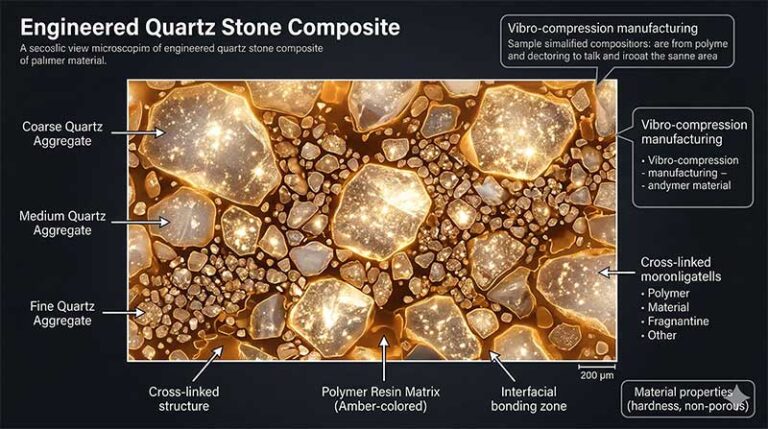
Engineered quartz is highly stain-resistant because it is non-porous and does not require sealing like natural stones such as granite or marble. In fact, the Marble Institute of America (now the Natural Stone Institute) has long emphasized the role porosity plays in stone performance. Quartz’s near-zero absorption rate gives it a major advantage in everyday kitchen use. But “resistant” does not mean “immune.” Surface discoloration can still occur under certain conditions — particularly with strong pigments, dyes, or prolonged contact.
The resin binder (typically 5–10% of the slab composition) is what differentiates engineered quartz from natural stone. While extremely durable, that resin component can react with concentrated dyes or high heat. When staining complaints arise, they are usually preventable — and often solvable — but they create unnecessary friction if expectations weren’t clearly set during installation.
This article is written for fabricators, installers, and distributors who want to proactively educate clients. We’ll walk through common staining culprits, practical removal methods, and what a professional care guide should include.
The Most Common Staining Culprits — And Why They Cause Issues
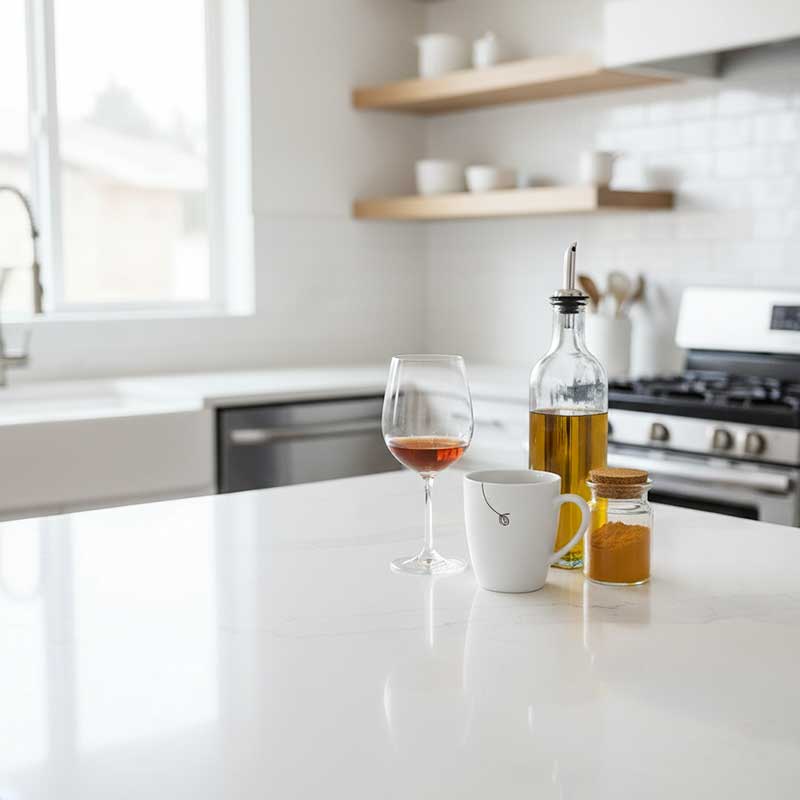
Most quartz staining cases share one thing in common: highly pigmented substances left sitting on the surface longer than intended. Understanding the chemistry behind them makes prevention easier to explain to clients.
Turmeric and Curry
Turmeric is arguably the most aggressive everyday staining agent. The compound curcumin — responsible for turmeric’s vivid yellow color — is a powerful natural dye. It bonds easily with porous materials, and while quartz isn’t porous, the resin component can temporarily absorb surface dyes if exposure is prolonged.
A turmeric paste left on a light-colored quartz surface for 30–60 minutes can leave visible discoloration. Addressed promptly, it is usually removable. Left for days, however, it may require professional-grade cleaners or poultice treatments.
Red Wine and Grape Juice
Red wine contains anthocyanins — the same pigment compounds that stain fabric and teeth. Fortunately, quartz’s non-porous structure means fresh spills wipe away easily. The issue arises when wine dries on the surface for several hours, allowing pigment concentration to increase. Most dried wine stains respond well to alcohol-based cleaning.
Coffee and Tea
Coffee and tea contain tannins, which are mild natural staining agents. On polished quartz, they rarely pose a problem if cleaned within a reasonable timeframe. On matte or textured finishes, however, the microscopic surface texture provides more contact area, allowing pigments to settle more easily.
Permanent Marker and Ink
Permanent marker sounds dramatic, but it’s often one of the easier problems to fix. Isopropyl alcohol dissolves most ink solvents without harming quartz. The key is to avoid abrasive scrubbing, which can dull the finish.
Hair Dye and Nail Polish
Bathroom vanities see a different category of staining agents. Hair dye contains oxidative colorants designed to bond strongly to surfaces — including quartz resin if left long enough. Nail polish can usually be removed with acetone, but prolonged exposure to acetone may dull polished surfaces. Quick application and immediate rinsing are essential.
Effective Stain Removal Methods
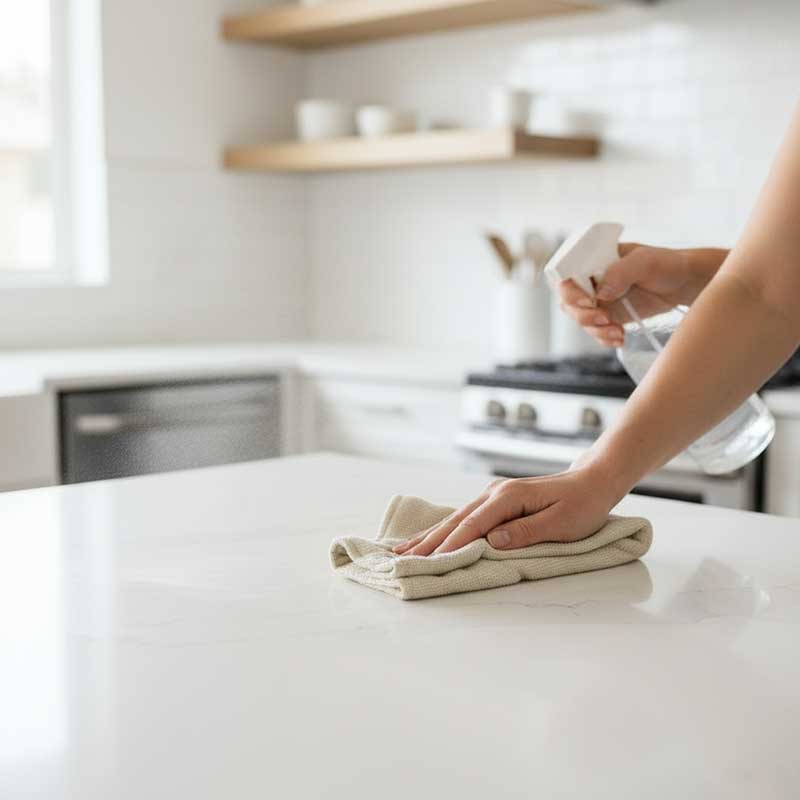
When advising clients, encourage a graduated approach — start gentle, escalate only if necessary.
Step 1: Warm Water + Mild Dish Soap
For routine cleaning and fresh spills, warm water and a pH-neutral dish soap are sufficient. The Environmental Protection Agency’s Safer Choice program (EPA Safer Choice) offers guidance on selecting household cleaners with safer chemical profiles. A soft microfiber cloth should be used — never abrasive pads.
Step 2: 70% Isopropyl Alcohol
For dried organic stains (wine, coffee, ink), 70% isopropyl alcohol is both effective and quartz-safe. Apply with a cloth, allow 2–3 minutes of dwell time, wipe clean, and rinse.
Step 3: Baking Soda Paste
A simple paste of baking soda and water (approximately 3:1 ratio) can help lift more persistent stains. Covering the paste with plastic wrap slows drying and improves effectiveness. Rinse thoroughly afterward.
Step 4: Quartz-Specific Cleaners
Commercial quartz cleaners formulated for engineered surfaces are appropriate for stubborn cases. Always follow manufacturer guidelines. The Cosentino Care & Maintenance Guide and similar manufacturer resources provide useful general guidance for best practices across the industry.
Avoid bleach (sodium hypochlorite), highly acidic cleaners (pH below 3), oven cleaners, or drain cleaners. These products can chemically attack the resin binder and cause irreversible dulling.
What to Avoid: Practices That Permanently Damage Quartz
Improper cleaning causes more long-term damage than staining does. Highly alkaline cleaners containing sodium hydroxide (lye) can break down resin. Abrasive powders and scouring pads scratch the surface. Steel wool leaves metallic residue that oxidizes. And placing hot pans directly from the stove or oven onto quartz can create thermal shock, potentially leading to resin discoloration or hairline cracks.
While quartz is durable, most manufacturers — including major brands across North America — recommend always using trivets or hot pads. Reinforcing this at installation prevents future warranty misunderstandings.
A Practical Care Guide Template for Clients
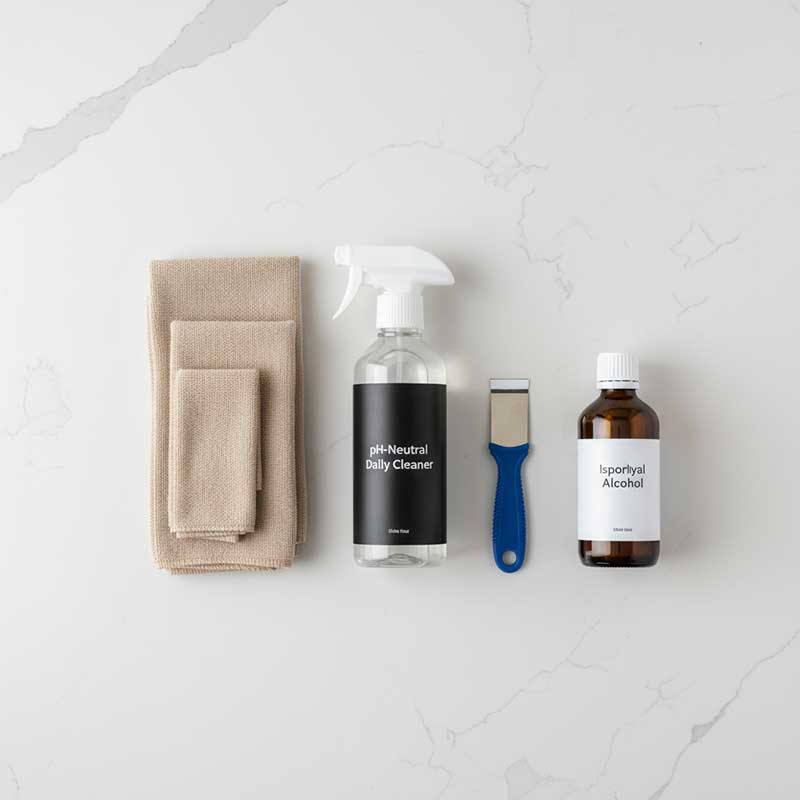
Providing a one-page care sheet at handover is a simple but powerful risk-management step. It demonstrates professionalism and sets clear expectations.
Your care guide should include:
- Daily cleaning instructions (warm water + mild soap + microfiber cloth)
- A clear statement: “Quartz is stain-resistant, not stain-proof.”
- A list of common staining substances (turmeric, wine, coffee, hair dye, ink)
- Approved removal steps (alcohol, baking soda paste, quartz cleaners)
- Products and practices to avoid (bleach, oven cleaner, abrasives, direct heat)
- A recommendation to use trivets and cutting boards
This small document can prevent the majority of service callbacks related to staining.
A Note on Matte and Honed Finishes
Matte and honed quartz finishes continue to grow in popularity. However, their micro-textured surface increases the likelihood that pigments will cling temporarily. Stains may appear more noticeable compared to polished finishes, even when they are only surface-level.
For matte surfaces, avoid wax-based or cream-based cleaners, as these can leave a sheen that alters the intended aesthetic. Stick to water-based cleaners and alcohol solutions.
The Bottom Line for Fabricators
Client education is the most effective stain management tool available. A brief conversation at installation — combined with a written care guide — eliminates unrealistic expectations and reinforces your professionalism.
Engineered quartz remains one of the most reliable, low-maintenance countertop materials available today. But like any material, it performs best when users understand both its strengths and its limitations. Taking one extra minute to explain the difference between stain-resistant and stain-proof can save months of unnecessary frustration later.