NSF/ANSI 51 Re-Certification Confirmed for 2026
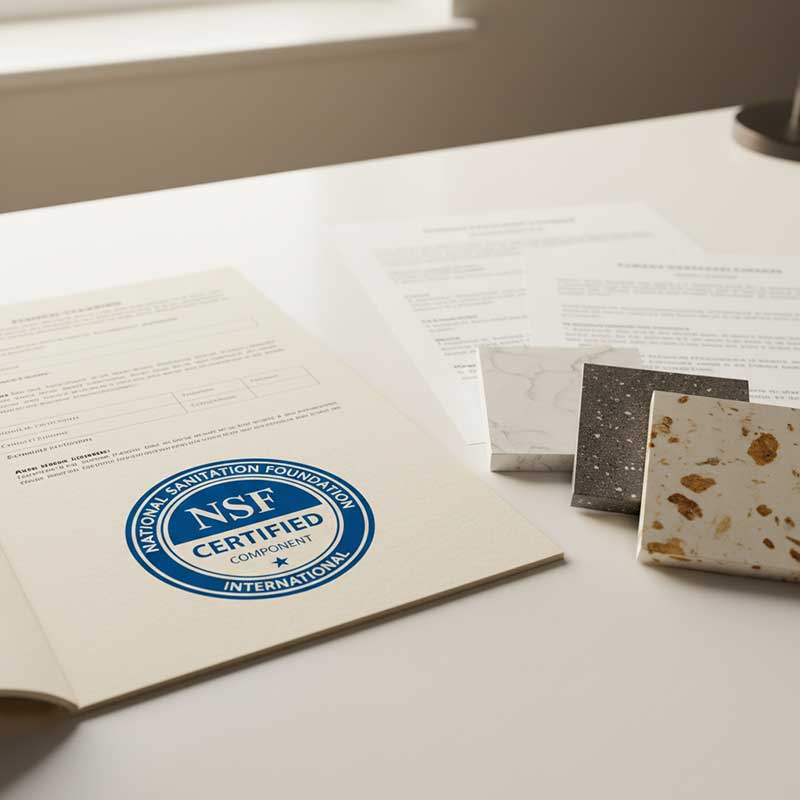
We’re pleased to confirm that our engineered quartz stone product line has successfully completed the annual NSF/ANSI 51 certification renewal process for 2026. The certification covers our entire range of quartz surface products manufactured at our Guangdong facility, confirming that they meet the requirements of NSF/ANSI Standard 51: Food Equipment Materials for use as food-contact surfaces.
For many of our customers — particularly those involved in hospitality, food service, healthcare, and institutional projects — this certification isn’t just a nice-to-have. It’s a specification requirement. In this article, we’ll explain what NSF/ANSI 51 actually tests for, why it matters for your projects, and how to verify certification when evaluating quartz stone suppliers.
What Is NSF/ANSI 51 and What Does It Test?
NSF International (formerly the National Sanitation Foundation) is an independent, accredited public health organization that develops standards and certifies products for food, water, and consumer safety. NSF/ANSI Standard 51 specifically addresses materials used in the construction of commercial food equipment — including countertops, prep surfaces, serving counters, and any other surface that may come into direct or indirect contact with food.
The standard evaluates extractability, meaning whether a material leaches harmful chemicals when exposed to food or food-simulating solvents. Quartz stone samples are immersed in various extraction solutions — such as distilled water, citric acid solution, and heptane (a fat/oil simulant) — at elevated temperatures for extended periods. The extraction solutions are then analyzed for heavy metals, volatile organic compounds, and other potentially harmful substances. If any tested substance exceeds the established limits defined in the NSF/ANSI 51 protocol, the material does not qualify for certification.
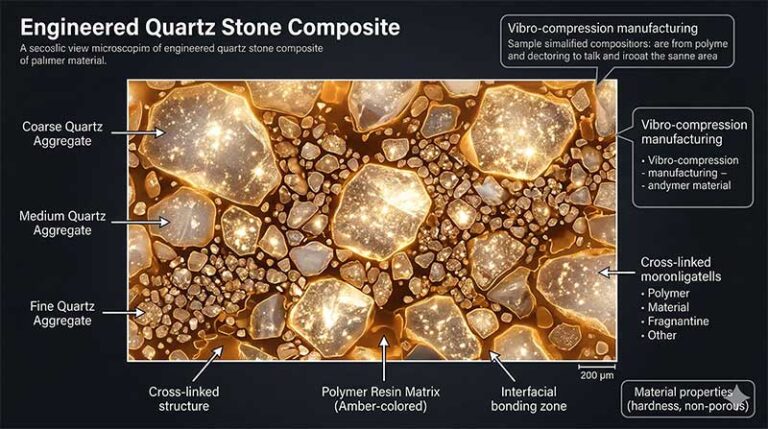
The standard also addresses cleanability and surface integrity. A food-contact surface must be smooth, non-absorbent, and resistant to degradation from routine cleaning. Commercial kitchens commonly follow sanitation guidance from the U.S. FDA Food Code, which emphasizes cleanable, non-toxic, and non-porous surfaces in food preparation areas. Engineered quartz, with its near-zero porosity and dense structure, performs strongly under these requirements when properly manufactured.
Why NSF/ANSI 51 Matters for Your Projects

Hospitality and Food Service
Hotels, restaurants, commercial kitchens, and food service facilities are the most common applications where NSF/ANSI 51 certification is required. Many state and local health departments reference nationally recognized sanitation standards when evaluating food establishments. Organizations such as the Centers for Disease Control and Prevention (CDC) emphasize the importance of safe food-contact surfaces in preventing contamination and foodborne illness.
Specifying a non-NSF-certified countertop material for a restaurant project can lead to failed health inspections, project delays, and costly material replacement. International hotel brands and food service operators frequently include NSF/ANSI 51 compliance in their interior finish specifications to ensure alignment with U.S. health and sanitation expectations.
Healthcare Facilities
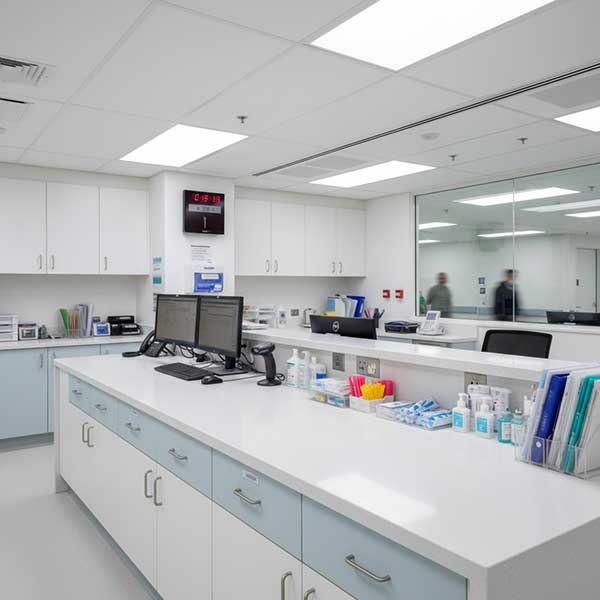
Hospitals, clinics, laboratories, and assisted living facilities often require NSF/ANSI 51 certified surfaces — particularly in patient care areas, pharmacy counters, nurses’ stations, and food service areas within medical campuses. Healthcare environments follow strict infection-control guidelines, including those issued by the CDC Infection Control Program, which highlight the need for durable, cleanable, and non-porous surfaces.
Quartz surfaces used in these settings must withstand aggressive cleaning and disinfection protocols involving bleach, quaternary ammonium compounds, and hospital-grade disinfectants, without surface degradation or chemical leaching.
Educational and Institutional Projects
Schools, universities, government buildings, and military facilities commonly reference nationally recognized safety standards in their procurement documents. Public-sector construction projects frequently require documentation demonstrating compliance with third-party certifications such as NSF/ANSI 51. For contractors bidding on these projects, failure to provide verifiable certification can result in disqualification during technical review.
Not All Quartz Stone Suppliers Are NSF Certified
NSF/ANSI 51 certification is not automatic within the engineered quartz industry. It requires product formulation review, laboratory extraction testing, ongoing factory audits, and annual renewal. Certified manufacturers are listed in NSF’s official online database, which can be accessed through the NSF Certified Products Listing.
This does not mean that non-certified quartz is inherently unsafe for residential use. However, for commercial food environments where certification is written into project specifications or health code requirements, using non-listed material introduces compliance risk that contractors and project owners should carefully evaluate.
How to Verify Certification
Verification is straightforward. Ask the supplier for their exact NSF listing name and certification number, then confirm it directly in the NSF online database. Be cautious of phrases such as “NSF equivalent” or “tested to NSF standards.” Only products formally evaluated and listed by NSF are authorized to claim NSF/ANSI 51 certification.
What Our Certification Covers
Our 2026 NSF/ANSI 51 certification covers all standard engineered quartz formulations produced at our Guangdong manufacturing facility. This includes our full range of Calacatta, Carrara, Statuario, solid color, and specialty pattern products in 12mm, 15mm, 20mm, and 30mm thicknesses. The certification remains valid through February 2027, after which we will complete our annual renewal process.
We provide copies of our NSF certification documentation with every shipment destined for commercial, hospitality, or institutional projects. For bid submissions or specification packages, certification documents can be supplied in PDF format within 24 hours upon request. In addition to NSF/ANSI 51, we maintain CE marking documentation for applicable markets, SGS test reports, and ISO 9001 quality management certification.
The Bigger Picture: Why Certifications Signal Supplier Quality
Third-party certifications are more than marketing claims — they are structured, audited systems of accountability. Maintaining NSF/ANSI 51 certification requires disciplined production controls, traceable raw material sourcing, documented quality testing, and regular third-party oversight. These same operational disciplines contribute to consistent product performance and reliable project delivery.
When evaluating quartz stone suppliers for large-scale commercial or institutional projects, reviewing certifications early in the process is one of the most objective ways to assess manufacturing credibility. In sectors where food safety, public health compliance, and inspection approval are involved, verified certification is not simply paperwork — it is risk management.