
Introduction: Why This Comparison Matters for B2B Buyers
Choosing between engineered quartz, granite, and marble is one of the most consequential material decisions in any construction or interior-fit-out project. For B2B professionals — importers, distributors, contractors, architects, and hospitality developers — this decision directly impacts project budgets, installation timelines, long-term maintenance obligations, and the end-user experience. A poorly matched material can lead to costly warranty claims, premature replacement, and dissatisfied clients; the right choice delivers decades of reliable performance.
Yet the countertop and surface material market is crowded with marketing claims and subjective opinions. This guide takes a different approach: we present a data-driven, technically rigorous comparison of all three materials, drawing on international testing standards from organizations like ASTM International and European EN Standards, real-world project data, and lifecycle cost modeling. Whether you are specifying surfaces for a 500-room hotel, sourcing countertops for a residential development, or evaluating materials for a national retail rollout, this guide gives you the objective foundation to make the right call.
The global engineered stone market, valued at approximately USD 28.4 billion in 2023 according to industry analyses, continues to grow at a compound annual rate of roughly 5–6%, largely driven by the displacement of natural stone in commercial applications. Understanding why this shift is happening — and where natural stone still holds decisive advantages — is essential knowledge for any B2B buyer operating in the surface materials space.
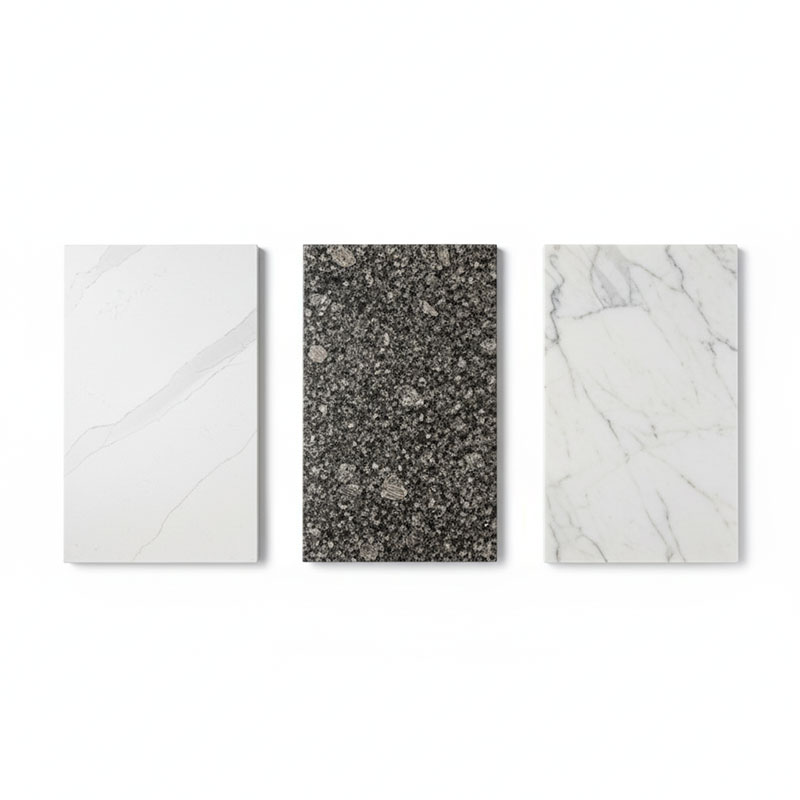
Side-by-side comparison of engineered quartz, granite, and marble surface samples showing distinct visual characteristics of each material.
1. Material Composition & Formation
The performance of any surface material is fundamentally determined by its composition and the process by which it was formed. Engineered quartz, granite, and marble differ radically in all three dimensions — raw ingredients, formation process, and resulting microstructure. These differences cascade into every practical property a B2B buyer cares about: hardness, porosity, stain resistance, and consistency.
1.1 Engineered Quartz (Manufactured Composite)
Engineered quartz stone is a factory-manufactured composite material. Its composition typically consists of 90–94% crushed natural quartz crystals (silicon dioxide, SiO₂ — one of the hardest common minerals on Earth at 7 on the Mohs hardness scale) combined with 6–10% polymer resin binder (typically unsaturated polyester or, in premium products, acrylic resin) plus color pigments and occasionally recycled materials like glass or mirror particles.
The manufacturing process is what truly distinguishes engineered quartz from natural stone. Raw quartz crystals are sorted by particle size — ranging from fine powder (under 45 microns) to coarse granules (several millimeters) — and blended in precise ratios to achieve the desired aesthetic effect. The mixture is fed into large molds, subjected to vacuum vibro-compression at pressures exceeding 100 tonnes, and then cured in industrial kilns at temperatures of approximately 85–100°C. The vacuum process is critical: it extracts virtually all air from the mixture, ensuring that the resin fills every microscopic void between quartz particles. The result is a slab with near-zero porosity (water absorption typically below 0.02%) and highly uniform physical properties throughout its entire cross-section. You can learn more about this manufacturing process in our detailed quartz manufacturing guide.
The controlled, repeatable nature of this process is what enables engineered quartz's defining commercial advantage: batch-to-batch consistency. Every slab produced from the same recipe in the same production run is virtually identical in color, pattern, density, and performance — a characteristic that is physically impossible with natural stone and enormously valuable for large-scale B2B projects.
1.2 Granite (Natural Igneous Rock)
Granite is a natural igneous rock formed deep within the Earth's crust from the slow crystallization of molten magma over millions — sometimes billions — of years. According to the United States Geological Survey (USGS), granite is one of the most abundant plutonic rocks in the continental crust. Its mineralogical composition includes quartz (20–60%), feldspar (35–80%), and mica (5–15%), along with trace minerals such as hornblende, magnetite, and garnet that contribute to each variety's unique coloration.
Because granite forms under natural geological conditions that are never perfectly identical from one location to another — or even within the same geological formation — no two granite slabs are exactly alike. The rate of magma cooling, the specific mineral content of the source magma, the pressure conditions at the depth of formation, and subsequent geological events like metamorphism or hydrothermal alteration all influence the final stone's appearance, crystal size, and physical properties. This natural variability is simultaneously granite's greatest aesthetic asset (each piece is genuinely unique) and its most significant commercial limitation (achieving consistent color matching across large quantities is challenging).
The crystalline structure of granite contains natural micro-fissures and intergranular voids between mineral crystals. These microscopic openings give granite measurable porosity — typically 0.1–0.4% water absorption — making it susceptible to slow moisture penetration and staining if not properly sealed. The Natural Stone Institute (formerly the Marble Institute of America) recommends annual sealing for granite surfaces in active-use environments to maintain optimal stain resistance.
1.3 Marble (Natural Metamorphic Rock)
Marble is a natural metamorphic rock formed when pre-existing limestone (composed primarily of calcium carbonate, CaCO₃) is subjected to extreme heat and pressure deep within the Earth's crust — a geological process called metamorphism. During this transformation, the calcite crystals in the original limestone recrystallize into a denser, more interlocking structure. The characteristic veining that makes marble so visually prized is created by mineral impurities — iron oxides, clay minerals, silt, sand, chert, or graphite — that were present in the original limestone and became stretched, folded, and compressed during the metamorphic process.
The dominant mineral in marble is calcite (CaCO₃), which is fundamentally softer and more chemically reactive than the quartz (SiO₂) that dominates both engineered quartz and granite. Calcite registers only 3 on the Mohs hardness scale, compared to 7 for quartz — meaning quartz is more than twice as hard as the primary component of marble. More critically, calcite reacts with acids through a well-understood chemical process: CaCO₃ + 2HCl → CaCl₂ + H₂O + CO₂. In practical terms, this means that common household substances including lemon juice, vinegar, wine, tomato sauce, and most commercial cleaning agents will chemically etch marble's surface on contact, creating dull spots that cannot be removed by simple cleaning and require professional honing to restore.
Marble's porosity is typically the highest of the three materials discussed here, with water absorption rates of 0.2–0.6% and sometimes higher for certain varieties. This porosity, combined with the calcite base's chemical vulnerability, makes marble the most maintenance-intensive option — a factor that significantly impacts total cost of ownership in commercial settings.
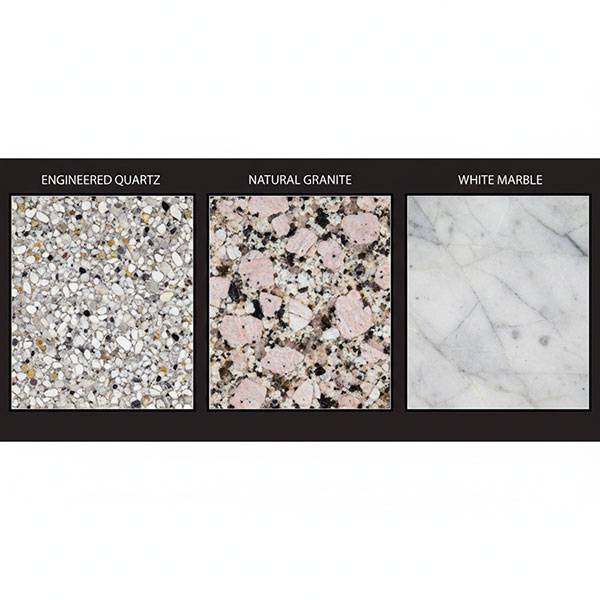
Microscopic cross-sections reveal fundamental structural differences: engineered quartz (left) shows dense, void-free composite; granite (center) displays interlocking crystalline minerals; marble (right) exhibits calcite crystals with visible porosity.
1.4 Composition Summary
| Attribute | Engineered Quartz | Granite | Marble |
|---|---|---|---|
| Type | Man-made composite | Natural igneous rock | Natural metamorphic rock |
| Primary Mineral | Quartz (SiO₂) 90–94% | Quartz + Feldspar + Mica | Calcite (CaCO₃) 95%+ |
| Binder | Polymer resin 6–10% | None (natural) | None (natural) |
| Formation | Factory manufacturing | Magma crystallization | Limestone metamorphism |
| Age | Days (production) | Millions–billions of years | Millions of years |
| Consistency | Identical per batch | Variable | Highly variable |
2. Physical & Mechanical Properties Deep Dive
For B2B specification purposes, subjective impressions are insufficient — decisions must be grounded in measurable, testable physical properties. This section examines the key mechanical and physical characteristics of all three materials, referencing test methods from ASTM C615 (granite), ASTM C503 (marble), and EN 14617 (agglomerated stone). All values represent typical ranges across commercially available grades.
2.1 Hardness & Scratch Resistance
Surface hardness directly determines a material's resistance to scratching, abrasion, and everyday wear. The Mohs hardness scale, developed by mineralogist Friedrich Mohs in 1812, remains the standard reference for mineral hardness comparison. Engineered quartz achieves a Mohs hardness of 7, which means it resists scratching from virtually all common kitchen and bathroom objects — including steel knives (Mohs 5.5), ceramic plates (Mohs 6–7), and most abrasive household materials. Granite varies between 6 and 7 on the Mohs scale depending on its specific mineral composition, providing good but slightly less consistent scratch resistance. Marble, with calcite at its core, registers only 3–5 on the Mohs scale, making it vulnerable to scratching from surprisingly ordinary objects including keys, coins, and even some types of ceramic dinnerware.
In commercial environments — hotel bathrooms, restaurant countertops, retail display surfaces — this hardness difference has profound practical implications. Marble surfaces in high-traffic areas develop visible scratch patterns and wear marks within months, while quartz and granite maintain their original surface quality for years under identical use conditions.
2.2 Porosity & Water Absorption
Porosity — the measure of void space within a material's structure — is arguably the single most commercially important property differentiating engineered quartz from natural stone. It determines stain resistance, bacterial resistance, moisture-related damage risk, and sealing requirements.
Engineered quartz, thanks to its vacuum-compression manufacturing process, achieves water absorption below 0.02% — essentially non-porous. This means liquids cannot penetrate the surface, stains cannot establish below the surface plane, and bacterial colonies cannot establish in surface pores. For applications regulated by food-safety standards, this non-porosity is not merely an advantage but a requirement.
Granite's water absorption of 0.1–0.4% is low by natural stone standards but still orders of magnitude higher than quartz. In practical terms, an unsealed granite surface will slowly absorb colored liquids — wine, coffee, cooking oil — if they are left in contact for more than a few minutes, potentially resulting in permanent staining. Annual sealing creates a sacrificial barrier that prevents this absorption, but the seal degrades over time and must be reapplied.
Marble's absorption of 0.2–0.6% — and sometimes higher for lighter, more porous varieties — makes it the most susceptible to liquid penetration. Combined with its acid sensitivity, this porosity creates a double vulnerability: liquids both stain the stone through absorption and chemically etch the surface on contact, requiring two different types of remediation (stain removal and re-polishing).
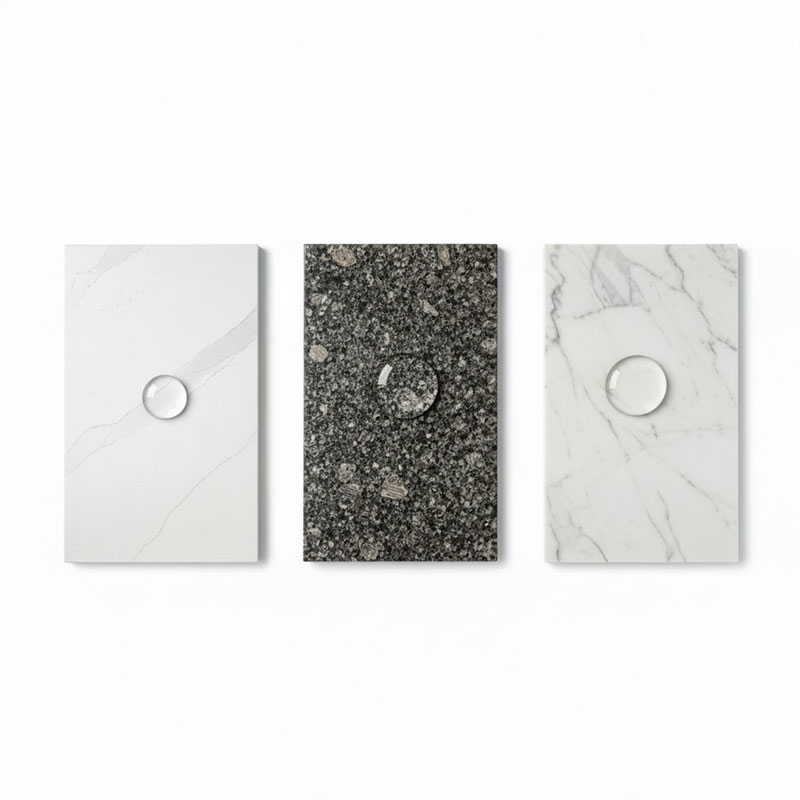
Water droplet test demonstrates porosity differences: quartz (left) shows complete water beading with zero absorption; granite (center) shows minimal spreading; marble (right) shows rapid absorption creating visible darkening.
2.3 Flexural & Compressive Strength
Flexural strength (bending strength) is critical for countertop applications, particularly for overhangs, unsupported spans, and undermount sink cutouts where the material must resist bending loads. Engineered quartz delivers flexural strength of 45–55 MPa — approximately 2–5 times higher than granite (10–20 MPa) and 3–8 times higher than marble (6–15 MPa). This superior bending resistance allows quartz countertops to support larger unsupported overhangs (up to 300mm without additional bracing for 20mm slabs), reduces the risk of fracture during transportation and installation, and enables thinner slab profiles (12mm and 15mm) for weight-sensitive applications like wall cladding and furniture surfaces. For more on thickness specifications, see our thickness and surface finish guide.
Compressive strength — resistance to crushing loads — is less frequently the deciding factor for horizontal surface applications but matters for flooring, structural cladding, and applications bearing sustained point loads. All three materials offer adequate compressive strength for typical surface applications, though quartz (150–250 MPa) and granite (130–200 MPa) significantly outperform marble (50–100 MPa).
2.4 Thermal Properties
Heat resistance is one area where natural granite genuinely outperforms engineered quartz. Granite can withstand direct contact with temperatures exceeding 300°C without damage, making it well-suited for placement adjacent to commercial cooking equipment and outdoor grills exposed to direct sunlight. Marble handles moderate heat well, though thermal shock (rapid temperature changes) can cause cracking in some varieties.
Engineered quartz's polymer resin binder begins to degrade at sustained temperatures above 150°C (300°F). Direct contact with hot pots, pans, or baking trays removed from an oven can cause localized discoloration or resin damage that is difficult or impossible to repair. While trivets and heat pads easily prevent this issue in residential settings, it is an important consideration for certain commercial applications, particularly those near professional cooking equipment. For detailed thermal performance data, refer to our climate and environmental performance guide.
2.5 UV Stability
Ultraviolet radiation causes progressive yellowing of the polymer resin in engineered quartz, making standard quartz products unsuitable for outdoor applications or areas with prolonged direct sunlight exposure. This UV sensitivity is a critical specification constraint that B2B buyers must account for in project planning. Some manufacturers now offer UV-stabilized quartz formulations for semi-outdoor applications (covered patios, sun-facing windows), but these remain specialty products with limited availability. Granite and marble, being composed entirely of inorganic minerals, are inherently UV-stable and perform well in outdoor environments.
2.6 Comprehensive Properties Comparison Table
| Property | Engineered Quartz | Granite | Marble |
|---|---|---|---|
| Hardness (Mohs) | 7 | 6 – 7 | 3 – 5 |
| Density (kg/m³) | 2,300 – 2,500 | 2,600 – 2,800 | 2,500 – 2,700 |
| Flexural Strength (MPa) | 45 – 55 | 10 – 20 | 6 – 15 |
| Compressive Strength (MPa) | 150 – 250 | 130 – 200 | 50 – 100 |
| Water Absorption (%) | < 0.02 | 0.1 – 0.4 | 0.2 – 0.6 |
| Stain Resistance | Excellent | Good (sealed) | Poor |
| Acid Resistance | Excellent | Good | Very Poor |
| Scratch Resistance | Excellent | Good | Poor |
| Heat Resistance | Up to 150 °C | Excellent (300 °C+) | Good |
| UV Resistance | Indoor only | Excellent | Good |
| Requires Sealing | Never | Yes, annually | Yes, 6–12 months |
| Color Consistency | Identical per batch | Variable | Highly variable |
| Available Colors | 200+ (fully customizable) | Natural variety only | Natural variety only |
| Outdoor Suitability | No (UV) | Yes | Limited |
Engineered quartz dominates in consistency, maintenance-free performance, and flexural strength — the three properties most critical for multi-unit commercial projects. Granite's advantages lie in heat resistance and outdoor suitability. Marble's appeal is purely aesthetic — it is outperformed on every measurable physical property by both competing materials.
3. Maintenance, Durability & Total Cost of Ownership
For B2B decision-makers — particularly those in hospitality, property development, and commercial facility management — the total cost of ownership (TCO) over a material's lifecycle is significantly more important than its initial purchase price. A surface material that costs less upfront but requires frequent professional maintenance, periodic resealing, and premature replacement will invariably cost more over a 10–15 year horizon than a material with a higher initial cost but zero ongoing maintenance. This section models the lifecycle cost reality of each material based on typical commercial-use scenarios.
3.1 Engineered Quartz: Near-Zero Maintenance
The maintenance protocol for engineered quartz surfaces is remarkably simple: clean with mild soap and water or any non-abrasive household cleaner. That's it. No sealing is required — not at installation, not at any point during the material's service life. The non-porous surface resists staining from all common substances including coffee, wine, cooking oil, cosmetics, hair dye, and ink. Stubborn residue can be removed with a non-abrasive cleaning pad and isopropyl alcohol without risk of surface damage.
Over a 15-year commercial lifecycle, the maintenance cost for engineered quartz is effectively $0 per square meter beyond the standard housekeeping labor that applies equally to any surface material. There is no need for specialized cleaning products, no professional maintenance visits, and no downtime for sealing or restoration. For hotel and hospitality operators — where room downtime translates directly to lost revenue — this zero-maintenance profile has significant operational value beyond the direct cost savings.
3.2 Granite: Moderate, Ongoing Maintenance
Granite surfaces require an initial sealing treatment at installation and re-sealing approximately once per year to maintain effective stain protection. The sealing process involves cleaning the surface, applying a penetrating impregnating sealer, allowing it to absorb for 15–20 minutes, then wiping off the excess. While the process itself is straightforward, it represents a recurring cost and operational task that must be budgeted and scheduled. The Natural Stone Institute's care guidelines recommend testing the seal effectiveness annually by placing a small water droplet on the surface and checking if it is absorbed within 10 minutes.
Professional sealing costs approximately $2–5 per square meter per application, depending on the sealer quality and local labor costs. Over a 15-year lifecycle, this accumulates to $30–$75/m² in sealing costs alone. Additionally, granite may require professional polishing every 5–8 years to restore surface luster diminished by normal wear and cleaning chemical exposure, adding further to the lifecycle cost.
If sealing is neglected — which happens frequently in commercial settings with high staff turnover — granite surfaces become progressively more vulnerable to staining, potentially resulting in permanent damage that requires slab replacement rather than simple re-sealing.
3.3 Marble: High and Complex Maintenance
Marble demands the most intensive and complex maintenance regimen of the three materials, driven by its dual vulnerability to both physical damage (scratching, etching) and chemical damage (acid reactions). The maintenance protocol for commercial marble surfaces includes frequent sealing (every 6–12 months with premium impregnating sealers), exclusive use of pH-neutral cleaning products (standard cleaners and disinfectants containing acids or alkalis will etch the surface), immediate cleanup of any acidic spill (even a few minutes of contact with citrus juice will leave visible etch marks), and periodic professional honing and polishing to remove accumulated etch marks, micro-scratches, and wear patterns.
In commercial environments such as hotel bathrooms, marble vanity tops and shower surrounds may require professional restoration every 2–3 years, involving diamond-abrasive honing to remove surface damage followed by progressive polishing to restore the original finish. This restoration process typically costs $15–40 per square meter and requires the space to be taken out of service during the work.
The cumulative 15-year maintenance burden for marble in commercial use is substantial: $45–$180/m² in sealing alone, plus $75–$200/m² in periodic professional restoration, bringing the total lifecycle maintenance cost to $120–$380 per square meter — often exceeding the original material cost multiple times over.
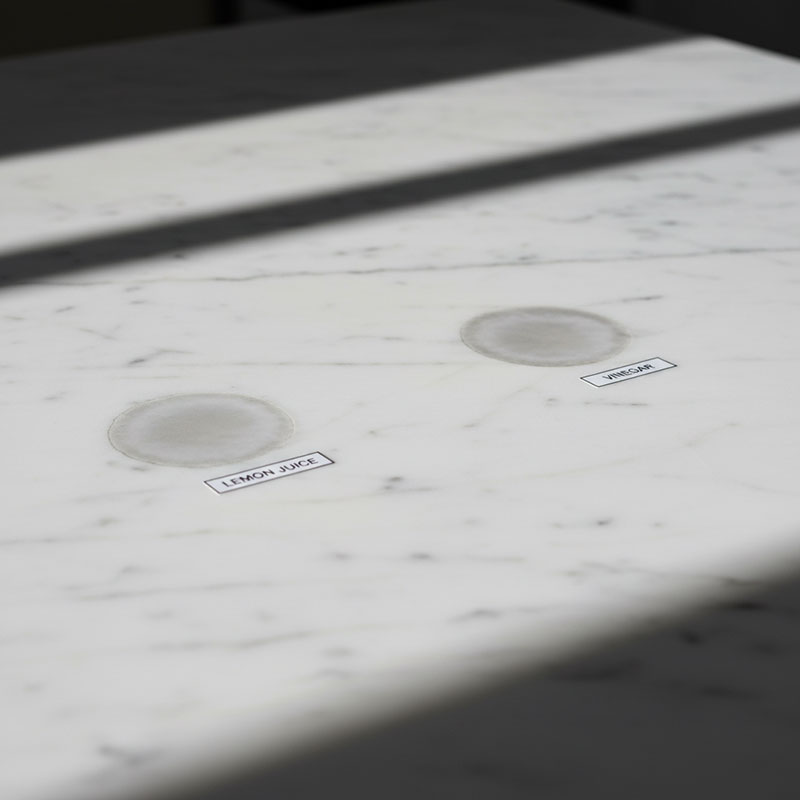
Acid etching test on polished marble: dull, cloudy spots appear within minutes of contact with lemon juice (left) and vinegar (right), demonstrating marble's chemical vulnerability to common household acids.
3.4 15-Year Lifecycle Cost Comparison
| Cost Component (15-Year Lifecycle) | Engineered Quartz | Granite | Marble |
|---|---|---|---|
| Material Cost (FOB China/Origin) | $15 – $45/m² | $18 – $80/m² | $25 – $150+/m² |
| Fabrication & Installation | Standard | Standard | Standard to 20% higher |
| Sealing Cost (per application) | $0 | $2 – $5/m² | $3 – $6/m² |
| Sealing Frequency | Never | Annually | Every 6–12 months |
| 15-Year Cumulative Sealing | $0 | $30 – $75/m² | $45 – $180/m² |
| Professional Restoration | Not required | Every 5–8 yrs ($10–25/m²) | Every 2–3 yrs ($15–40/m²) |
| 15-Year Restoration Cost | $0 | $20 – $75/m² | $75 – $200/m² |
| Replacement Risk | Very low | Low | Moderate – high |
| Estimated 15-Year TCO | $15 – $45/m² | $68 – $230/m² | $145 – $530+/m² |
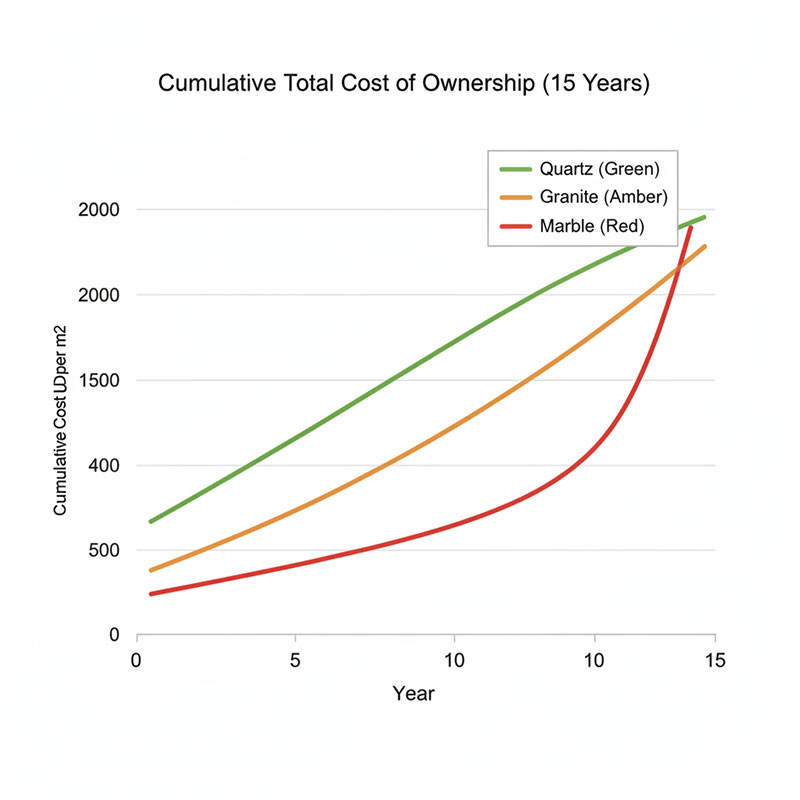
Cumulative 15-year cost comparison: engineered quartz (green) remains flat after initial purchase, granite (amber) increases steadily with annual sealing and periodic polishing, and marble (red) escalates sharply due to frequent sealing, restoration, and higher replacement risk.
For a 300-room hotel renovation using an average of 3 m² of countertop surface per bathroom, the 15-year maintenance cost difference between marble and quartz can exceed $100,000–$400,000 for the property — a compelling financial argument that often drives the specification decision toward quartz, particularly when combined with the marble-look designs available in modern engineered quartz.
4. Aesthetic Capabilities & Design Flexibility
While physical properties and cost drive the rational side of material selection, aesthetics often drive the emotional side — and in architecture and interior design, the emotional side matters enormously. Each of these three materials offers distinct aesthetic qualities that resonate with different design philosophies, project types, and market segments.
4.1 Engineered Quartz: Precision-Controlled Design
The most transformative development in the surface materials industry over the past decade has been the dramatic improvement in engineered quartz aesthetics. Modern manufacturing technology — particularly advancements in digital vein-injection systems, multi-layer pigment application, and sophisticated particle-blending algorithms — has enabled quartz producers to create designs that closely replicate the appearance of premium natural stones including Calacatta Oro, Statuario, Carrara, Emperador, and dozens of other varieties.
The Calacatta-look quartz — featuring dramatic grey or gold veining on a luminous white background — has become the single most-specified surface design in the global kitchen and bathroom market. It offers the coveted marble aesthetic at a fraction of the maintenance burden, making it the default choice for hospitality projects, multi-unit residential developments, and commercial interiors where the marble "look" is desired but the marble "upkeep" is not.
Beyond natural stone replication, engineered quartz unlocks design possibilities that do not exist in nature: pure bright whites without natural mineral variation, consistent solid blacks, complex terrazzo-inspired patterns with precisely controlled chip sizes and colors, concrete-look surfaces with industrial character, and bold contemporary designs in virtually any color. With over 200+ standard designs available from major manufacturers and the ability to create fully custom colors and patterns (subject to minimum order quantities), quartz provides unmatched design versatility for architects and specifiers. This is particularly valuable for branded hospitality and retail chains that need to replicate an identical design aesthetic across dozens or hundreds of locations worldwide.
4.2 Granite: Natural Depth & Uniqueness
Granite's aesthetic power lies in its natural authenticity and irreproducible uniqueness. The complex interplay of visible quartz, feldspar, and mica crystals — some translucent, some reflective, some matte — creates a depth and visual richness that is extremely difficult to perfectly replicate in manufactured materials. Exotic granite varieties such as Blue Bahia, Van Gogh, Labradorite, and Cosmic Black exhibit iridescent mineral crystals, dramatic color movements, and three-dimensional depth effects that make each slab a natural work of art.
For design contexts where natural authenticity and one-of-a-kind character are core values — luxury custom homes, heritage building restorations, naturalistic design philosophies, and high-end residential projects where the client wants a surface that is genuinely unique in the world — granite offers something that manufactured materials cannot replicate. The trade-off, as discussed throughout this guide, is the consistency challenge: for projects requiring precise color matching across multiple slabs, granite requires careful lot selection and may still exhibit visible variation between pieces.
4.3 Marble: Timeless, Irreplaceable Luxury
Marble occupies a unique position in the hierarchy of building materials as perhaps the most culturally significant surface material in human history. From the Parthenon to Michelangelo's David, from the Taj Mahal to contemporary five-star hotels, marble has symbolized refinement, permanence, and luxury for over 2,500 years. No amount of engineering can fully replicate marble's unique optical properties: the subtle translucency of polished Statuario, the warm, soft luminosity of Calacatta Gold, or the way light interacts with the crystalline calcite structure to create a gentle inner glow that distinguishes genuine marble from any reproduction.
For ultra-luxury projects where budget is secondary to prestige — landmark hotel lobbies, high-end brand flagships, luxury residential penthouses, cultural institutions — genuine marble remains the aspirational choice. In these contexts, marble's maintenance demands are accepted as part of the material's character, and the natural patina that develops over years of use (slight dulling, minor etching, subtle wear patterns) is valued as evidence of authenticity and history rather than viewed as damage.
The critical market insight for B2B buyers is this: the development of high-quality marble-look quartz has created a clear segmentation in the market. Genuine marble is increasingly reserved for landmark and ultra-premium applications, while marble-look quartz has captured the vast majority of the mid-to-upper commercial market — hospitality, multi-unit residential, corporate offices, retail — where the marble aesthetic is desired but the practical advantages of quartz are decisive.
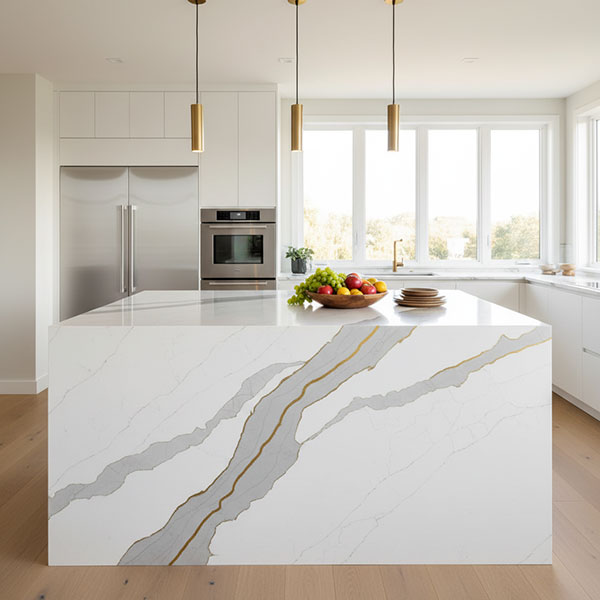
Modern luxury kitchen featuring Calacatta-look engineered quartz with dramatic grey veining and waterfall edge — achieving the premium marble aesthetic with zero-maintenance performance.
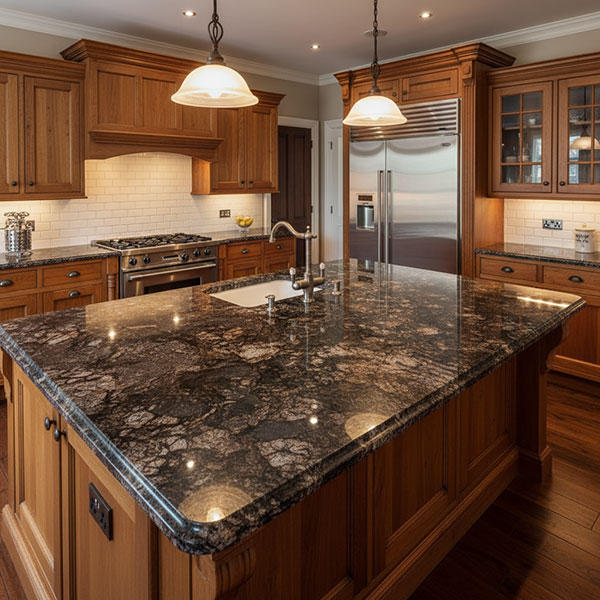
Polished natural granite kitchen island showcasing the material's distinctive crystalline depth and natural variation — each slab a unique geological creation.
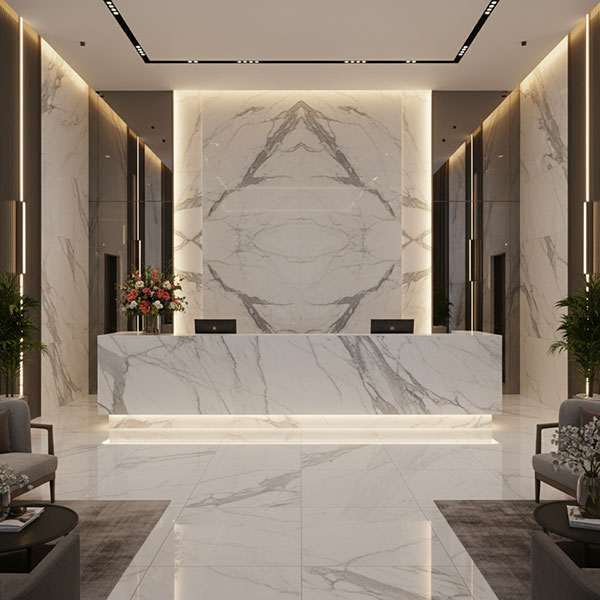
Genuine Statuario marble reception desk in a five-star hotel lobby — illustrating the timeless prestige and luminous quality that makes natural marble the aspirational standard for ultra-luxury interiors.
5. Best Applications by Project Type
Based on the physical properties, maintenance profiles, cost structures, and aesthetic characteristics analyzed above, this section provides specific application recommendations organized by B2B project type. These recommendations reflect real-world project experience and are intended as guidelines — the optimal choice always depends on the specific project requirements, budget parameters, and client priorities.
5.1 Kitchen Countertops
Kitchen countertops face the most demanding combination of challenges: thermal stress from cooking, chemical exposure from food and cleaning agents, physical impact from utensils and heavy objects, and high aesthetic expectations. For commercial kitchens and multi-unit residential projects, engineered quartz is the recommended choice due to its stain resistance, scratch resistance, and zero-maintenance profile. Its non-porous surface also meets food-contact hygiene requirements under NSF/ANSI 51 standards. For high-end custom residential kitchens where the client values natural uniqueness and is willing to maintain the material, granite remains an excellent choice, with the added advantage of superior heat resistance for placement near cooking ranges. Marble is generally not recommended for kitchen countertops in any context due to its acid sensitivity and staining vulnerability — though it can work as a dedicated pastry-making surface in professional bakeries, where its natural coolness and smooth surface are functional advantages. Learn more about kitchen-specific considerations in our kitchen countertop application guide.
5.2 Bathroom Vanities & Surfaces
Bathroom environments present a unique challenge: sustained exposure to moisture, cosmetics (which are often oil-based and pigmented), hair-care products, and frequent cleaning with potentially harsh disinfectants. Engineered quartz excels in this environment due to its complete moisture imperviousness and chemical resistance. For hospitality bathroom vanities — where hundreds of different guests will use the surface with varying degrees of care — quartz's durability and stain resistance are decisive advantages. Marble is frequently specified in luxury hotel bathrooms for its prestige factor, but the maintenance implications discussed in Section 3 apply in full; many hotel operators are now transitioning to marble-look quartz for guest room bathrooms while reserving genuine marble for lobby and suite applications. See our bathroom vanity application guide for detailed specifications.
5.3 Commercial & Hospitality Projects
Large-scale commercial projects — hotel chains, apartment developments, retail store rollouts, corporate office fit-outs — place the highest premium on consistency, scale, and predictable maintenance. Engineered quartz is the dominant material in this segment for clear reasons: guaranteed color consistency across hundreds or thousands of identical units, zero maintenance requirements (critical for portfolio operators managing multiple properties), scalable factory production with reliable lead times, and the broadest design range to match any brand aesthetic. For flagship or high-prestige commercial locations (main hotel lobby, CEO suite, brand flagship store), genuine natural stone may be specified as a premium accent while quartz serves the high-volume production areas. Our commercial project guide provides detailed case studies.
5.4 Wall Cladding & Vertical Surfaces
Wall cladding applications are fundamentally different from horizontal countertops: they experience minimal physical contact, no food or liquid exposure, and primarily need to deliver visual impact. All three materials can be effective for wall cladding, but the choice depends on the project context. Quartz offers the advantage of lighter-weight options (12mm or 15mm thickness), consistent patterning across large wall areas, and a wider design palette. Marble wall cladding delivers unmatched prestige in luxury interiors — dramatic bookmatched marble walls, where adjacent slabs are opened like a book to create a mirrored vein pattern, remain one of the most striking design features in high-end architecture. For large-format wall applications, refer to our wall cladding specification guide.
5.5 Outdoor Applications
Outdoor applications — pool surrounds, outdoor kitchens, exterior cladding, patio surfaces — require UV stability, freeze-thaw resistance, and weathering durability. Standard engineered quartz is not suitable for outdoor use due to UV-induced yellowing of the resin binder. Granite is the strongest natural stone option for outdoor applications, offering excellent UV stability, freeze-thaw resistance, and weathering durability. Marble can be used outdoors in mild climates but is susceptible to accelerated acid-rain erosion, biological staining (algae, moss), and freeze-thaw damage in cold climates.
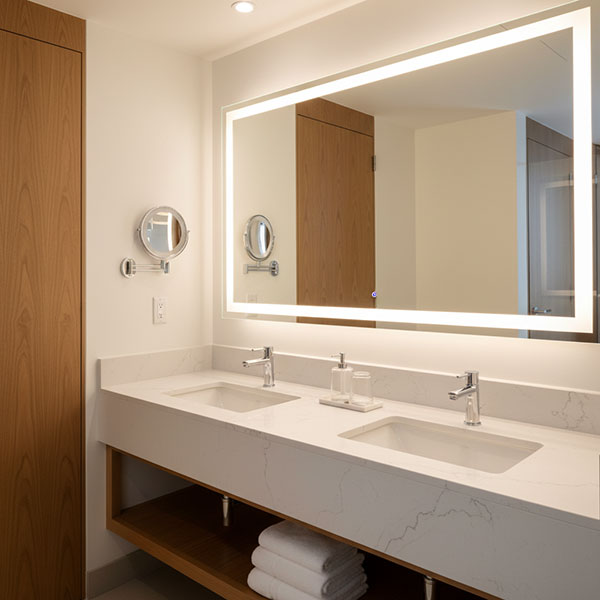
Modern hotel bathroom featuring marble-look engineered quartz vanity — delivering premium aesthetics with zero-maintenance performance, the preferred solution for hospitality operators managing hundreds of guest rooms.
Many successful large-scale projects use a hybrid material strategy to optimize both prestige and practicality. For example, a luxury hotel group might specify genuine Calacatta marble for the main lobby reception desk and feature walls (high visual impact, low-traffic surface, professionally maintained) while using Calacatta-look quartz for all 500+ guest room bathroom vanities (high-traffic, zero maintenance, perfect consistency). This approach maximizes design impact where it matters most while managing lifecycle costs across the property.
6. B2B Sourcing & Supply Chain Considerations
For B2B buyers — importers, distributors, fabricators, and project contractors — the sourcing experience and supply chain dynamics for each material type are fundamentally different and directly impact project feasibility, timelines, cost predictability, and risk management.
6.1 Sourcing Engineered Quartz
Engineered quartz offers the most predictable, scalable, and controllable B2B sourcing experience of the three materials. Because it is factory-manufactured from a standardized recipe, the buying process follows industrial procurement logic rather than the artisanal, block-by-block approach required for natural stone. Key sourcing characteristics include guaranteed color consistency within production batches (the sample you approve is what you receive), predictable MOQ structures (typically 50–200 slabs per color for Chinese manufacturers, with many factories accepting mixed-color containers at lower per-color minimums), reliable lead times (15–25 working days from order confirmation to loading for stock colors, 20–35 days for custom production), and comprehensive quality documentation including material test reports, certification copies, and container loading photographs.
China is the world's largest producer of engineered quartz, with major production clusters in Guangdong, Fujian, Shandong, and Guangxi provinces. Chinese manufacturers offer the broadest product range and most competitive pricing globally, making China the default sourcing origin for most B2B buyers worldwide. Other significant production origins include Turkey, India, Spain, and Italy. When evaluating Chinese quartz suppliers, the critical due-diligence factors are factory production capacity, quality management systems, export experience, available certifications, and willingness to provide production samples and factory audit access.
6.2 Sourcing Granite
Granite sourcing involves inherent natural variability that requires different procurement skills and risk-management strategies. Because each quarry block is unique, there is always some degree of variation between the sales sample and the delivered production — responsible suppliers manage this through detailed block photography, slab-by-slab photography of finished production, and bundle inspection protocols where buyers approve specific production lots before shipping. For large-scale projects requiring 1,000+ m² of granite with acceptable color consistency, careful block selection at the quarry level is essential, and buyers should expect to pay a premium for hand-selected, closely matched material.
Major granite sourcing origins include India (the world's largest exporter, offering the broadest variety and most competitive pricing), Brazil (known for exotic varieties with dramatic color and movement), China (strong production infrastructure with good mid-range options), and Italy/Scandinavia (premium varieties at higher price points). Lead times are generally longer and less predictable than quartz — typically 20–40 working days — due to dependence on quarry block availability, which can be affected by weather conditions (monsoon seasons in India), quarry capacity, government permits, and geological variability within the quarry face.
6.3 Sourcing Marble
Marble sourcing — particularly for premium varieties — is the most complex, expensive, and risk-prone of the three materials. The world's most sought-after marbles (Calacatta, Statuario, Arabescato) come from a handful of quarries in the Carrara-Massa region of Tuscany, Italy, which have been mined since Roman times. Demand for these premium varieties far exceeds available supply, creating a seller's market with significant pricing power, limited negotiation flexibility, and long lead times.
For premium Italian marble, the procurement process typically involves visiting the quarry or warehouse to personally select specific blocks, paying a deposit to reserve selected blocks (often 30–50% of material value), waiting 30–60 working days for cutting, polishing, and packing, and accepting inherent block-to-block variation as a natural characteristic. Pricing can fluctuate dramatically based on block quality — a Calacatta Oro block with exceptional veining may command $200–500/m² at the quarry gate, while a less desirable block from the same quarry might be $80–150/m². For B2B buyers accustomed to the predictable pricing and production schedules of engineered quartz, marble procurement represents a fundamentally different paradigm requiring deeper relationships, larger budget contingencies, and more flexible project timelines.

Inside a modern engineered quartz manufacturing facility: automated production lines enable consistent quality, scalable output, and reliable lead times — the operational foundation of quartz's B2B sourcing advantage.
6.4 Sourcing Comparison Table
| Sourcing Factor | Engineered Quartz | Granite | Marble |
|---|---|---|---|
| Color Consistency | Guaranteed per batch | Approximate match | Block-specific variation |
| Typical MOQ | 50–200 slabs/color | 1 container (~200 slabs) | Block-dependent |
| Lead Time | 15–25 working days | 20–40 working days | 30–60 working days |
| Pricing Model | Stable quarterly quotes | Market-driven, moderate variation | Block-specific, highly volatile |
| Quality Verification | EN/ASTM/NSF test reports | Visual + basic physical tests | Visual / block selection |
| Supply Predictability | High (factory capacity) | Moderate (quarry-dependent) | Low (limited premium supply) |
| Primary Origins | China, Turkey, India | India, Brazil, China | Italy, Turkey, Greece, Spain |
| Container Flexibility | Mixed-color containers available | Usually single color/block | Block-specific packing |
7. Certifications & International Compliance Standards
For B2B buyers importing surface materials into regulated markets — particularly North America, the European Union, and Australasia — understanding the applicable certification and compliance landscape is critical. Material certifications serve as third-party validation of product safety, performance, and quality, and are increasingly required by building codes, project specifications, and end-client procurement policies.
7.1 Key Certifications for Engineered Quartz
NSF/ANSI 51 (Food Equipment Materials): Issued by NSF International, this certification confirms that a material is safe for use in food-contact applications — essential for kitchen countertops, commercial food-preparation surfaces, and healthcare facilities. NSF 51 certification involves testing for chemical leaching, cleanability, and material safety. Reputable quartz manufacturers provide NSF 51 certification for their product lines.
Greenguard / Greenguard Gold (Indoor Air Quality): Administered by UL Environment, Greenguard certification verifies that a product meets strict limits on chemical emissions (VOCs — volatile organic compounds) into indoor air. Greenguard Gold applies even stricter thresholds and is recognized by green building programs including LEED, WELL, and BREEAM. For projects pursuing green building certification, specifying Greenguard-certified quartz contributes to indoor environmental quality credits.
CE Marking (European Conformity): Required for products sold in the European Economic Area, CE marking for agglomerated stone confirms compliance with the relevant harmonized European standard (EN 14618 — Agglomerated Stone Terminology and Classification). CE-marked quartz products include a Declaration of Performance documenting physical properties tested according to EN 14617 methods.
EN 14617 Test Series: This comprehensive European testing standard covers flexural strength, water absorption, abrasion resistance, thermal shock resistance, chemical resistance, and dimensional stability. B2B buyers should request EN 14617 test reports from quartz suppliers as the primary physical performance documentation.
SGS / Bureau Veritas / Intertek Inspection Reports: These global third-party inspection and testing companies provide independent verification of product quality, labeling accuracy, and compliance with buyer specifications. Many B2B importers engage these agencies for pre-shipment inspection (PSI) services to verify quality before containers are sealed and shipped.
7.2 Certifications for Natural Stone
Natural stone (granite and marble) is subject to different but overlapping certification requirements. ASTM C615 (granite) and ASTM C503 (marble) define physical property requirements and test methods for natural stone used in building applications. In the EU, natural stone products must comply with EN 12058 (natural stone slabs for cladding) or EN 12057 (modular tiles). However, natural stone certification typically provides less comprehensive performance documentation than manufactured quartz, because natural stone's inherent variability means that test results from one slab may not be representative of the next. The Natural Stone Institute's accreditation program for fabricators and installers provides an additional quality assurance layer for natural stone projects.
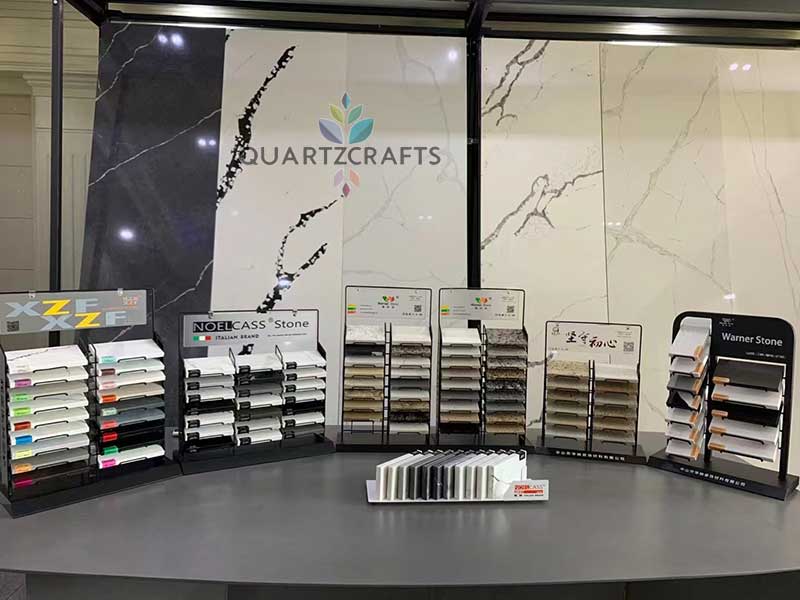
Key quality certifications for internationally traded engineered quartz: NSF/ANSI 51 (food contact safety), CE Marking (European compliance), SGS inspection reports, and UL Greenguard Gold (indoor air quality).
When evaluating quartz suppliers, request the following documentation: EN 14617 full test report (flexural strength, water absorption, abrasion, chemical resistance, thermal shock), NSF/ANSI 51 certificate (if destined for food-contact applications), Greenguard or Greenguard Gold certificate (if project pursues LEED/WELL), CE Declaration of Performance (for EU market), and SGS or equivalent third-party inspection capability for pre-shipment quality verification.
8. Environmental Impact & Sustainability
Sustainability has transitioned from a niche concern to a mainstream procurement criterion in the B2B building materials market. Green building certification programs like LEED (Leadership in Energy and Environmental Design), BREEAM, WELL, and Green Star now influence material specification decisions for a growing share of commercial projects worldwide. Understanding the environmental profile of each material type enables B2B buyers to make informed selections that align with both sustainability goals and practical project requirements.
8.1 Raw Material Extraction
Natural stone extraction (quarrying) involves significant land disturbance, heavy machinery operation, substantial water usage for cutting and dust suppression, and generation of stone waste (offcuts and damaged blocks that cannot be used as finished slabs). Marble quarrying, particularly in historic regions like Carrara, faces increasing environmental scrutiny and regulatory pressure related to landscape impact, slope stability, sediment runoff, and waste-rock management. Granite quarrying has similar environmental impacts but is generally conducted on a larger scale in regions with less heritage sensitivity.
Engineered quartz uses crushed natural quartz as its primary raw material, but the quartz crystals used in manufacturing are typically sourced from quartz sand mines or as a byproduct of other mining operations, requiring less direct landscape disruption than dimension-stone quarrying. Some quartz manufacturers incorporate recycled materials — post-consumer glass, reclaimed quartz from fabrication waste, or recycled mirror — into their products, further reducing virgin material demand. The resin binder (6–10% of the product) is petroleum-derived, contributing to the product's petrochemical footprint but in relatively small quantities per square meter of finished slab.
8.2 Manufacturing Energy & Emissions
Engineered quartz manufacturing is an energy-intensive process, with the vacuum compression, kiln curing, and polishing stages requiring significant electrical energy input. However, the manufacturing process is highly optimized in modern factories with energy recovery systems, water recycling loops (achieving 90%+ water reuse in leading facilities), and increasingly, renewable energy sourcing. Natural stone processing (cutting raw blocks into slabs, polishing, and edge-finishing) is also energy-intensive, though arguably less so per square meter than quartz manufacturing when measured at the factory gate.
However, a complete lifecycle energy comparison must account for transportation. Natural stone, particularly premium marble from Italy or exotic granite from Brazil, often travels greater distances to end markets than Chinese quartz (which serves Asian, Middle Eastern, and African markets with shorter shipping routes). The heavier density of natural stone (granite at 2,600–2,800 kg/m³ vs. quartz at 2,300–2,500 kg/m³) also means higher fuel consumption per square meter transported.
8.3 Service Life & End-of-Life
From a sustainability perspective, the most impactful factor is often service life — the longer a material performs in service before requiring replacement, the lower its annualized environmental impact. Engineered quartz's zero-maintenance profile and superior resistance to staining, scratching, and everyday damage give it a long practical service life, typically 20–30 years or more in commercial settings before aesthetic obsolescence (rather than material failure) drives replacement. Natural stone, properly maintained, can also last decades — but the "properly maintained" caveat is critical, as inadequately maintained marble in particular may require premature replacement.
At end of life, all three materials present recycling challenges. Natural stone can be crushed and reused as aggregate in construction applications. Engineered quartz can similarly be crushed, and some manufacturers are developing programs to accept post-consumer quartz slabs for recycling back into new production. However, the resin binder in quartz complicates recycling compared to pure mineral materials. None of the three materials are biodegradable or easily recyclable in the traditional consumer-goods sense.
8.4 LEED & Green Building Contributions
For projects pursuing LEED certification, engineered quartz can contribute to several credit categories: Materials & Resources credits (through regional sourcing, recycled content, and Environmental Product Declarations), Indoor Environmental Quality credits (through Greenguard Gold certification demonstrating low VOC emissions), and Innovation credits (through manufacturer sustainability programs). Specific LEED point contributions depend on the project type, LEED version, and the specific quartz product selected — B2B buyers should consult with their LEED consultant and the quartz manufacturer's sustainability documentation for project-specific credit calculations.
9. Common Myths & Misconceptions Debunked
The surface materials market is rife with misinformation — some originating from competing material suppliers, some from outdated knowledge, and some from well-intentioned but inaccurate generalizations. Addressing the most persistent myths helps B2B buyers make decisions based on facts rather than folklore.
Myth 1: "Quartz is artificial and therefore inferior to natural stone."
Reality: Engineered quartz is 90–94% natural quartz mineral — one of the hardest and most abundant minerals in the Earth's crust. The manufacturing process enhances the natural mineral's properties by eliminating porosity, ensuring consistency, and enabling design flexibility. Calling quartz "artificial" is like calling steel "artificial iron" — the engineering process adds performance value to the natural base material. On every measurable performance metric except heat resistance and UV stability, engineered quartz matches or exceeds natural stone.
Myth 2: "Granite doesn't need sealing."
Reality: While some very dense, low-porosity granite varieties (such as Absolute Black) have minimal absorption and may perform adequately without sealing in low-demand environments, the vast majority of commercial granite varieties benefit significantly from regular sealing. The Natural Stone Institute recommends sealing as standard practice for granite countertops. Unseal granite with even moderate porosity will eventually stain when exposed to oils, wines, and colored liquids in normal kitchen use.
Myth 3: "Marble is too delicate for any practical use."
Reality: While marble is genuinely softer and more maintenance-intensive than quartz or granite, characterizing it as "too delicate" is an overstatement. Marble has served successfully in demanding applications — from building facades exposed to weather for centuries to busy restaurant tables — when properly matched to the application and maintained appropriately. The key is setting realistic expectations: marble will develop patina and character over time, and clients who appreciate this natural evolution can use marble very successfully. The issue arises when marble is specified for high-demand applications (busy commercial kitchens, high-traffic bathroom vanities) with the expectation that it will remain pristine without professional maintenance.
Myth 4: "Quartz and granite are essentially the same thing."
Reality: While both contain significant quartz mineral content, they are fundamentally different materials with different formation processes, physical structures, and performance characteristics. Engineered quartz is a manufactured composite with near-zero porosity, guaranteed consistency, and resin-enhanced flexibility. Granite is a natural igneous rock with inherent porosity, natural variability, and a purely mineral structure. They are no more "the same" than plywood and solid hardwood — related, but distinct in every practical dimension.
Myth 5: "Higher price always means higher quality."
Reality: In the natural stone market, price correlates more closely with rarity and aesthetic demand than with physical performance. A $200/m² Calacatta marble is not physically "better" than a $30/m² engineered quartz — it is softer, more porous, less consistent, and more maintenance-intensive. Its high price reflects the limited supply of visually desirable blocks from specific Italian quarries. B2B buyers should evaluate materials on their fitness for the specific application, not on price as a proxy for quality.
Be cautious of suppliers — for any material type — who make absolute claims like "maintenance-free," "indestructible," or "lifetime warranty with no exclusions." Every material has limitations. Quartz can be damaged by excessive heat. Granite can stain if unsealed. Marble will etch on acid contact. Honest, knowledgeable suppliers clearly communicate both the strengths and limitations of their products.
10. Frequently Asked Questions
Is engineered quartz heat-proof?
No. Engineered quartz resists moderate heat well, but its polymer resin binder can be damaged by sustained contact with temperatures above approximately 150°C (300°F). Hot pots and pans removed directly from a stovetop or oven should always be placed on a trivet or heat pad, not directly on the quartz surface. Brief or incidental contact with warm (not hot) items generally causes no damage. In contrast, granite can withstand direct contact with very high temperatures without damage, making it a better choice for applications immediately adjacent to professional cooking equipment.
Can I use engineered quartz outdoors?
Standard engineered quartz is not recommended for outdoor or prolonged direct sunlight exposure. UV radiation causes progressive yellowing of the resin binder over time, resulting in color changes that cannot be reversed. For outdoor applications such as pool surrounds, outdoor kitchen countertops, and exterior cladding, granite is the preferred choice among these three materials. Some quartz manufacturers offer specialty UV-stabilized formulations for covered outdoor areas, but availability is limited and these products should be specified in consultation with the manufacturer.
What is the minimum order quantity (MOQ) for importing quartz from China?
MOQ requirements vary by manufacturer and product type. Typical ranges are 50–200 slabs per color for standard production orders. Many factories offer mixed-color containers (combining multiple colors to fill a 20-foot or 40-foot container) with lower per-color minimums — sometimes as few as 20–50 slabs per color within a mixed container. Stock colors (designs kept in ongoing inventory by the factory) may have lower MOQs than custom-produced colors. The most cost-effective approach for new importers is usually to start with a mixed container of 5–8 popular stock colors to test the market before committing to large single-color orders.
How does quartz compare to granite for resale value?
In most residential real estate markets, both quartz and granite countertops are considered premium finishes that positively impact property resale value. Quartz has been gaining ground in buyer preference surveys over the past decade, with many real estate professionals reporting that quartz countertops are now equal to or more desirable than granite in contemporary kitchen designs, particularly in the mid-to-upper market segments. For ultra-luxury properties, rare natural stone (exotic granite or premium marble) may command a perception premium, but this is market- and buyer-specific.
Is marble suitable for commercial bathroom countertops?
Marble can be used in commercial bathrooms, but it requires a clear commitment to ongoing professional maintenance — regular sealing, pH-neutral cleaning protocols, and periodic professional honing/polishing. For hotel and hospitality bathrooms, marble vanity tops typically require professional restoration every 2–3 years to maintain acceptable appearance. Many hospitality operators have transitioned from genuine marble to high-quality marble-look quartz for guest room bathrooms to achieve the desired aesthetic with dramatically lower maintenance requirements and costs, while reserving genuine marble for high-impact public areas like the lobby.
Can I get a custom quartz color that matches a specific marble or granite?
Yes. Most established quartz manufacturers offer custom color development services. The process typically involves providing a sample, photo, or name of the target material; the manufacturer develops a prototype, produces a sample slab for approval, and then proceeds to full production upon approval. Custom color MOQs are usually higher than standard colors (often 100+ slabs minimum) and development lead time adds 2–4 weeks before production begins. For B2B buyers seeking a quartz alternative to a specific natural stone, this custom-matching capability is one of quartz's most valuable commercial features. Contact us with a photo or material name for a custom-match quote.
What certifications should I request from a quartz supplier?
At minimum, request: EN 14617 physical property test reports (covering flexural strength, water absorption, abrasion resistance, chemical resistance), CE Declaration of Performance (for European markets), and factory quality management documentation (ISO 9001). Depending on your target market and application, you may also need: NSF/ANSI 51 certification (food-contact applications in North America), Greenguard or Greenguard Gold certification (projects pursuing LEED, WELL, or other green building standards), and radioactivity test reports (required by some markets). Reputable manufacturers will provide all requested documentation promptly — reluctance to share certifications is a red flag.
How do I verify the quality of quartz before shipping?
The most reliable approach is engaging a third-party inspection service (SGS, Bureau Veritas, Intertek, or similar) to conduct a Pre-Shipment Inspection (PSI) at the factory before the container is loaded. The inspection typically covers visual quality assessment (color consistency, surface defects, edge quality), dimensional verification (thickness, length, width tolerances), and may include basic physical tests (water absorption spot-check). Many experienced quartz importers also request container loading photos showing every slab being loaded with identification labels visible. Establishing a strong supplier relationship with documented quality standards from the first order is the foundation of reliable ongoing procurement.
Conclusion: Making the Right Choice for Your Project
The choice between engineered quartz, granite, and marble is not a matter of one material being universally "best" — it is a matter of matching the right material to the specific project requirements, budget parameters, maintenance capabilities, and aesthetic vision. However, the data presented in this guide makes the decision framework clear.
Engineered quartz is the optimal choice for the majority of B2B projects — particularly those requiring consistency at scale, zero-maintenance performance, hygiene compliance, and predictable sourcing. Its design flexibility, through advanced manufacturing technology, enables it to replicate the aesthetic of premium natural stones while delivering dramatically superior practical performance. For hospitality chains, multi-unit residential developments, commercial office fit-outs, retail rollouts, healthcare facilities, and any project where lifecycle cost and operational simplicity are priorities, quartz is the rational default.
Granite retains clear advantages for applications requiring heat resistance, UV stability, outdoor suitability, and natural stone authenticity. It is an excellent choice for custom residential projects, outdoor installations, and contexts where the client values natural uniqueness and is committed to ongoing maintenance.
Marble remains the ultimate prestige material for ultra-luxury applications where its cultural significance, irreproducible beauty, and natural character are valued above practical convenience. Its use is increasingly concentrated in high-impact, low-traffic applications — lobby features, wall cladding, decorative accents — while marble-look quartz has assumed the practical workload in high-use areas.
The most sophisticated B2B approach — and the strategy employed by many leading hospitality brands and developers — is the hybrid strategy: using each material where its strengths are maximized and its limitations are minimized, creating projects that combine natural stone prestige with engineered quartz practicality.
Whether you're looking for marble-look, granite-look, solid-color, or contemporary quartz designs, we provide factory-direct B2B pricing with CIF quotes to all major international ports. Send us the natural stone you're considering, and we'll recommend the closest quartz match — complete with samples, test reports, and competitive FOB/CIF pricing.