
1. Why Engineered Quartz Is the Preferred Material for Commercial Projects
Commercial construction and interior fit-out projects operate under fundamentally different constraints than residential work. The materials specified for a 400-room hotel, a 50,000-square-foot corporate headquarters, or a chain of 200 retail outlets must satisfy requirements that go far beyond visual appeal. They must deliver batch-to-batch color consistency across thousands of square meters, withstand daily abuse from hundreds or thousands of users, meet stringent hygiene and fire-safety regulations, and remain cost-effective when evaluated on a total lifecycle basis.
Engineered quartz stone — composed of approximately 90–94% crushed natural quartz crystals bound with high-performance polymer resins and pigments — has emerged as the dominant surface material for commercial interiors worldwide. According to industry reports from Freedonia Group, the global engineered stone market surpassed USD 28 billion in 2024, with commercial and hospitality applications accounting for a rapidly growing share. This trajectory is driven by measurable advantages that natural stone simply cannot match at scale.
Unlike natural granite or marble, which are extracted from quarries and inherently exhibit variation in color, veining, and mineral composition from one slab to the next, engineered quartz is manufactured under precisely controlled conditions. Every batch is formulated to an exact recipe of quartz aggregate sizes, pigment ratios, and resin quantities. This means a project manager ordering 2,000 m² of material for a hotel chain can receive slabs that are visually indistinguishable — whether they arrive in the first shipment or a reorder twelve months later. For brands that demand visual consistency across global locations, this capability is not merely convenient; it is a contractual necessity.
The financial case for quartz in commercial settings extends well beyond the purchase price. Natural stone surfaces require periodic sealing (typically annually for marble, every two to three years for granite) to maintain their stain resistance. Over a 25-year building lifecycle, these maintenance interventions — including material costs, labor, and the operational disruption of taking areas out of service — accumulate into significant expenditure. Engineered quartz, being inherently non-porous with a water absorption rate below 0.02%, eliminates this maintenance category entirely. When combined with its superior resistance to staining, scratching, and chemical exposure, the total cost of ownership (TCO) for quartz surfaces is typically 30–45% lower than equivalent natural stone installations in commercial environments.
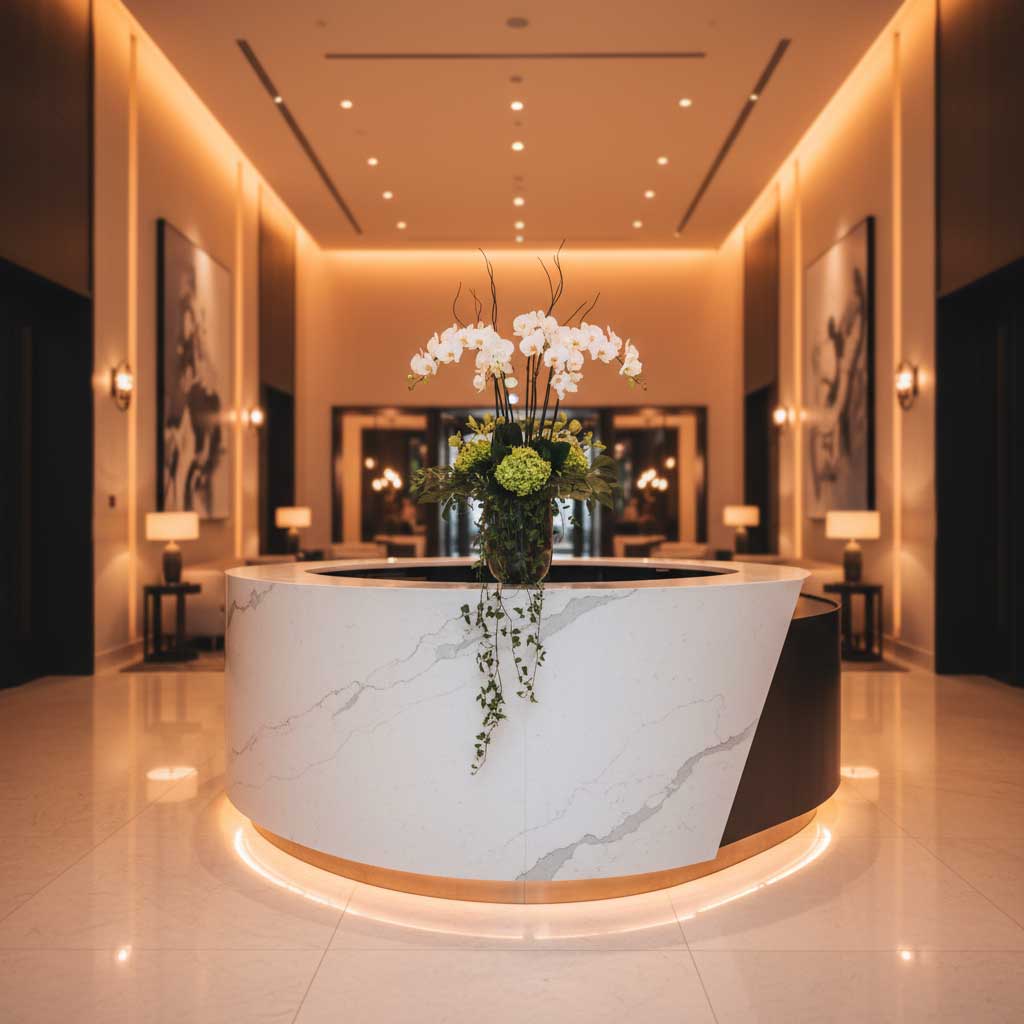
Beyond cost and consistency, engineered quartz addresses a growing priority in commercial construction: sustainability documentation. Modern commercial buildings increasingly pursue green building certifications such as LEED (Leadership in Energy and Environmental Design) or BREEAM. Quartz surfaces contribute to these certifications through low VOC (volatile organic compound) emissions, recyclable content, and long service life that reduces material replacement frequency. The material's durability — with an expected lifespan exceeding 25 years in commercial settings — aligns with circular economy principles that are reshaping specification decisions across the construction industry.
2. Technical Performance Data: Quartz vs. Competing Commercial Surface Materials
Specifying surface materials for commercial projects requires a data-driven approach. Architects and designers must balance aesthetics with quantifiable performance metrics that determine long-term suitability. The following comparison provides the technical foundation for evaluating engineered quartz against the most commonly specified alternatives in commercial construction.
Understanding these metrics is essential because commercial environments impose far greater stress on surface materials than residential settings. A hotel bathroom vanity may be cleaned with industrial-strength chemicals three times daily. An office building washroom vanity handles thousands of hand-washing interactions per week. A restaurant bar counter endures constant exposure to acids, alcohol, heat, and mechanical abrasion. The material must perform reliably under all these conditions without degradation.
| Property | Engineered Quartz | Natural Granite | Natural Marble | Solid Surface (Acrylic) | Porcelain Slab |
|---|---|---|---|---|---|
| Hardness (Mohs Scale) | 7 | 6–7 | 3–5 | 2–3 | 6–7 |
| Water Absorption | <0.02% | 0.1–0.4% | 0.2–0.6% | <0.04% | <0.05% |
| Flexural Strength (MPa) | 45–55 | 10–20 | 6–15 | 40–70 | 35–50 |
| Compressive Strength (MPa) | 150–250 | 100–250 | 50–120 | 90–130 | 200–400 |
| Stain Resistance | Excellent — no sealing | Good — requires sealing | Poor — etches with acids | Good — can absorb dyes | Excellent — no sealing |
| Heat Resistance | Up to 150°C | Up to 300°C+ | Up to 200°C | Up to 100°C | Up to 1,000°C |
| Color Consistency (Batch) | Excellent — ΔE ≤ 1.5 | Poor — natural variation | Poor — natural variation | Excellent | Very Good |
| Requires Sealing | No | Yes — annually | Yes — frequently | No | No |
| UV Resistance | Moderate (improved in latest formulations) | Excellent | Good | Poor | Excellent |
| Impact Resistance | Good | Moderate — can chip | Poor — chips/cracks easily | Good — repairable | Poor — can shatter |
| Typical Commercial Price Range | $$–$$$ | $$–$$$$ | $$$–$$$$$ | $–$$ | $$–$$$$ |
As the table above illustrates, engineered quartz occupies a uniquely balanced position among commercial surface materials. It matches or exceeds granite in hardness and stain resistance while offering the color consistency that natural stone cannot provide. Compared to marble — historically the material of choice for luxury hospitality — quartz delivers an equivalent visual result (particularly in modern Calacatta and Statuario designs) without the vulnerability to acid etching that makes marble unsuitable for food-service and bar environments. For a deeper exploration of these material differences, see our detailed quartz vs. natural stone comparison guide.
Solid surface materials (such as Corian and HI-MACS) offer excellent design flexibility but lack the hardness and heat resistance of quartz. They are more susceptible to surface scratching and can be damaged by hot pots and pans — a significant limitation in food-service environments. Porcelain slabs are the closest competitor to quartz in terms of overall performance, offering superior heat and UV resistance. However, porcelain's brittleness makes it vulnerable to impact damage during fabrication and installation, and repair of chips or cracks in porcelain is far more difficult than with quartz.
3. Hotel & Hospitality Applications
The hospitality industry represents the single largest commercial application segment for engineered quartz surfaces. The unique operational demands of hotels — combining the aesthetic expectations of luxury interiors with the practical need for rapid cleaning, damage resistance, and standardized room appearances — make quartz the material of choice for hotel groups ranging from boutique properties to international chains with thousands of locations.
Guest Room Bathroom Vanities
Guest room bathroom vanities are the highest-volume quartz application in any hospitality project. A typical 300-room hotel requires between 600 and 900 vanity tops, accounting for the main bathroom and secondary wet-bar or powder-room surfaces in suite configurations. At a 500-room resort, volumes can exceed 1,200 individual pieces.
The specification requirements for hotel vanity tops are demanding. Every unit must be color-identical because guests expect the same experience in room 102 as in room 1405. The surface must resist staining from toiletries, cosmetics, hair dyes, and the cleaning chemicals used by housekeeping staff — often industrial-strength solutions applied multiple times daily. Quartz's inherent non-porosity means these substances cannot penetrate the surface, ensuring the vanity maintains its original appearance through years of heavy use.
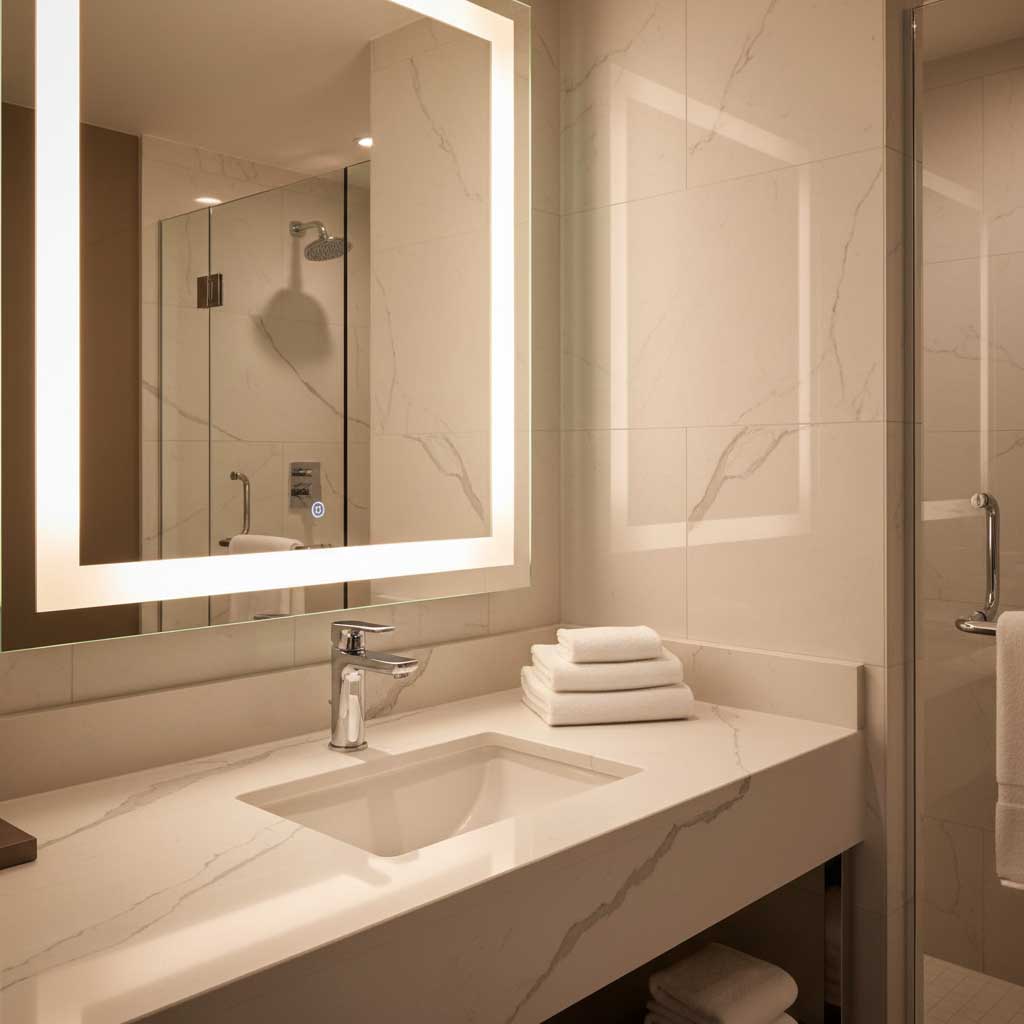
Standard vanity dimensions for hospitality projects range from 900mm to 1,500mm in width, 550mm to 600mm in depth, and 20mm in thickness. Pre-fabricated units with factory-cut sink openings (for undermount or drop-in basins) and pre-finished edges reduce on-site installation time significantly — a critical factor when hotel renovation timelines are compressed to minimize revenue loss from out-of-service rooms. A well-coordinated installation team can fit 20–30 pre-fabricated vanity tops per day, compared to just 8–12 when working with raw slabs that require on-site cutting.
Lobby, Reception & Public Areas
Hotel lobbies are brand-defining spaces. The reception desk is often the first physical touchpoint a guest has with the property, and its surface material communicates the hotel's quality positioning instantly. Engineered quartz with Calacatta, Statuario, or Arabescato marble-look veining has become the preferred specification for reception desks, concierge counters, and lobby feature walls. The material can be fabricated with mitered edges — creating the visual impression of a thick, monolithic stone slab — achieving the impact of premium Italian marble at a fraction of the cost and with none of the maintenance burdens.
Lobby surfaces face unique challenges: luggage scratches, spilled beverages, heavy foot traffic around reception counters, and constant contact with keys, phones, and credit cards. Quartz's 7 Mohs hardness ensures these interactions do not leave visible marks. For elevator lobbies and corridor wall panels, thinner 12mm or 15mm quartz slabs are increasingly specified as an alternative to large-format porcelain, offering superior impact resistance and a more luxurious tactile quality. Our quartz wall cladding guide covers these applications in detail.
Hotel Restaurants, Bars & Spas
Hotel food and beverage outlets require surfaces that handle wine, citrus juice, coffee, and cocktail ingredients without staining or etching. Quartz's chemical resistance makes it superior to marble (which etches on contact with any acid) and natural granite (which can stain without proper sealing) in these environments. Bar counters in particular benefit from quartz's non-porosity — red wine, beet juice, and turmeric-based cocktail ingredients that would permanently stain unsealed natural stone wipe clean from quartz with a damp cloth.
Hotel spa and wellness areas — including treatment room counters, changing room vanities, and pool-side bar surfaces — present additional requirements for moisture resistance. Quartz's near-zero water absorption rate makes it ideal for these high-humidity environments where natural stone would eventually absorb moisture and develop unsightly dark spots or microbial growth.
| Hotel Application | Recommended Thickness | Recommended Finish | Typical Quantity (300-Room Hotel) | Key Requirements |
|---|---|---|---|---|
| Guest Room Vanities | 20mm | Polished | 600–900 pieces | Color consistency, chemical resistance |
| Reception Desk | 30mm (or 20mm mitered) | Polished / Honed | 15–30 m² | Impact resistance, brand aesthetics |
| Restaurant Counters | 20mm or 30mm | Polished | 20–60 m² | Stain resistance, hygiene |
| Bar Tops | 30mm | Polished / Leathered | 10–30 m² | Alcohol/acid resistance |
| Elevator Lobby Panels | 12mm or 15mm | Polished | 30–80 m² | Light weight, impact resistance |
| Spa & Wellness Areas | 20mm | Honed / Matte | 40–100 m² | Moisture resistance, slip considerations |
| Suite Kitchenettes | 20mm | Polished | 50–150 pieces | Heat resistance, uniform sizing |
4. Office & Corporate Spaces
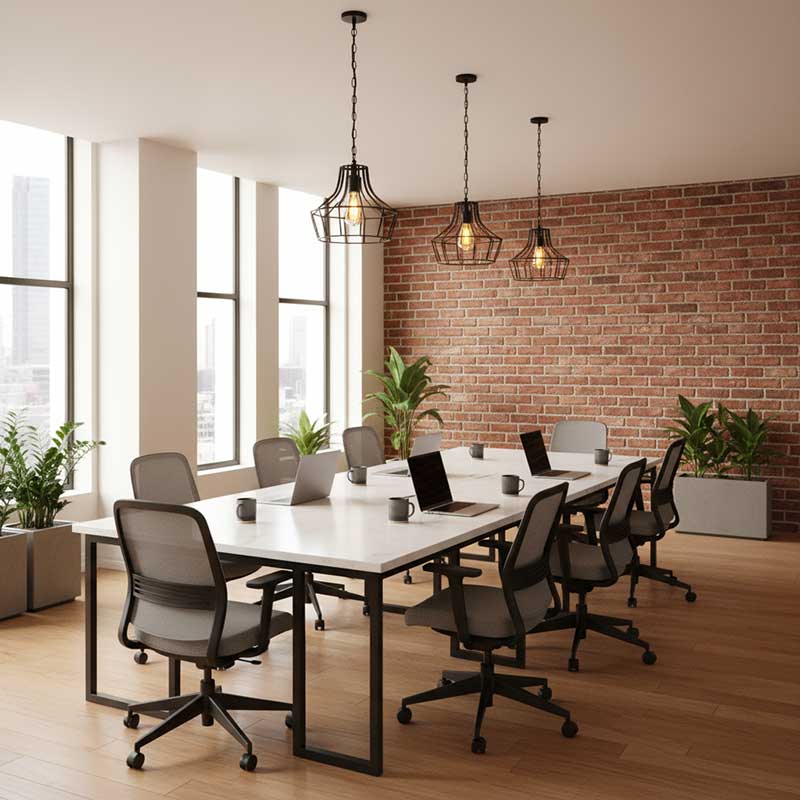
The modern office is far more than a functional workspace. It is a brand expression tool, an employee recruitment and retention asset, and — increasingly — a wellness-focused environment where material choices directly influence occupant satisfaction. Engineered quartz surfaces play a significant role in premium office fit-outs, coworking spaces, corporate headquarters, and technology campuses.
Break Rooms & Office Kitchenettes
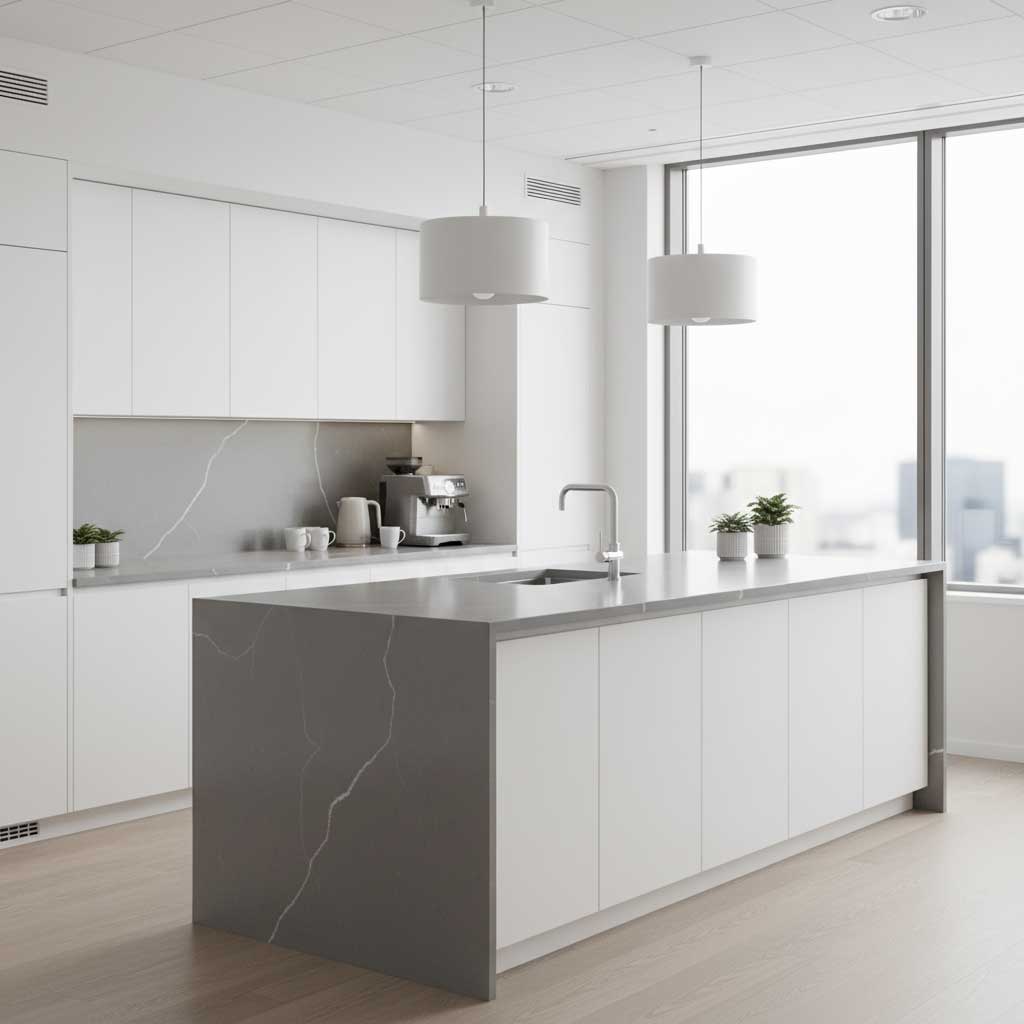
Office kitchenette countertops endure a punishing daily routine: hot coffee mugs placed directly on the surface, microwave meal spills, fruit juice and soda residue, and end-of-day cleaning with commercial janitorial products. Quartz surfaces handle all of these without staining, etching, or surface degradation. The material's resistance to coffee and tea tannins is particularly valuable — these substances are the number-one cause of staining on office countertops and are notoriously difficult to remove from porous surfaces like marble or unsealed granite.
Standard specifications for office kitchenettes call for 20mm polished quartz in neutral tones — warm whites, soft grays, or light beige — that complement contemporary corporate interior palettes. For companies seeking a more distinctive aesthetic, darker tones or marble-look veined patterns provide visual interest while maintaining the same performance characteristics. Edge profiles in office settings typically favor clean, contemporary styles: eased edges, pencil rounds, or mitered waterfall edges for island configurations.
Corporate Washroom Vanities
Washroom quality is one of the most immediate indicators of building class in commercial real estate. Class A office buildings and corporate headquarters increasingly specify quartz vanity tops as a quality differentiator. Full-length continuous vanity runs — spanning 2,400mm to 6,000mm with multiple undermount basins — create a seamless, premium appearance that signals building quality to tenants and visitors.
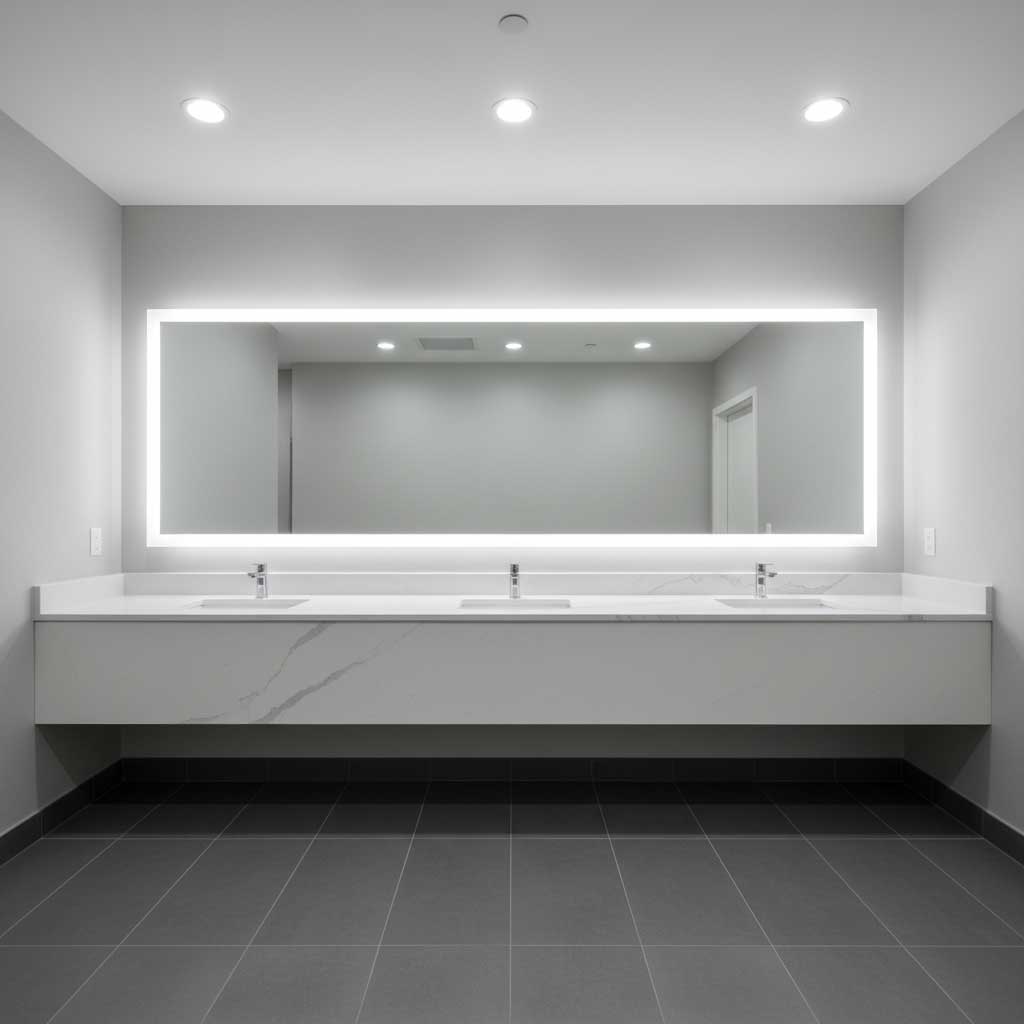
For washroom applications, honed or matte finishes are increasingly specified alongside traditional polished surfaces. Honed finishes are less likely to show water spots and fingerprints — a practical advantage in high-traffic washrooms where staff cannot wipe down surfaces after every use. The thickness and surface finish guide on our site provides detailed comparisons of finish types for different commercial applications.
Reception Desks & Brand Spaces
Corporate reception desks are brand-critical installations. Technology companies, law firms, financial institutions, and creative agencies all use reception desk design to communicate their identity. Quartz's fabrication versatility — supporting complex curves, cantilevered overhangs, integrated lighting channels, and bookmatched veining patterns — makes it ideal for these high-impact installations. Waterfall edges, where the countertop material cascades down the sides of the desk to the floor, have become a signature design element in contemporary corporate reception areas.
Coworking & Flexible Workspace Environments
The global coworking industry — led by operators like WeWork, IWG/Regus, and numerous regional providers — has created massive demand for surface materials that combine aesthetic appeal with extreme durability. Coworking spaces experience usage patterns more akin to public facilities than private offices: hundreds of different users interact with communal tables, coffee bars, and shared kitchen surfaces every week. Quartz's scratch resistance, stain resistance, and ease of cleaning make it the practical choice for these high-turnover environments.
| Office Application | Typical Dimensions | Thickness | Recommended Finish | Key Considerations |
|---|---|---|---|---|
| Kitchenette Counter | 2,400–3,600mm × 600mm | 20mm | Polished | Sink cutout, backsplash |
| Washroom Vanity | 2,400–6,000mm × 550mm | 20mm | Polished / Honed | Multiple basin cutouts, splash guard |
| Reception Desk | Custom per design | 20mm or 30mm | Polished | Waterfall edges, brand alignment |
| Communal Table | 2,400 × 1,200mm | 20mm | Honed / Matte | Fingerprint resistance, structural support |
| Conference Room Table | 3,000–4,800 × 1,200mm | 20mm | Polished / Honed | Cable management integration |
5. Restaurant & Food Service Applications
Food service environments present some of the most demanding conditions for surface materials. The combination of strict hygiene regulations, constant exposure to staining substances, frequent heavy cleaning, and the need to maintain an inviting dining atmosphere creates a specification challenge that engineered quartz is uniquely positioned to address.
Front-of-House: Dining & Bar Surfaces
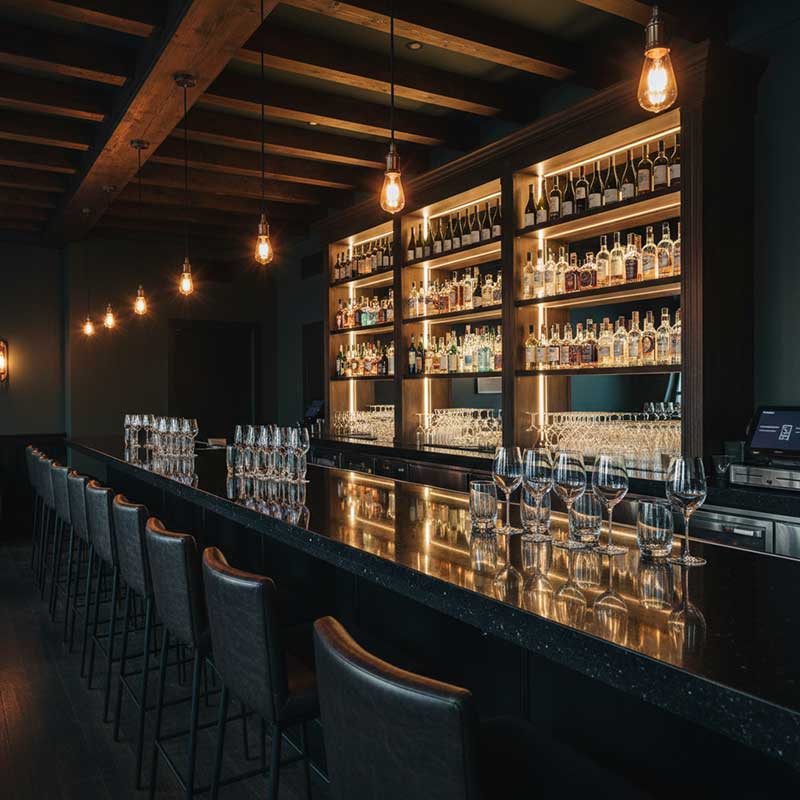
Restaurant tabletops, bar counters, buffet surfaces, and hostess station counters constitute the primary front-of-house applications. These surfaces face daily exposure to a formidable list of potentially staining substances: red wine, coffee, beet juice, turmeric, soy sauce, vinegar, citrus juice, and olive oil. Marble — the traditional luxury restaurant surface — etches visibly within days in these environments. Granite performs better but requires diligent sealing maintenance. Quartz's completely non-porous surface renders it immune to all of these substances, requiring nothing more than a wipe with a damp cloth to return to its original appearance.
For high-volume restaurants where table turnover speed directly impacts revenue, the speed of cleaning matters. A quartz tabletop can be wiped clean and ready for the next guest in seconds, compared to the more careful cleaning protocols required for porous or sealed surfaces. Over thousands of seatings per month, this operational efficiency advantage compounds significantly.
Open Kitchens & Display Cooking Areas
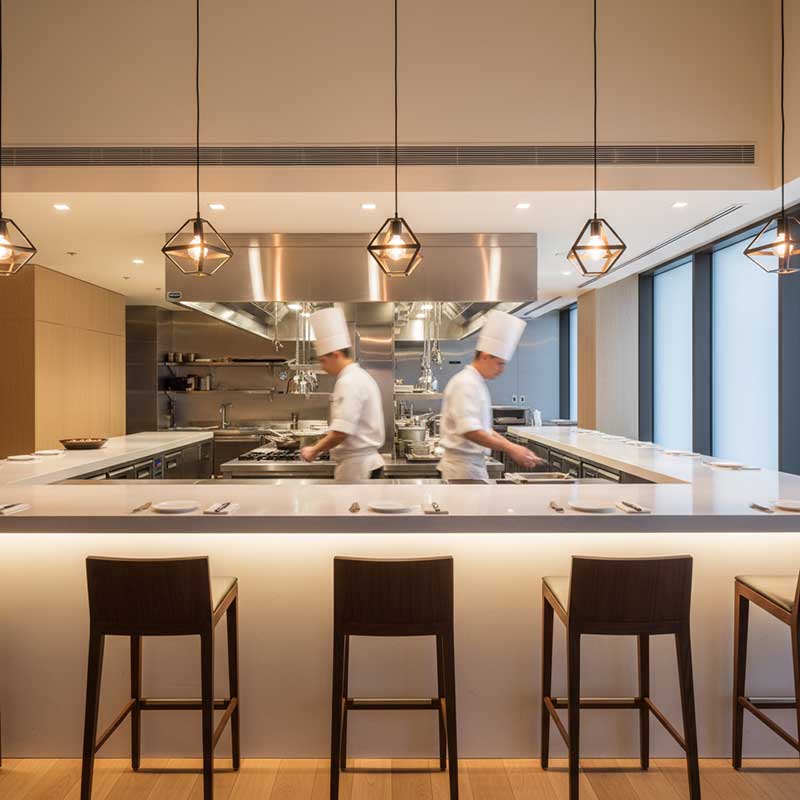
The trend toward open kitchens and chef's counter dining — where guests sit at a counter watching food preparation — has created a new category of food-service quartz applications. These surfaces must meet the hygiene standards of a commercial kitchen while maintaining the visual appeal expected in a dining environment. Quartz excels in this dual-purpose role: its non-porous surface meets food-contact hygiene requirements (certified to NSF/ANSI 51 — the standard for food equipment materials), while its design versatility allows it to complement the restaurant's aesthetic.
Sushi counters, pastry display areas, pizza preparation stations, and carving stations are all increasingly specified in quartz. The material's 7 Mohs hardness provides excellent resistance to knife marks, while its thermal stability handles warm plates and dishes without damage — though direct contact with extremely hot cookware should still be avoided.
Chain Restaurant & QSR Specifications
Chain restaurants and quick-service restaurant (QSR) brands — with dozens to thousands of locations worldwide — have the most stringent consistency requirements. A franchise outlet in Dubai must present the exact same surface color and appearance as one in São Paulo, London, or Sydney. Engineered quartz delivers this cross-continental consistency through controlled manufacturing: every batch is formulated to precise color specifications with a color variance guarantee of ΔE ≤ 1.5 (imperceptible to the human eye).
Major food-service chains also require documented hygiene certification for all customer-contact surfaces. Key certifications include NSF/ANSI 51 for food equipment materials, UL GREENGUARD certification for indoor air quality, and European food contact compliance under EC Regulation 1935/2004. Our factory maintains all major certifications and can provide documentation packages tailored to your region's regulatory requirements.
6. Retail & Showroom Environments
Retail design is fundamentally about creating environments that enhance brand perception and drive purchasing behavior. The surface materials used for cash wrap counters, product display fixtures, fitting room shelving, and storefront features contribute directly to the sensory experience that influences customer decisions. Engineered quartz has become a standard specification across luxury retail, mass-market fashion, cosmetics, electronics, and automotive showroom environments.
Luxury Brand Environments
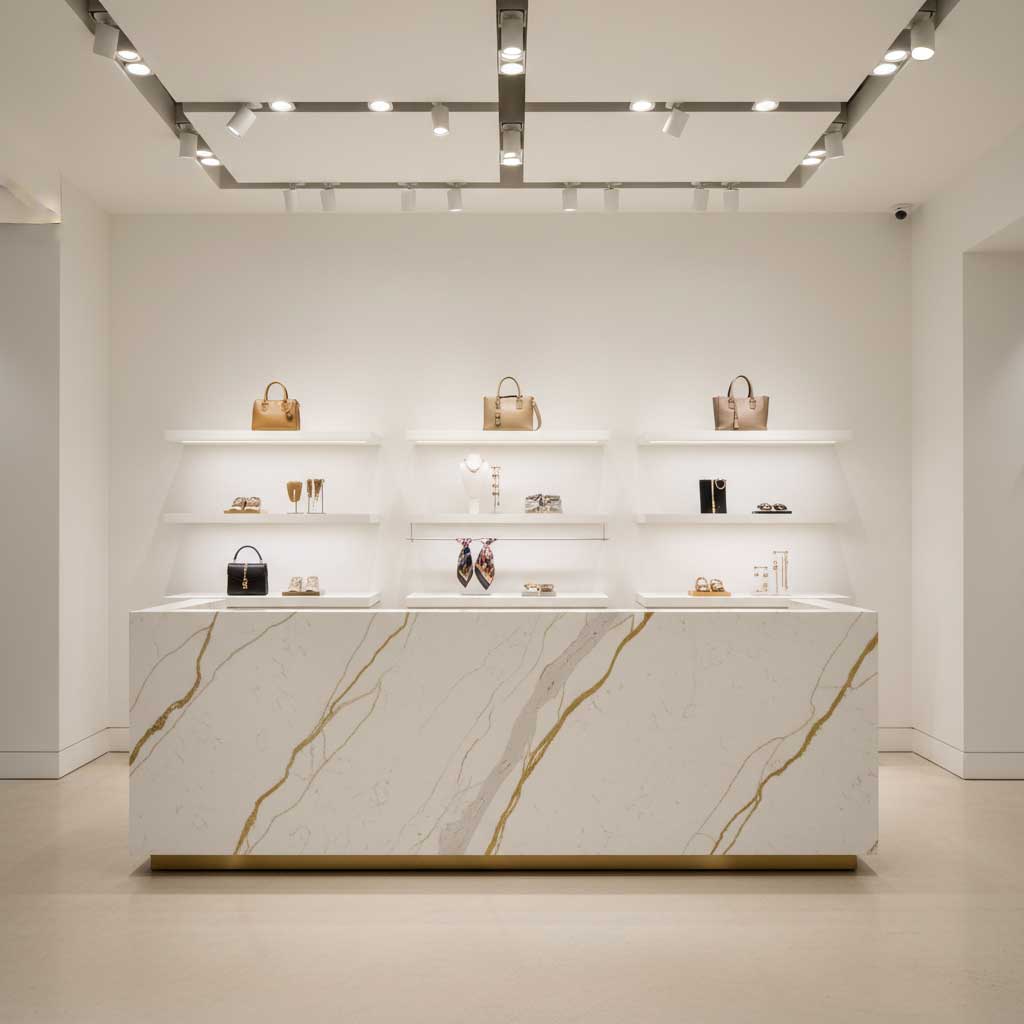
High-end fashion, jewelry, and cosmetics brands — including global houses managing 300–1,000+ retail locations — specify quartz surfaces for their stores as a standard element of visual merchandising. The material's ability to replicate rare marble aesthetics (Calacatta, Statuario, Arabescato) with perfect consistency across all locations eliminates the visual variability that natural stone would introduce. For a luxury brand, surface inconsistency between flagships and secondary-market locations would undermine the brand's quality positioning.
Cosmetics retail is a particularly demanding segment. Makeup products — foundations, lipsticks, eye shadows — are frequently tested on display surfaces and can cause severe staining on porous materials. Quartz's non-porous surface resists all cosmetic compounds, and display surfaces can be cleaned to pristine condition with standard commercial cleaning products.
Automotive Showrooms
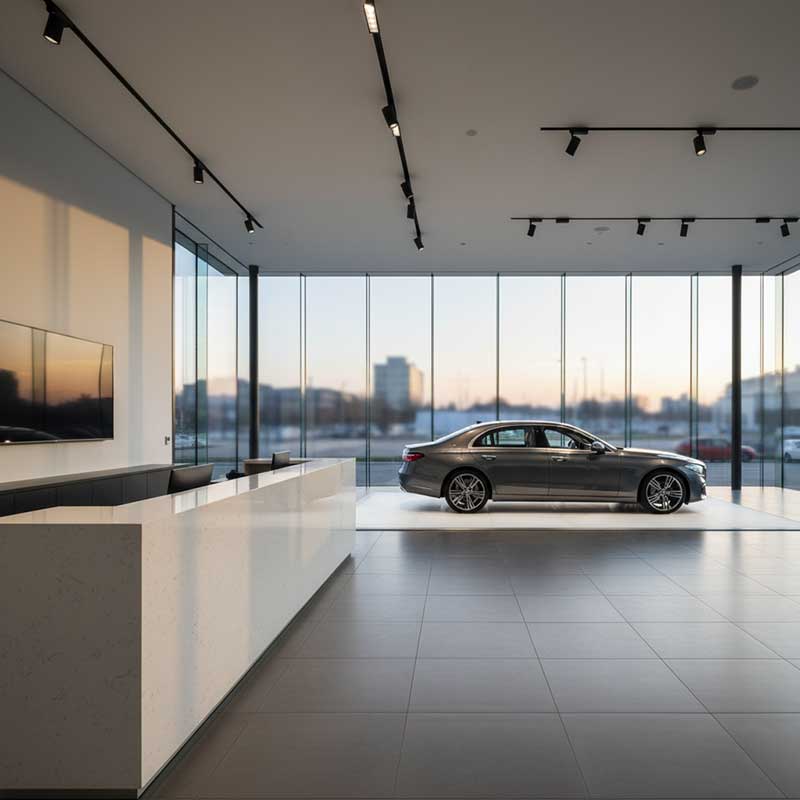
Premium automotive brands have adopted quartz surfaces for dealership reception desks, customer lounges, service advisor counters, and parts display areas. The material communicates the same quality and precision that these brands project through their vehicles. Quartz's resistance to hand oils, cleaning chemicals, and the high foot traffic inherent in showroom environments ensures surfaces maintain their pristine appearance through years of use. Lighter colors — particularly whites and light grays — are favored for automotive environments as they create a clean, gallery-like backdrop that allows the vehicles to remain the visual focal point.
Pop-Up & Modular Retail Installations
The rapid growth of pop-up retail and modular store concepts has created demand for pre-fabricated quartz counter units that can be installed quickly and potentially relocated. Standard modular counter configurations — 1,200mm, 1,800mm, and 2,400mm lengths with 600mm depth in 20mm thickness — allow retailers to assemble display and point-of-sale counters for temporary installations. These pre-fabricated units can be produced in bulk and stored for deployment across seasonal pop-up locations, trade shows, and temporary brand activations.
7. Healthcare & Medical Facility Applications
Healthcare environments impose the most rigorous hygiene requirements of any commercial sector. Hospitals, clinics, dental offices, medical laboratories, and pharmaceutical facilities require surface materials that can be disinfected with aggressive chemical agents without degradation, support infection-control protocols, and meet specific regulatory standards for cleanroom and clinical environments.
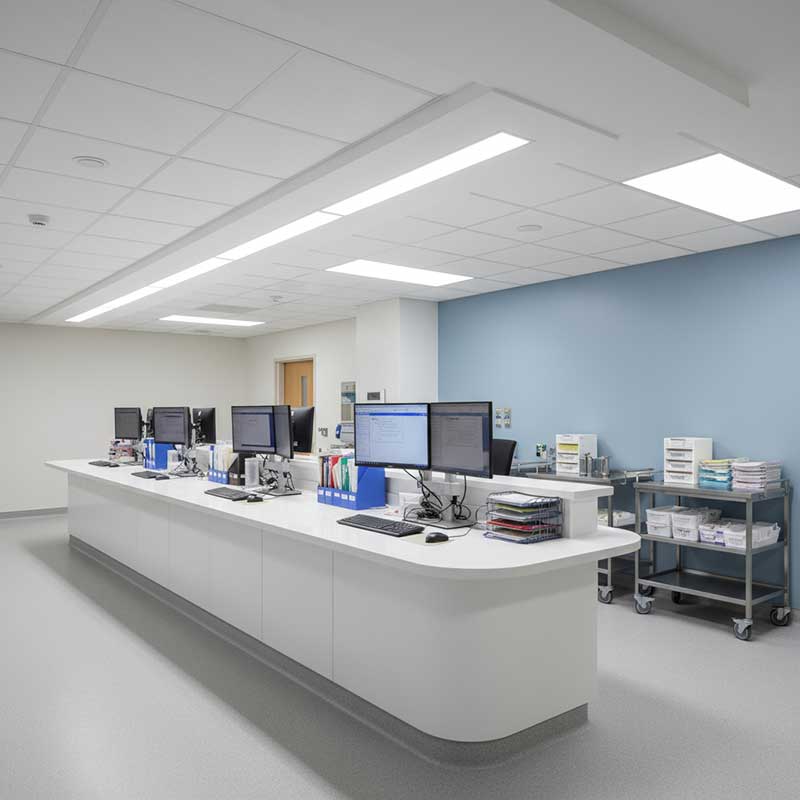
Engineered quartz's zero-porosity is the defining advantage in healthcare applications. The CDC's infection control guidelines emphasize that non-porous surfaces are significantly easier to decontaminate than porous alternatives, as they prevent microorganisms from establishing biofilms within the material structure. Quartz surfaces can be cleaned with hospital-grade disinfectants — including bleach solutions, quaternary ammonium compounds, and hydrogen peroxide-based cleaners — without the surface degradation that these aggressive chemicals would cause on natural stone.
Primary Healthcare Applications
Nurse station counters are the highest-volume healthcare application for quartz. These surfaces are in constant use — supporting computer equipment, medication preparation, chart review, and communication activities — and must withstand the intensive cleaning protocols mandated by hospital infection-control departments. Quartz's hardness resists the scratching that would create micro-harboring sites for bacteria, and its non-porous surface prevents absorption of blood, medications, and other healthcare-specific contaminants.
Patient room vanities and handwashing stations represent another significant application. These surfaces are cleaned multiple times daily with disinfectant solutions and must maintain their appearance and performance through thousands of cleaning cycles over the building's service life. Dental office operatory surfaces, laboratory bench tops, and pharmacy dispensing counters round out the healthcare application portfolio.
Design Considerations for Healthcare
Healthcare quartz installations typically specify honed or matte finishes rather than high-polish, as matte surfaces show fewer fingerprints and cleaning streaks under the bright fluorescent lighting common in clinical environments. Edge profiles should be fully rounded (bullnose or demi-bullnose) to eliminate sharp edges that could cause injury and to facilitate thorough cleaning — squared edges can accumulate debris in the junction between the edge and the surface. Color selections in healthcare lean toward light neutrals that make contamination visible, supporting the visual inspection element of cleaning protocols.
8. Education & Institutional Buildings
Educational institutions — from primary schools to universities and research facilities — require surface materials that combine durability against student use, ease of maintenance for custodial staff, and safety compliance for environments occupied by young people. Engineered quartz addresses all of these requirements while supporting the trend toward higher-quality learning environments that studies have shown improve student engagement and academic outcomes.
Laboratory Worktops
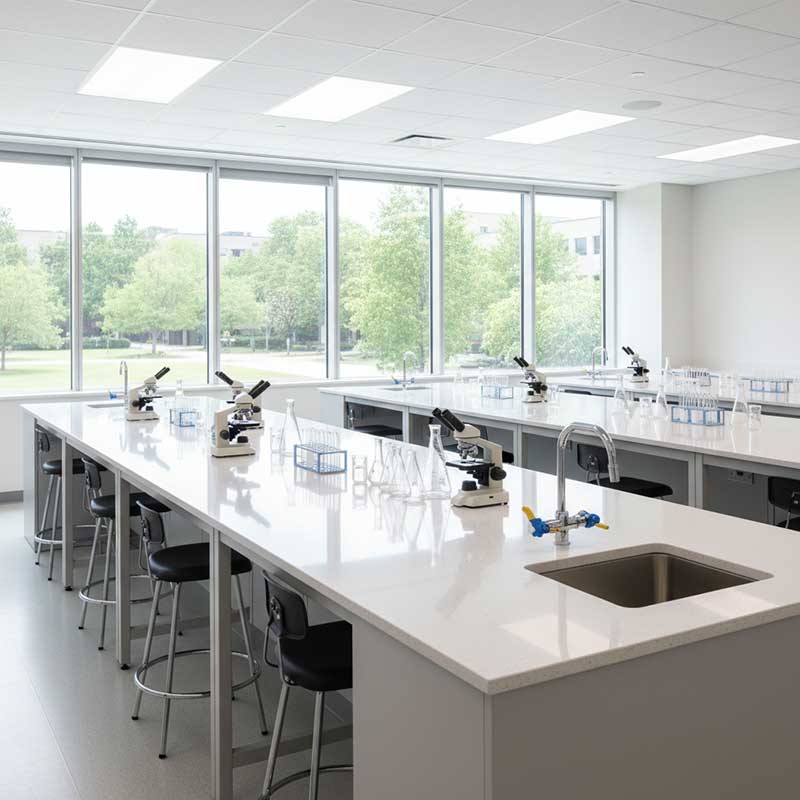
University and school science laboratories are an emerging high-value application for engineered quartz. Traditional laboratory bench materials — epoxy resin, phenolic resin, or chemical-resistant laminate — are functional but visually unappealing and can degrade over time. Quartz offers excellent resistance to a wide range of laboratory chemicals (acids, bases, solvents, and biological stains) while providing a vastly superior aesthetic that elevates the learning environment. It should be noted that for laboratories using extremely concentrated acids (such as hydrofluoric acid), specialized materials remain necessary, but for standard educational chemistry, biology, and physics laboratories, quartz provides excellent performance.
Cafeteria & Student Services
School and university cafeteria serving counters, student services desks, library checkout counters, and student union common areas all benefit from quartz's combination of durability and cleanability. In cafeteria environments, the material resists food staining and supports the sanitation requirements of institutional food service. Custodial staff appreciate the easy-clean surface that reduces labor time per square meter compared to porous alternatives.
Washrooms & Common Areas
Institutional washroom vanities represent a high-volume application in education. University dormitory bathrooms, school washrooms, and gymnasium changing facilities all require surfaces that withstand heavy use from young populations. Quartz's scratch and impact resistance, combined with its stain-proof non-porous surface, makes it a long-lasting choice for these high-abuse environments. The material also resists vandalism better than many alternatives — marker pen, paint, and adhesive residue can all be removed from quartz surfaces without damage.
9. Transportation Hubs & Public Infrastructure
Airports, railway stations, bus terminals, cruise ship terminals, and transit hubs represent a growing application segment for engineered quartz. These environments combine extremely high foot traffic volumes with the need for premium aesthetics in passenger-facing areas such as VIP lounges, airline check-in counters, retail concessions, and food-court surfaces.
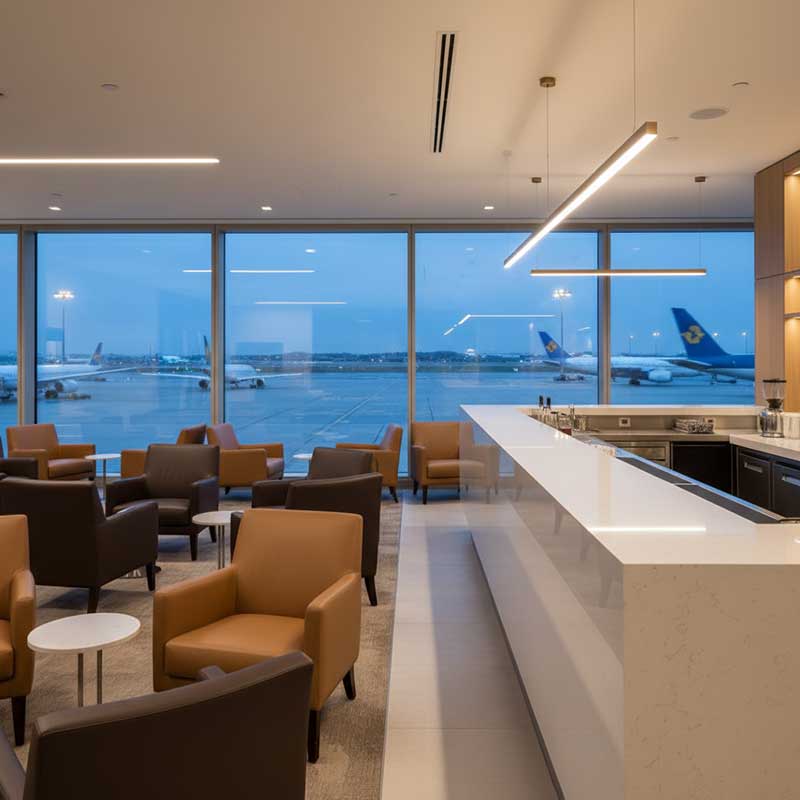
Airport VIP lounges — operated by airlines and independent lounge networks — specify quartz for bar counters, buffet surfaces, washroom vanities, and reception desks. These facilities operate 18–24 hours daily and experience continuous passenger flow, requiring surfaces that maintain their appearance under relentless use. The material's resistance to luggage scratches (from bags placed on counters) and beverage stains (from the constant food and drink service in lounges) makes it operationally ideal.
Airline check-in counters and customs/immigration processing counters are another high-impact application. These surfaces endure millions of passenger interactions per year — passports, boarding passes, luggage tags, electronic devices, and elbows all contact the surface continuously. Quartz's 7 Mohs hardness ensures these surfaces resist wear from this volume of interaction, maintaining a professional appearance far longer than laminate or solid surface alternatives.
For a comprehensive overview of how quartz performs under different environmental conditions — including the temperature extremes and humidity variations common in transportation infrastructure — see our climate performance guide.
10. Bulk Ordering & Procurement Guide for Commercial Projects
Procuring engineered quartz for a commercial project differs fundamentally from residential purchases. Quantities are larger, lead times are longer, logistics are more complex, and the coordination between architects, general contractors, sub-contractors, and the material supplier requires detailed documentation and reliable communication. This section provides a comprehensive guide to the procurement process for commercial-scale quartz orders.
| Specification | Standard Option | Notes |
|---|---|---|
| Minimum Order Quantity (MOQ) | 50 slabs per color | Lower MOQ negotiable for multi-color combined orders totaling 100+ slabs |
| Standard Slab Sizes | 3,200 × 1,600mm & 3,000 × 1,400mm | Custom sizes (e.g., 3,200 × 1,800mm jumbo) available for orders of 200+ slabs |
| Thickness Options | 12mm, 15mm, 20mm, 30mm | 20mm is the most widely specified for commercial countertop applications |
| Surface Finishes | Polished, Honed, Leathered, Concrete-look | Custom texture development available for orders of 500+ slabs |
| Edge Profiles (Pre-Fabricated) | Flat polished, eased, pencil round, bullnose, mitered | Complex profiles (ogee, dupont) available for pre-fabricated vanity/counter orders |
| Production Lead Time | 15–25 business days | Depends on quantity, color complexity, and current production schedule |
| Pre-Fabrication Lead Time | Additional 7–15 days | For factory-cut vanity tops, counters, or custom pieces with sink/faucet cutouts |
| Packaging | Wooden bundle/crate, foam separators, steel strapping | ISPM 15 fumigation certificate included for all international shipments |
| Shipping Terms | FOB Xiamen/Shanghai, CIF, CFR | CIF pricing available to all major global ports — door-to-door available on request |
| Payment Terms | T/T: 30% deposit, 70% before shipment | L/C at sight available for orders above USD 50,000; trade credit for repeat customers |
| Sample Policy | Free 300 × 300mm samples (shipping at cost) | Full-size sample slabs available for large project evaluations |
Slab vs. Pre-Fabricated: Choosing the Right Supply Model
Commercial buyers face a strategic decision between ordering raw slabs for local fabrication or ordering pre-fabricated (cut-to-size) pieces from the factory. Each model has distinct advantages depending on the project's requirements.
Raw slab supply is preferred when the project involves complex, irregular shapes that require precise on-site measurement and templating — such as curved reception desks, irregular-shaped bar counters, or surfaces that must accommodate existing plumbing locations. In this model, slabs are shipped to a local fabrication shop near the project site, where they are cut, edged, and polished to exact specifications. This approach provides maximum design flexibility but requires a skilled local fabricator and adds time and cost for the local processing step.
Pre-fabricated supply is ideal for projects with standardized, repetitive pieces — the dominant scenario in hospitality (hundreds of identical vanity tops) and chain retail (identical cash wrap counters across multiple stores). When all pieces share the same dimensions, the factory can produce them on a production line with consistent quality and significantly lower per-unit cost than local fabrication. Pre-fab also reduces on-site installation time, which can be decisive in time-sensitive hotel renovation projects. For detailed guidance on available sizes and configurations, see our kitchen countertop wholesale guide, which covers standard size and cut-to-size options extensively.
11. Color Consistency & Quality Assurance for Large-Scale Orders
Color consistency is arguably the single most important quality parameter for commercial quartz orders. When outfitting a building where hundreds of identical surfaces will be seen and compared by users, even subtle color variation between units is unacceptable. This section explains the manufacturing controls and quality assurance processes that ensure batch-to-batch uniformity.
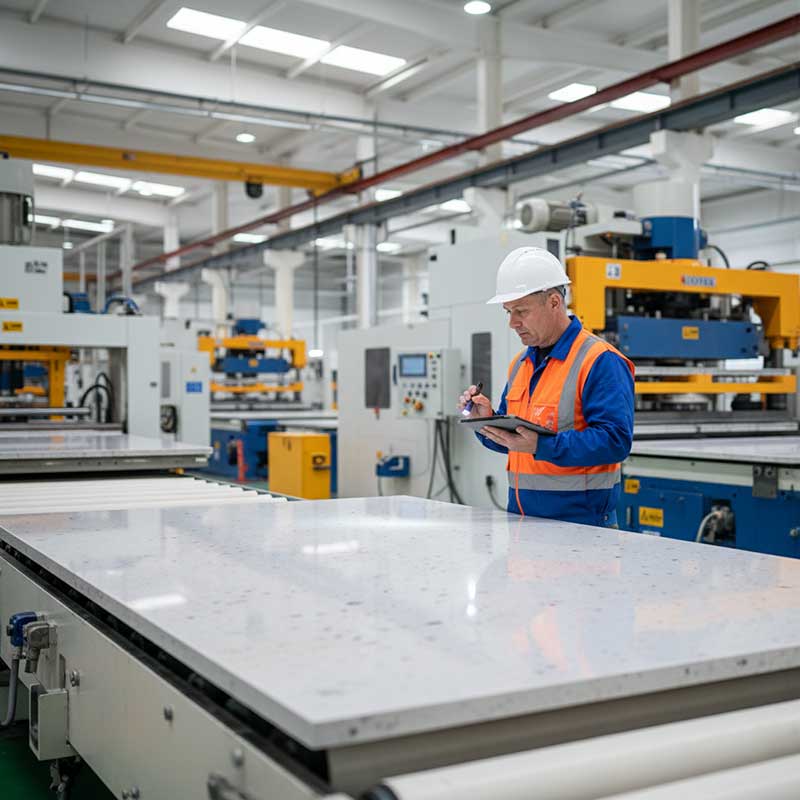
How Color Consistency Is Achieved
Engineered quartz color is determined by four controllable variables: the size and color of the quartz aggregate, the type and quantity of pigments, the ratio and type of binding resin, and the compaction and curing parameters during manufacturing. For commercial orders, our factory implements the following protocol to ensure uniformity:
- Single-source raw material batching: All quartz aggregate, pigment, and resin for a project order are sourced from a single supply batch and pre-mixed before production begins. This eliminates the raw-material variation that is the primary cause of color inconsistency.
- Continuous production runs: Large orders are scheduled as uninterrupted production runs. This means all slabs for a given order pass through the same press, curing oven, and polishing line under identical conditions, further minimizing variation.
- Spectrophotometer verification: Every slab is measured using a calibrated spectrophotometer to quantify its color position in CIE L*a*b* color space. Slabs falling outside the ΔE ≤ 1.5 tolerance from the approved reference sample are rejected.
- Human visual inspection: In addition to instrumental measurement, experienced QC inspectors perform visual inspections under standardized D65 lighting conditions to identify any pattern irregularities or surface defects that instruments might not capture.
- Sample approval workflow: Before full production begins, physical 300 × 300mm samples are shipped to the buyer for approval. Production does not commence until written approval is received. During production, progress photographs and videos of the actual slabs being produced are shared for ongoing client verification.
Understanding ΔE Color Tolerance
The ΔE (Delta E) metric, defined by the International Organization for Standardization (ISO) in standard ISO 11664, quantifies the perceptual difference between two colors. A ΔE value of 1.0 represents the smallest color difference a trained human observer can typically detect under controlled conditions. Our factory guarantees ΔE ≤ 1.5 for all slabs within a single order — meaning the color variation between any two slabs is imperceptible to the human eye under normal viewing conditions. By comparison, natural stone slabs from the same quarry block can exhibit ΔE values of 5–15 or more.
Pre-Shipment Inspection (PSI)
For commercial orders, we strongly recommend engaging a third-party pre-shipment inspection service — such as SGS, Bureau Veritas, or Intertek — to inspect the finished goods at our factory before containerization. Our team coordinates inspection scheduling and provides full access to the inspection agency. The PSI report typically covers slab dimensions, thickness tolerance, surface finish quality, color consistency (visual and spectrophotometric), edge quality, and packaging adequacy.
12. International Standards, Testing & Certifications
Commercial construction projects — particularly in regulated sectors like hospitality, healthcare, food service, and public infrastructure — require surface materials to hold specific certifications and comply with testing standards defined by international and regional bodies. Understanding which certifications apply to your project is essential for specification compliance, building code approval, and successful final inspections.
| Certification / Standard | Issuing Body | Relevance | Our Status |
|---|---|---|---|
| NSF/ANSI 51 | NSF International | Food equipment material safety — required for restaurant and food-service countertops in North America | ✅ Certified |
| UL GREENGUARD Gold | UL Environment | Indoor air quality / low VOC emissions — contributes to LEED and WELL Building credits | ✅ Certified |
| CE Marking (EN 15285 / EN 14617) | European Committee for Standardization | EU market access — covers physical properties, dimensions, and safety | ✅ Certified |
| ASTM C1364 | ASTM International | Standard specification for engineered stone — covers mechanical and physical properties | ✅ Tested & Compliant |
| EC 1935/2004 | European Commission | Food contact material compliance for EU food-service applications | ✅ Compliant |
| ASTM E84 (Class A Fire Rating) | ASTM International | Surface burning characteristics — required for commercial building interiors in most jurisdictions | ✅ Class A Rated |
| ISO 9001:2015 | ISO | Quality management system certification — demonstrates manufacturing process control | ✅ Certified |
| ISO 14001:2015 | ISO | Environmental management system certification — demonstrates environmental responsibility | ✅ Certified |
For projects in the Middle East, additional certifications may be required, including Gulf Standards Organization (GSO) compliance and Emirates Authority for Standardization and Metrology (ESMA) approvals. For Australian projects, compliance with AS/NZS standards and potential WaterMark certification for surfaces in wet areas may be applicable. Our export documentation team maintains familiarity with certification requirements for over 60 destination countries and can prepare country-specific compliance packages.
To learn more about the import process, tariffs, and certification requirements for your specific country, visit our detailed import tariffs and certifications guide.
13. Project Management & Logistics Support
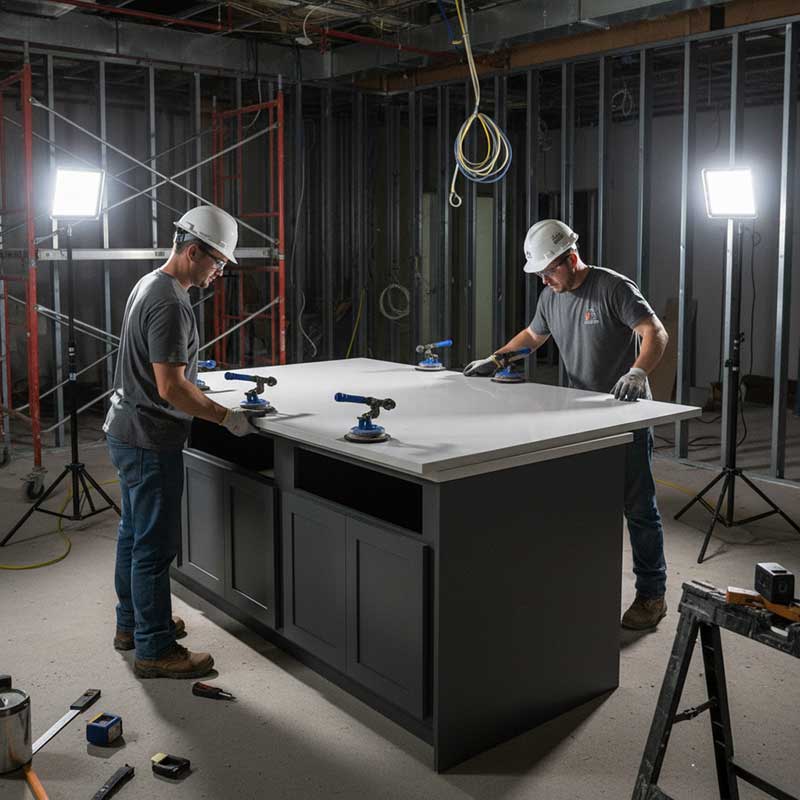
Successful delivery of a large-scale commercial quartz installation requires coordinated project management that extends from initial specification through manufacturing, international logistics, customs clearance, and on-site installation coordination. Our factory provides end-to-end project support to ensure that material arrives at the job site on time, in specification, and properly documented.
Project Timeline: From Inquiry to Installation
| Phase | Duration | Key Activities | Deliverables |
|---|---|---|---|
| 1. Specification & Sampling | 1–2 weeks | Color selection, physical sample production and shipment, technical specification review with architect | Physical samples, technical data sheets, specification documents |
| 2. Quotation & Contract | 3–5 business days | Detailed quotation preparation (FOB/CIF pricing per m² or per piece), payment terms negotiation, contract execution | Proforma invoice, sales contract, payment schedule |
| 3. Deposit & Production Scheduling | 3–5 business days | Deposit receipt confirmation, production slot reservation, raw material preparation | Production schedule, order confirmation |
| 4. Manufacturing | 15–25 business days | Slab production, quality control, pre-fabrication (if applicable), progress reporting with photos | Production progress reports, QC test results, progress photos/videos |
| 5. Pre-Shipment Inspection | 2–3 business days | Third-party or client inspection at factory, final quality verification, packaging inspection | PSI report, final approval for shipment |
| 6. Shipping & Transit | 15–35 days (sea freight) | Container loading, sea freight, in-transit tracking, document forwarding | Bill of lading, packing list, commercial invoice, certificate of origin, fumigation certificate |
| 7. Customs Clearance & Delivery | 3–10 business days | Destination port clearance, duty payment, last-mile delivery to job site or warehouse | Customs clearance documentation, delivery confirmation |
| 8. Fabrication & Installation | Variable (project-dependent) | Local fabrication (if slabs ordered), site installation, quality sign-off | Installation guidelines, care manuals, warranty certificates |
Phased Delivery for Multi-Phase Projects
Large hotel, hospital, and mixed-use projects are frequently constructed in phases — with different building zones reaching the interior fit-out stage at different times. Our project management team coordinates phased production and shipment schedules aligned with your construction timeline. This approach avoids the need to warehouse large quantities of material on site (where storage conditions may not be ideal for stone products) while ensuring each construction phase receives its material allocation at the optimal moment for installation.
Documentation Package
Every commercial order ships with a comprehensive documentation package that includes: detailed packing lists with slab identification numbers, material test reports covering all physical and mechanical properties, certificates of conformity referencing applicable standards, certificate of origin for customs processing, fumigation certificate (ISPM 15 compliance) for wooden packaging, and project-specific certifications as required (fire rating, food contact, VOC emissions). We also provide installation guidelines, care and maintenance manuals, and warranty documentation for your end clients or building operators.
After-Sales & Long-Term Support
Our commitment to commercial projects extends well beyond the initial delivery. We maintain full project records — including batch formulations, slab identification logs, and QC data — for a minimum of 10 years. This ensures that color-matched replacement material can be manufactured for future renovations, expansions, or damage repairs. Our technical team remains available for installation troubleshooting, care-and-maintenance guidance, and any quality inquiries throughout the product's service life.
14. Sustainability, LEED & Green Building Compliance
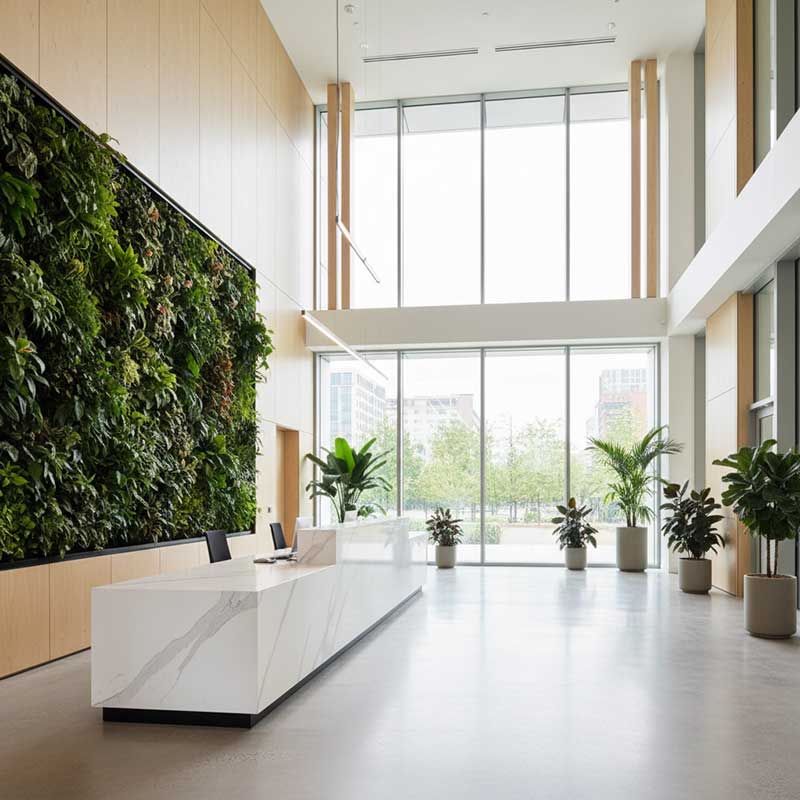
Sustainability is no longer a niche consideration in commercial construction — it is a mainstream specification requirement. The world's largest corporate tenants, hotel operators, and retail brands increasingly mandate green building certifications for new construction and major renovations. Engineered quartz surfaces contribute positively to several of the most widely adopted green building rating systems.
LEED Contributions
The LEED rating system, developed by the U.S. Green Building Council (USGBC) and adopted globally, awards credits across multiple categories. Engineered quartz can contribute to LEED credits in the following areas:
- Indoor Environmental Quality (IEQ) — Low-Emitting Materials: Quartz surfaces certified to UL GREENGUARD Gold meet the VOC emission limits required for this credit. This is particularly relevant in office and educational environments where indoor air quality directly affects occupant health and productivity.
- Materials & Resources (MR) — Building Product Disclosure and Optimization: Manufacturers providing Environmental Product Declarations (EPDs) and Health Product Declarations (HPDs) for their quartz products enable project teams to earn credits in this category. Our factory can provide EPD documentation upon request.
- Materials & Resources (MR) — Construction & Demolition Waste Management: Quartz's long service life (25+ years) reduces material replacement frequency, supporting lifecycle waste reduction. Manufacturing waste (off-cuts and rejected slabs) can be recycled into aggregate for new slabs or other building materials.
- Regional Priority Credits: In certain geographic regions, locally manufactured quartz products may qualify for regional material preference credits that reduce transportation-related environmental impacts.
BREEAM & Other Rating Systems
For projects in the UK and Europe, the BREEAM (Building Research Establishment Environmental Assessment Method) rating system applies similar principles. Quartz surfaces contribute to BREEAM credits through responsible sourcing documentation, low VOC emissions, and material durability assessments. In the Middle East, the Estidama Pearl Rating System (UAE) and GSAS (Global Sustainability Assessment System) (Qatar) include similar material performance criteria that quartz products can address.
Manufacturing Sustainability Practices
Our factory implements several environmental management practices certified under ISO 14001:2015. Water used in the quartz polishing process is recycled through a closed-loop filtration system, reducing freshwater consumption by over 90%. Quartz dust generated during cutting and polishing is captured by industrial vacuum systems and recycled as aggregate filler. The manufacturing facility uses energy-efficient vacuum compression presses that reduce electricity consumption compared to older vibro-compression technology. These practices are documented in our corporate sustainability report, available to clients pursuing green building certification documentation.
For the latest industry data on market sustainability trends and how they affect material specification in commercial projects, our market trends analysis provides current insights.
15. Frequently Asked Questions: Commercial Quartz Projects
The following questions represent the most common inquiries we receive from architects, project managers, and B2B buyers specifying quartz for commercial projects.
Ready to Source Quartz for Your Commercial Project?
Get a detailed quotation with CIF pricing to your port. Our dedicated commercial project team responds within 12 business hours.