
1. Introducción a la Manufactura de Cuarzo
La piedra de cuarzo ingenierizado — también conocida como cuarzo artificial, cuarzo compuesto o piedra de ingeniería — es uno de los materiales de superficie más populares en la industria global de construcción y diseño de interiores. El mercado mundial de piedra ingenierizada fue valorado en aproximadamente USD 18.500 millones en 2023 y se proyecta que crecerá a una tasa de crecimiento anual compuesto (TCAC) de alrededor del 5–6% hasta 2030, impulsado por remodelaciones residenciales, proyectos comerciales de hospitalidad y un cambio continuo desde la piedra natural. A diferencia de la piedra natural (granito, mármol, cuarcita), que se extrae de canteras y se corta en planchas, el cuarzo ingenierizado es un producto manufacturado. Se produce combinando aproximadamente un 90–94% de cristales de cuarzo natural triturado con un 6–10% de resinas poliméricas, pigmentos y aditivos que mejoran el rendimiento.
El proceso de manufactura fue originalmente desarrollado por la empresa italiana Breton S.p.A. n la década de 1960 bajo la marca "Bretonstone". El inventor Marcello Toncelli patentó la tecnología de compresión por vibración al vacío que sigue siendo el estándar de la industria hasta hoy. Si bien varios fabricantes chinos, turcos e indios han desarrollado sus propias variaciones y mejoras a lo largo de las décadas, el principio fundamental — el uso simultáneo de vacío, vibración y compresión hidráulica para lograr una porosidad cercana a cero — no ha cambiado. Actualmente, más de 300 fábricas de cuarzo ingenierizado operan en todo el mundo, con la mayoría concentradas en China (provincias de Guangdong y Fujian), India (Gujarat y Rajastán), Turquía y Vietnam.
Para compradores B2B — ya sea que usted sea importador, distribuidor, fabricante o especificador de proyectos — entender el proceso de manufactura no es solo conocimiento académico. Impacta directamente en su capacidad para evaluar la calidad de los proveedores, comprender por qué dos planchas aparentemente idénticas de diferentes fábricas pueden diferir en precio entre un 30–50%, identificar posibles problemas de calidad antes de que se conviertan en costosos reclamos de garantía, y tomar decisiones informadas sobre qué productos se adaptan a los requisitos regulatorios y de desempeño de su mercado específico. En mercados como Australia, donde cambios regulatorios respecto al riesgo de silicosis han llevado a la prohibición directa de ciertos productos de piedra ingenierizada con alto contenido de sílice, comprender la composición y los procesos de manufactura se ha convertido en una cuestión de acceso al mercado, no solo de preferencia.
Esta guía recorre cada etapa del proceso de manufactura en detalle, explica cómo cada etapa afecta la calidad y el desempeño del producto final, y proporciona preguntas prácticas que usted debería hacer al evaluar proveedores de piedra de cuarzo.
ℹ️ Conclusión Clave para Compradores
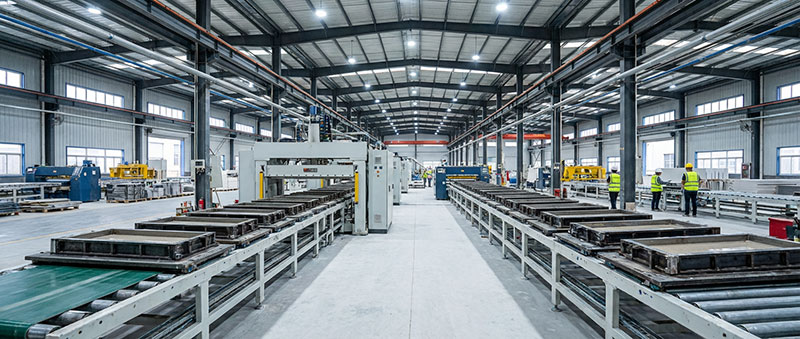
Dos planchas de cuarzo que lucen idénticas en la superficie pueden tener propiedades físicas vastamente diferentes dependiendo de la calidad de manufactura. Las seis etapas de producción descritas a continuación son donde se originan las diferencias de calidad entre cuarzo barato y premium. Comprender estas etapas le da una ventaja decisiva en las negociaciones con proveedores.
2. Selección y Clasificación de Materias Primas
El proceso de manufactura comienza con el abastecimiento y la preparación de materias primas. El cuarzo natural (dióxido de silicio, SiO₂) es el componente primario, representando típicamente el 90–94% de la plancha terminada por peso. La calidad, pureza y distribución granulométrica del cuarzo utilizado tienen un impacto profundo en la dureza, resistencia al rayado, pureza de color y durabilidad general del producto final.
Obtención de Cristales de Cuarzo
Los fabricantes premium obtienen cristales de cuarzo con una pureza de 99,5% de SiO₂ o superior. Las principales regiones de abastecimiento incluyen Minas Gerais (Brasil), Andhra Pradesh y Rajastán (India), Spruce Pine (Carolina del Norte, EE.UU. — el depósito de cuarzo más puro del mundo) y diversas minas en Noruega y Sudáfrica. El cuarzo generalmente se extrae de canteras a cielo abierto o depósitos de vetas subterráneas y luego se somete a una rigurosa serie de pasos de limpieza y purificación. Estos pasos típicamente incluyen trituración por mandíbula y molienda de bolas para reducir el tamaño de partícula, separación magnética para eliminar minerales portadores de hierro (magnetita, ilmenita), lavado ácido utilizando ácido clorhídrico (HCl) o una combinación de HCl y ácido fluorhídrico (HF) para disolver contaminantes de óxido de hierro superficial, y flotación por espuma para remover feldespato y mica residual.
La contaminación por hierro es la impureza individual más problemática, particularmente para productos blancos, crema y gris claro. Incluso cantidades traza de óxido de hierro (Fe₂O₃) en niveles tan bajos como 50–100 ppm pueden causar decoloración amarilla o marrón no deseada, especialmente cuando la plancha se expone a la luz UV o al calor a lo largo del tiempo. Es por eso que las especificaciones de pureza importan enormemente — la diferencia entre 99,0% y 99,7% de SiO₂ puede ser la diferencia entre una plancha que se mantiene blanca y una que se torna crema dentro de dos años.
Los fabricantes de menor calidad pueden usar arena de cuarzo con niveles de pureza alrededor del 98–99%, lo que puede resultar en inconsistencias sutiles de color, dureza reducida y una mayor probabilidad de decoloración con el tiempo. Algunas operaciones de bajo presupuesto usan arena de río obtenida localmente con purificación mínima, lo que aumenta significativamente el riesgo de variación de color entre lotes. Al evaluar proveedores, preguntar sobre la pureza del cuarzo — y solicitar un Certificado de Análisis (COA, por sus siglas en inglés) del proveedor de cuarzo — es una de las formas más efectivas de medir su compromiso con la calidad.
Clasificación por Tamaño de Partícula
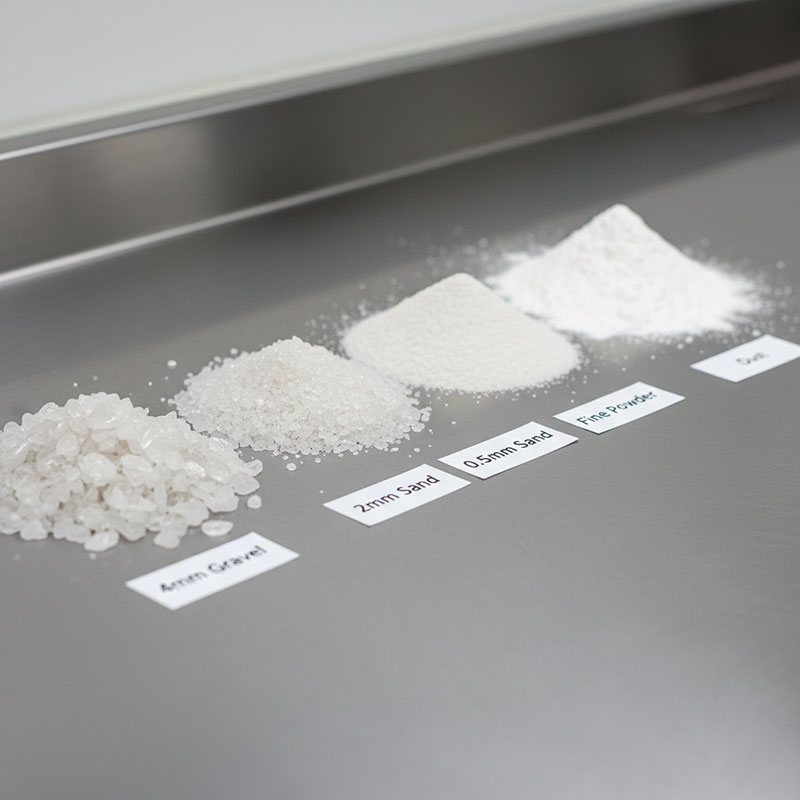
Después de la purificación, los cristales de cuarzo se trituran y tamizan en múltiples categorías de tamaño de partícula utilizando cribas vibratorias y clasificadores de aire. Una corrida de producción típica utiliza tres a cinco tamaños diferentes de gránulos, que van desde polvo fino (menos de 0,1 mm, a menudo llamado "harina de cuarzo") hasta partículas gruesas (2–4 mm). La proporción específica de estos tamaños de partícula es uno de los secretos comerciales más celosamente guardados de la industria, ya que determina directamente la textura visual, la densidad y la resistencia mecánica de la plancha.
La ciencia subyacente sigue el principio de empaquetamiento optimizado de partículas — similar a la curva de Fuller o el modelo de empaquetamiento de Andreasen utilizados en la tecnología del concreto. Las partículas finas llenan los espacios entre las gruesas, creando una matriz más densa con menos vacíos y requiriendo menos resina para lograr una unión completa. Esto es significativo porque la resina es tanto la materia prima más cara por unidad de volumen como el componente más susceptible a la degradación — por lo que minimizar el contenido de resina mientras se mantiene la densidad completa produce una plancha que es tanto más económica como más durable. La proporción también afecta profundamente el resultado estético: mayores proporciones de partículas finas crean una apariencia más suave y uniforme (típica de diseños de color sólido y aspecto marmolado), mientras que incorporar partículas más grandes crea más profundidad visual y una textura granular natural (deseable para diseños de aspecto granítico).
Resina y Aditivos
El agente aglutinante en la piedra de cuarzo ingenierizado es resina de poliéster insaturado (UPR, por sus siglas en inglés), que típicamente representa el 5–8% de la plancha por peso. La UPR es un polímero termoestable — una vez curada, no se puede volver a fundir, lo que le otorga a la plancha terminada su rigidez permanente y resistencia al agua. La formulación de resina típicamente contiene monómero de estireno como diluyente reactivo, que se entrecruza con las cadenas de poliéster durante el curado para formar una red polimérica tridimensional densa. La calidad de la resina — incluyendo el peso molecular del esqueleto de poliéster, la relación estireno-poliéster y la presencia de estabilizadores UV — afecta la resistencia a la flexión, la resistencia química, la estabilidad de color y la susceptibilidad al amarillamiento inducido por UV de la plancha.
Los fabricantes premium usan resinas de alta calidad, estabilizadas contra UV, de proveedores químicos establecidos (como Ashland, DSM, o equivalentes chinos líderes como Changzhou New Solar). Las resinas más baratas pueden ahorrar un 15–25% en costos de adquisición de resina, pero pueden provocar amarillamiento de planchas blancas dentro de los 12–24 meses de exposición UV, reducción de la resistencia al impacto, mayores emisiones de estireno durante la producción (una preocupación significativa de salud ocupacional), y posibles problemas con emisiones de COV (Compuestos Orgánicos Volátiles) del producto terminado — una preocupación creciente en mercados con regulaciones estrictas de calidad del aire interior como la UE (marcado CE con cumplimiento de EN 15286), Norteamérica (GREENGUARD, NSF/ANSI 51) y, cada vez más, China (GB 18580 y estándares relacionados).
Los aditivos adicionales incluyen agentes de acoplamiento (compuestos de silano, típicamente gamma-metacriloxipropiltrimetoxisilano, que mejoran el enlace químico entre los cristales inorgánicos de cuarzo y la resina polimérica orgánica), catalizadores (peróxidos orgánicos como peróxido de metiletilcetona, o MEKP, para iniciar y controlar la reacción de curado), y pigmentos (colorantes a base de óxidos metálicos y a veces partículas de vidrio reciclado o espejo para efecto decorativo). Para diseños de aspecto marmolado, se aplican pigmentos especializados y compuestos de veteo durante la etapa de mezclado para simular los patrones de vetas naturales del mármol Calacatta, Statuario o Carrara.
| Materia Prima | Proporción | Función | Impacto en la Calidad |
|---|---|---|---|
| Cuarzo Natural (SiO₂) | 90–94% | Componente estructural primario | Mayor pureza = mejor dureza, claridad de color |
| Resina de Poliéster (UPR) | 5–8% | Agente aglutinante | Resina estabilizada UV previene amarillamiento |
| Pigmentos | 0,5–2% | Creación de color y patrón | Pigmentos premium = mejor consistencia entre lotes |
| Agentes de Acoplamiento y Catalizadores | 0,5–1% | Mejora de adhesión, control de curado | Proporción adecuada = resistencia uniforme en toda la plancha |
🔬 Nota Técnica
Algunos fabricantes están desarrollando actualmente piedra ingenierizada de bajo contenido de sílice (con contenido de SiO₂ por debajo del 40%) en respuesta a las regulaciones sobre silicosis, particularmente en Australia. Estos productos reemplazan una porción del cuarzo con minerales alternativos como feldespato, alúmina o recicita. Si bien abordan las preocupaciones de salud ocupacional durante la fabricación, sus propiedades físicas difieren del cuarzo tradicional — los compradores deben solicitar datos de prueba separados para estas formulaciones.
3. Mixing & Blending Process
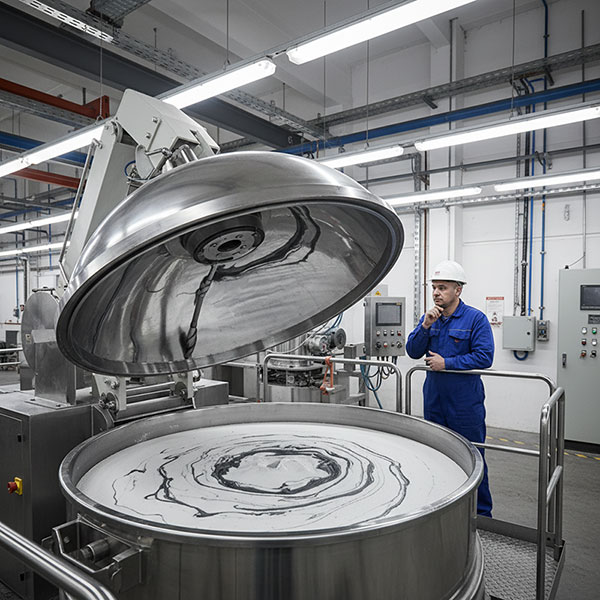
Once the raw materials have been prepared and graded, the next stage is mixing. This is where quartz particles of various sizes are combined with resin, pigments, and additives in large industrial mixers. The mixing process is critical because the homogeneity of the mixture directly determines the final slab's structural integrity, visual consistency, and physical properties. Even minor inconsistencies introduced at this stage — uneven resin distribution, pigment clumping, or incomplete wetting of quartz particles — will manifest as visible defects or structural weak points in the finished slab.
Modern automated batching systems weigh and dispense each ingredient with precision tolerances of ±0.5% or better, using load cells and PLC-controlled feeders. The quartz granules, resin, catalysts, and pigments are fed into a high-shear mixer — typically an Eirich-type intensive mixer with a rotating pan and high-speed rotor, or a planetary mixer for smaller batch sizes. The materials are blended for a precisely timed period — typically 3 to 8 minutes depending on the mixer type and batch size — to ensure complete and uniform coating of every quartz particle with resin. The target is a "dry-wet" consistency where each quartz particle has a thin, uniform resin film but the mixture remains granular and free-flowing, not clumped or paste-like. Humidity and ambient temperature in the mixing room are controlled (typically 20–25°C, below 60% RH) because moisture on quartz particles inhibits the resin bond and excess heat can trigger premature curing.
Creating Veining Patterns
For solid-color designs, the mixed material has a uniform appearance and can be distributed directly into molds. However, for the increasingly popular marble-look designs (Calacatta, Statuario, Carrara imitations) — which now account for over 60% of all engineered quartz sales in premium markets — a secondary process is required to create veining effects. The veining technology used is often the most visible differentiator between factories, and the technology has evolved through several distinct generations.
First-generation veining (still used in some budget factories) involves workers manually drizzling or scooping contrasting pigment mixes across the base material in the mold. This produces inconsistent, repetitive patterns that are immediately recognizable as artificial. Second-generation systems use physical templates or stencils to guide pigment placement, improving consistency but still limited in realism. Third-generation systems — now standard in mid-range factories — use semi-automated dispensing systems with programmable nozzles that create flowing vein patterns based on pre-set programs. Fourth-generation systems, used by premium manufacturers, employ fully robotic arms with multi-axis movement and sometimes AI-driven pattern variation, creating unique, organic-looking patterns for every slab that are nearly indistinguishable from natural marble to the untrained eye.
The "whole-body" veining technique is another important distinction. In whole-body production, the veining pattern extends through the entire thickness of the slab rather than being concentrated on or near the surface. This is achieved by creating the vein pattern in multiple layers as material is progressively loaded into the mold. Whole-body veining is particularly important for applications where the slab edge will be visible (such as waterfall kitchen islands or mitered edge details), as it eliminates the unnatural appearance of solid-color edges on a veined surface. However, true whole-body veining is significantly more complex and time-consuming to produce, which is why many budget products only feature surface veining.
💡 Buyer Tip
When requesting marble-look quartz, always ask to see photos of the slab edge — preferably a 45° mitered cut. If the edge shows a completely different pattern or solid color from the surface, the veining is surface-applied only, which may be an issue for mitered edge, laminated edge, or waterfall applications. Also ask whether the veining system is automated or manual, and request multiple slab photos to assess pattern variation between slabs.
4. Vacuum Vibro-Compression
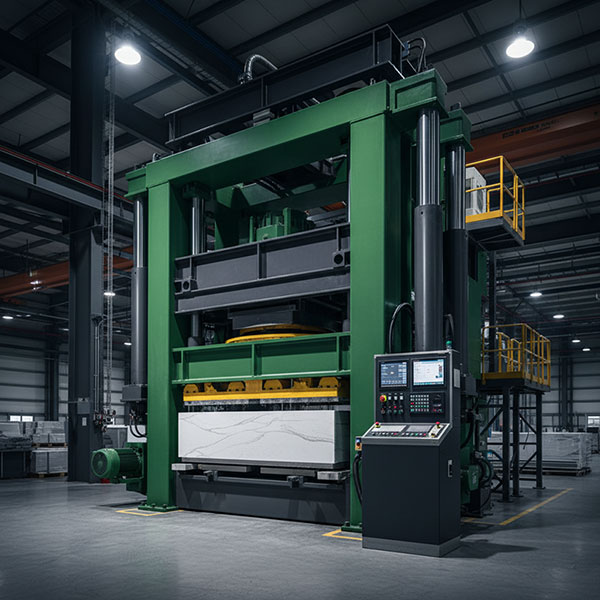
This stage is the heart of the manufacturing process and is where engineered quartz truly differentiates itself from other composite materials such as solid surface (acrylic) or simple resin-bound terrazzo. The mixed material is distributed evenly into a large rubber-lined mold (typically 3200mm × 1600mm or 3000mm × 1400mm, though jumbo formats up to 3400mm × 1650mm are increasingly offered) and then subjected to a combination of vacuum and vibration compression. This process, originally patented by Breton S.p.A. as the Bretonstone system, is the defining technology of the industry.
The process works in a carefully sequenced manner. First, the mold is loaded with the mixed material and a rubber membrane is sealed over the top. A powerful vacuum pump then evacuates the mold chamber to a target pressure of approximately -0.098 MPa (near-absolute vacuum), removing virtually all air from the interparticle spaces. This de-aeration step is critical because trapped air creates voids and porosity within the slab — even tiny air pockets of 0.5mm diameter become points of structural weakness and potential stain absorption. Once the vacuum is established and maintained, the mold platform begins vibrating at high frequency (typically 50–70 Hz, with some systems reaching 90 Hz) while hydraulic rams simultaneously apply compressive force from above at pressures of approximately 80–100 tons (some premium presses exceed 120 tons). The vibration energy causes the quartz particles to rearrange into their densest possible packing configuration — a phenomenon similar to how shaking a container of sand causes it to settle and compact — while the hydraulic pressure forces the resin into every remaining interstitial space.
The entire press cycle typically lasts 60–90 seconds, after which the slab exits the press as a "green" (uncured) body with enough cohesion to be transferred to the curing stage. The result is an extremely dense, non-porous material with a water absorption rate of less than 0.02% — dramatically lower than natural granite (0.1–0.4%) or marble (0.2–0.6%). This near-zero porosity is what gives engineered quartz its excellent stain resistance, bacterial resistance, and zero-maintenance characteristics. Independent studies have demonstrated that properly manufactured engineered quartz harbors up to 99.9% fewer bacteria than natural granite under identical conditions, which is why it is the preferred surface in healthcare, food-service, and laboratory environments.
Why Pressing Technology Matters
The original Breton vibro-compression press remains the industry benchmark, and factories that operate genuine Breton equipment often highlight this in their marketing. However, several high-quality Chinese press manufacturers — most notably KEDA (科达) and Henghui — have developed equipment that approaches Breton performance at significantly lower capital investment. A new Breton press line can cost EUR 3–6 million, while a top-tier Chinese equivalent may cost 40–60% less. However, the engineering tolerances, vacuum pump quality, vibration uniformity, and control system sophistication of entry-level Chinese presses remain noticeably inferior. As a buyer, asking about the pressing technology — including the specific manufacturer, model, and year of installation — is one of the most important quality indicators available to you.
The compression stage also determines the slab's thickness. By adjusting the amount of material in the mold and the compression parameters, manufacturers produce slabs in standard thicknesses: 12mm (thin format for wall cladding and furniture applications), 15mm (popular in Asia-Pacific markets), 20mm (the global standard for countertops), and 30mm (premium applications and the US market where a thicker edge profile is preferred). The tolerance on thickness calibration at this stage is typically ±0.5mm, with further precision achieved during the subsequent calibrating and polishing stage.
| Parameter | Premium Factory | Budget Factory |
|---|---|---|
| Pressing Technology | Breton / Top-tier equivalent (KEDA+) | Entry-level press |
| Compression Force | 80–120+ tons | 50–70 tons |
| Vacuum Level | -0.098 MPa or better | -0.08 MPa or worse |
| Vibration Frequency | 50–90 Hz, computer-controlled | Fixed frequency, limited control |
| Water Absorption Result | < 0.02% | 0.03–0.06% |
| Density | 2.3–2.5 g/cm³ | 2.1–2.3 g/cm³ |
5. High-Temperature Curing
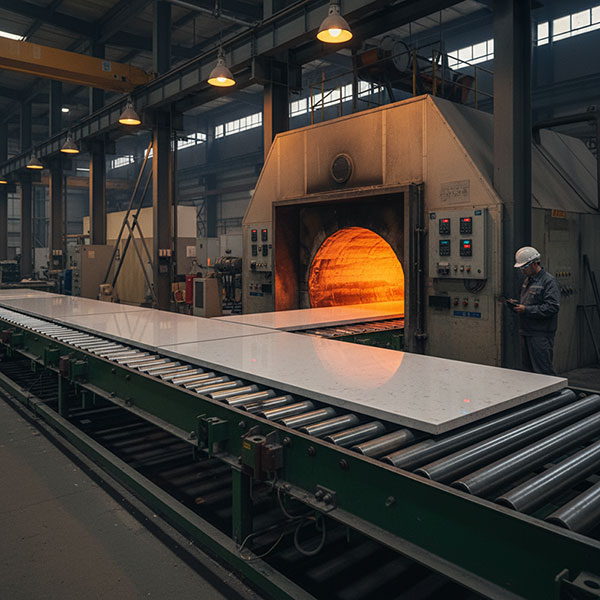
After compression, the "green" slabs are transferred to curing kilns (industrial ovens) where they undergo a controlled heat treatment process. The curing stage triggers and completes the chemical crosslinking reaction in the polyester resin, transforming it from a semi-liquid binder into a hard, rigid thermoset polymer matrix that permanently locks the quartz crystals in place. From a chemistry perspective, the organic peroxide catalyst (MEKP) decomposes at elevated temperature to generate free radicals, which initiate a chain reaction between the styrene monomer and the unsaturated bonds in the polyester chains, creating a dense three-dimensional crosslinked network that is chemically irreversible.
Typical curing parameters involve temperatures of 85–110°C maintained for 30–45 minutes, although the exact temperature profile varies by manufacturer and product formulation. The curing process follows a carefully controlled temperature curve consisting of three phases: an initial ramp-up phase (approximately 15–20 minutes, where temperature rises gradually from ambient to the target), a sustained peak temperature phase (the "soak" period, where the exothermic crosslinking reaction proceeds to completion), and a gradual cool-down phase (critical for preventing thermal shock). Rushing any of these phases — particularly the cool-down — can introduce internal stresses that lead to warping, cracking, or micro-fissures that reduce flexural strength and may not become visible until weeks or months after production.
The curing stage is where the slab achieves its final hardness rating. A properly cured engineered quartz slab reaches a Mohs hardness of 7 (tested on the quartz crystals themselves — the resin-rich areas between particles are softer), making it harder than most natural granite (typically 6–6.5 on the Mohs scale) and significantly harder than marble (3–5). This hardness is what gives quartz countertops their excellent scratch resistance in everyday kitchen use, though it is worth noting that quartz is not scratch-proof — ceramic knives, sand particles, and other quartz-based abrasives can still cause surface damage.
Under-curing is one of the most common and insidious quality issues in the industry, because its effects are often not visible during factory inspection. If the slab does not reach sufficient temperature for a sufficient duration, the resin matrix will not fully crosslink, resulting in reduced hardness (sometimes 1–2 Mohs points lower), increased susceptibility to chemical staining (particularly from acidic substances like citrus juice, vinegar, or certain cleaning agents), potential resin bleed-out during subsequent polishing (appearing as dark wet spots), and a phenomenon known as "resin bloom" where unreacted resin migrates to the surface months after installation, creating hazy or sticky patches. Over-curing, while less common, can cause the resin to become excessively brittle and reduce the slab's impact resistance, making it more prone to chipping during fabrication and transport.
After the kiln, many premium manufacturers allow slabs to undergo a secondary "post-cure" aging period of 24–48 hours at ambient temperature. This allows residual crosslinking reactions to complete and internal stresses to equalize, resulting in more stable and consistent physical properties. Budget factories, driven by throughput demands, often skip this step entirely. For instance, reviewing the advanced medium-temperature curing processes at Quartzcrafts demonstrates how precise thermal control can perfectly balance heat resistance and prevent yellowing without the explosive risks of traditional high-temperature methods.
6. Calibrating & Polishing
Once fully cured, the slabs undergo calibration and surface finishing. This is a multi-stage industrial process that transforms the raw, matte-surfaced slab into a finished product ready for sale and installation. The calibrating and polishing line is one of the most capital-intensive areas of the factory, often costing USD 1–3 million depending on the number of heads and degree of automation.
Thickness Calibration
The slab first passes through a calibrating machine (also called a "gauging" machine) equipped with multiple diamond-tipped grinding heads that grind both the top and bottom surfaces to achieve precise, uniform thickness across the entire slab. Premium manufacturers calibrate to tolerances of ±0.3mm or better, while the industry standard tolerance specified in EN 15286 is ±0.5mm. Consistent thickness is critically important for fabricators because it directly affects seam alignment at joints (uneven thickness creates visible steps at seams), the amount of shimming required during installation, the flatness and levelness of the finished countertop surface, and material waste during CNC fabrication. A slab that is 0.5mm thicker on one end than the other creates compounding problems during a complex kitchen installation with multiple seams.
Surface Polishing
After calibration, the slab progresses through the polishing line — a long conveyor system (often 25–40 meters in length) equipped with multiple oscillating grinding heads. Each head uses successively finer diamond abrasive pads or Fickert-type abrasive blocks. A typical polishing line has 10 to 20 heads, starting with coarse 50-grit pads for initial surface leveling and progressing through 100, 200, 400, 800, 1500, and finally 3000-grit pads. The diamonds used are synthetic industrial diamonds bonded in either metal matrices (for coarse stages) or resin matrices (for fine polishing stages). Throughout the process, water is continuously sprayed onto the surface for cooling, lubrication, and slurry removal. The water is recycled through a closed-loop filtration system in environmentally responsible factories.
The final result is a mirror-like high-gloss finish with a gloss level typically measured at 45–65 units on a 60-degree gloss meter, calibrated to ISO 2813. Higher-end factories may achieve 60–70 gloss units. Factories with fewer polishing heads (8–10) typically produce lower gloss levels (35–50 units) and may leave faint circular scratches visible under raking light — a common quality complaint that careful visual inspection can detect.
Alternative Surface Finishes
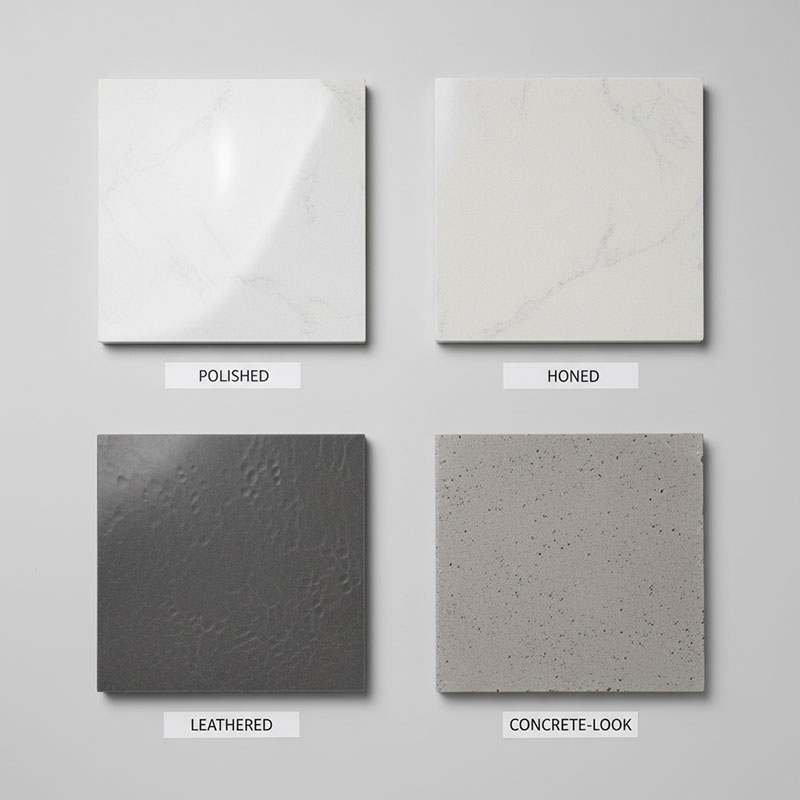
Beyond the standard polished (glossy) finish, manufacturers offer several alternative surface textures to meet current design trends. Honed finish is produced by stopping the polishing process at a mid-grit stage (typically 200–400 grit), resulting in a smooth, matte appearance that hides fingerprints and water spots better than polished surfaces and is increasingly popular in contemporary European and North American kitchens. Leathered finish is created by using a combination of diamond brushes and antiquing tools to add a subtle dimpled texture, giving the surface a soft, tactile quality. Concrete-look or "raw" finish creates a more industrial aesthetic with a very flat, low-gloss surface. Rough or sandblasted finish provides a rustic, anti-slip surface suitable for exterior cladding or high-traffic commercial flooring applications. The availability of these finishes varies by manufacturer, and some finishes may only be available on certain colors or at specific thickness options. Buyers should always request a physical sample of the exact color-finish combination they intend to order.
7. Quality Control & Testing
Quality control is the final — and arguably most critical — stage of the manufacturing process. A reputable factory implements quality checks at every preceding stage (incoming raw material inspection, mid-process parameter monitoring, and post-cure verification), but the final inspection before packaging determines whether a slab is approved for shipment or rejected. The rigor of this final inspection is often the clearest indicator of a factory's overall quality culture.
Visual Inspection
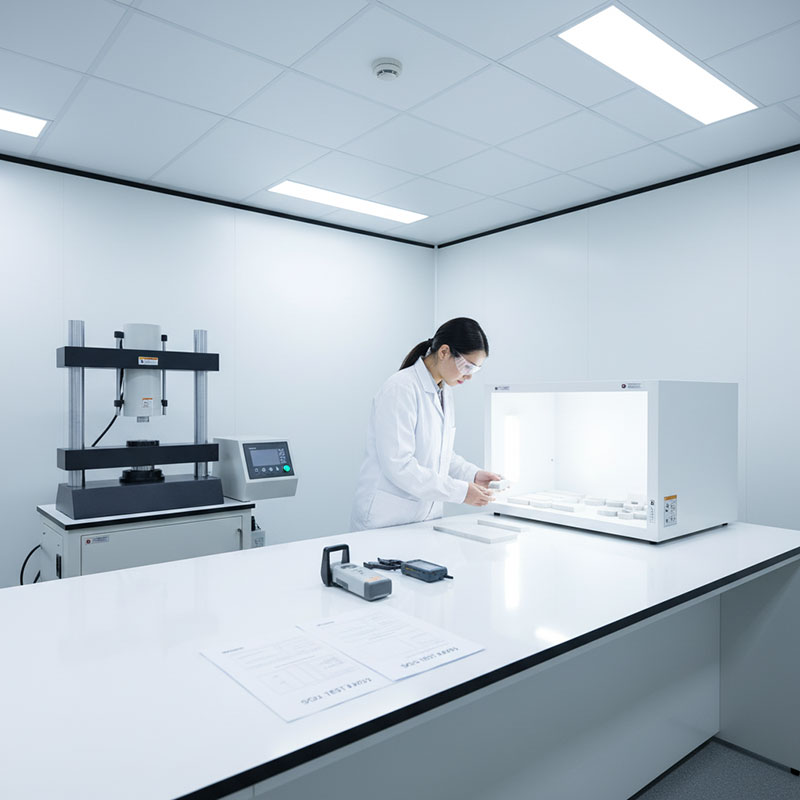
Every slab is visually inspected under controlled lighting conditions. Inspectors check for surface defects including scratches, pinholes (tiny open pores caused by incomplete vacuum), uneven gloss zones, resin spots (dark areas of excess resin), color deviation from the master sample, foreign particle inclusions (metal fragments from mixer wear, for example), and veining defects in patterned products. Premium factories use standardized light booths with multiple light sources at defined angles (typically 15°, 45°, and 90° to the surface) to ensure defects are not missed under any lighting condition. Increasingly, top-tier factories are supplementing human inspectors with automated vision inspection systems — high-resolution cameras coupled with machine learning algorithms that can detect defects as small as 0.3mm at production-line speed. Slabs that fail visual inspection are either re-processed (if the defect is minor and can be polished out) or downgraded for sale in less demanding applications.
Physical Property Testing
Representative samples from each production batch undergo a battery of physical tests to verify compliance with international standards. The primary testing standards used in the industry include EN 15286 (the European standard for agglomerated stone slabs for cladding and countertops), NSF/ANSI 51 (food contact surfaces certification, required for the US market), ASTM C1722 (the American standard for quartz-based dimension products), and GB/T 32834-2016 (the Chinese national standard for engineered quartz stone).
Key tests include flexural strength testing, where samples (typically 200mm × 50mm × thickness) are loaded in a three-point bending fixture at a controlled displacement rate until fracture. EN 15286 requires a minimum of 30 MPa; premium products typically achieve 45–55 MPa. Water absorption testing involves immersing samples in water under vacuum conditions for a defined period (typically 48 hours) and measuring weight gain. The EN 15286 requirement is less than 0.1%, but this threshold is easily met by virtually all manufacturers — premium products typically achieve less than 0.02%, which is a far more discriminating benchmark. Abrasion resistance testing uses the Taber Abrasion Test (ASTM C501) with CS-17 wheels to measure surface wear under controlled conditions, quantified as weight loss after a defined number of cycles. Mohs hardness testing confirms scratch resistance using a calibrated Mohs scratch kit. Chemical resistance testing, one of the most practically important tests, exposes the surface to common household chemicals including citric acid (10% solution), coffee, red wine, turmeric, acetone, ammonia, and bleach, measuring any staining or surface etching after timed exposure periods of 24 hours or more. Thermal shock testing, though not required by all standards, is performed by premium factories to verify that the slab can withstand sudden temperature changes — typically achieved by placing a hot vessel directly on the surface and checking for cracking or discoloration.
Dimensional Accuracy
Each slab is measured for overall length and width, thickness uniformity (checked at a minimum of 8 points across the slab surface using a calibrated digital caliper or ultrasonic thickness gauge), diagonal equality (squareness, where the difference between the two diagonals should not exceed 2mm per EN 15286), and surface flatness (measured by placing a 2-meter straightedge across the slab and checking for gaps, with a tolerance of ±0.5mm per 2 meters). Dimensional consistency is particularly important for large commercial projects — hotels, office towers, airport terminals — where dozens or hundreds of slabs must align seamlessly across long countertop runs and wall cladding installations.
Grading & Classification
After inspection, slabs are graded and classified. The industry typically uses a two or three-tier grading system. Grade A (First Choice) represents slabs that pass all quality criteria with no visible defects, consistent color matching the master sample within an acceptable ΔE color difference (typically ΔE < 1.0 for premium manufacturers), and physical properties meeting or exceeding standard requirements. Grade B (Second Choice) represents slabs with minor cosmetic imperfections such as small surface blemishes under 3mm, slight color variation (ΔE 1.0–2.5), hairline scratches that may be visible under raking light, or minor dimensional deviations that do not affect structural performance. Grade C (Third Choice) represents slabs with more noticeable imperfections — visible pinholes, resin spots, color patches, or dimensional deviations — that are still functional but not suitable for premium retail markets and are typically sold into price-sensitive channels or cut-to-size applications where defective areas can be avoided.
As a B2B buyer, always clarify the grading standard with your supplier and specify which grade you require in writing (in the purchase contract, not just verbally). Price differences between Grade A and Grade B can be significant (often 15–25%), and understanding the grading system helps you make informed cost-quality trade-offs for your specific market. Also request that your supplier provide a batch-specific quality inspection report with each shipment, documenting the inspection results and the grading decision.
8. How Manufacturing Affects Price
One of the most common questions from B2B buyers is: "Why do quartz stone prices vary so much between suppliers?" FOB prices for standard 20mm engineered quartz slabs from Chinese factories, for example, can range from USD 18–25/m² for budget products to USD 55–90/m² for premium products — a four-fold spread. The manufacturing process provides the answer. Every quality decision at each stage affects cost, and the cumulative effect creates a wide price spectrum in the market.
| Cost Factor | Premium Approach | Budget Approach | Price Impact |
|---|---|---|---|
| Quartz Purity | 99.5%+ SiO₂, acid-washed | 98–99% SiO₂, minimal processing | +5–8% cost |
| Resin Quality | UV-stabilized premium resin | Standard resin, no UV stabilizer | +3–5% cost |
| Pressing Equipment | Breton / Top-tier (KEDA+) | Entry-level press | +10–15% amortized capital cost |
| Veining Technology | Automated robotic veining, whole-body | Manual application, surface only | +8–15% cost for marble-look |
| Polishing | 16–20 head line, 60+ gloss | 8–12 head line, 40–50 gloss | +3–5% cost |
| Quality Control | In-house lab + 100% visual inspection | Spot-check only, no lab | +2–4% cost |
| Post-Cure Aging | 24–48 hour post-cure period | Immediate processing | +1–2% (throughput reduction) |
| Certifications | EN 15286, NSF 51, GREENGUARD | No third-party certification | +2–5% (testing and compliance) |
The cumulative effect of these differences means that a premium slab may cost 30–50% more to manufacture than a budget equivalent. However, the premium slab will typically deliver superior hardness and scratch resistance with fewer warranty claims, better color consistency between batches (critical for multi-slab projects), significantly lower risk of yellowing, staining, or resin bloom over time, tighter dimensional tolerances that reduce fabrication waste and installation problems, and proper certifications for access to regulated markets (EU, US, Australia, Middle East). For B2B buyers, the choice between premium and budget depends on your target market's quality expectations, regulatory requirements, and price sensitivity.
Beyond manufacturing cost, buyers should also consider total landed cost, which includes FOB price, ocean freight (which has been volatile since 2020), port handling, customs duties, and any applicable anti-dumping duties. The United States, for example, imposed anti-dumping duties ranging from 2.77% to 336.69% on Chinese-origin quartz surface products in 2019 (countervailing duties of 45.32–194.88% were also applied), fundamentally reshaping global trade flows. The European Commission opened a similar anti-dumping investigation in 2024. These trade policy factors can make a "cheap" FOB price irrelevant if the duties applied at the border multiply the final cost. Sourcing from alternative origins (India, Vietnam, Turkey) has become a strategic imperative for buyers in affected markets.
9. Questions to Ask Your Supplier
Armed with your understanding of the manufacturing process, here are the most important questions to ask when evaluating a quartz stone supplier. The answers will tell you a great deal about their production quality, transparency, and capabilities:
Q1: What is the purity grade of the quartz you use, and can you provide a Certificate of Analysis?
Expect a confident answer of 99.5% or higher from quality manufacturers, backed by documentation from their quartz supplier. Evasive answers or "we use high-quality quartz" without specific numbers may indicate lower-grade materials.
Q2: What pressing technology do you use, and when was the equipment installed?
Look for Breton, top-tier KEDA, or recognized equivalent. Ask about compression force (should be 80+ tons), vacuum specification (-0.098 MPa or better), and vibration frequency. Older presses (10+ years) may have degraded vacuum performance.
Q3: Can you provide SGS, BV, or TÜV test reports for water absorption and flexural strength?
Reputable factories have current (within 12 months) third-party test reports readily available. Water absorption should be below 0.03% and flexural strength above 35 MPa. Ask for the specific test report, not a generic certificate.
Q4: What is your grading system and rejection rate?
A factory with a 3–8% rejection rate likely has strict QC. A factory claiming zero rejection is either not inspecting carefully or being dishonest. Ask what happens to rejected slabs — responsible factories downgrade them to Grade B/C rather than mixing them into Grade A shipments.
Q5: How do you ensure color consistency between production batches?
Good answers include automated batching systems with PLC-controlled dosing, master color reference samples maintained under controlled conditions, spectrophotometer measurement with ΔE tolerances defined, and retained batch samples archived for at least 12 months.
Q6: What resin brand do you use, and is it UV-stabilized?
This is particularly critical if you sell white or light-colored products. The supplier should name a specific resin brand and confirm UV stabilizer content. Ask for a UV aging test report if available — this simulates years of light exposure in accelerated conditions.
Q7: What certifications does your product hold, and are they current?
Depending on your target market: EN 15286 / CE marking for Europe, NSF/ANSI 51 for US food contact, GREENGUARD Gold for US indoor air quality, and any relevant local certifications. Ask for certificate copies and verify them independently with the certifying body.
Q8: What is your capacity, current utilization rate, and typical lead time?
Understanding production capacity (in m² per day or month) versus current order load helps you assess whether the factory can reliably meet your delivery schedules, especially during peak season (typically Q3–Q4 for Northern Hemisphere construction markets).
Q9: Can I visit the factory and observe the production process?
Legitimate manufacturers welcome factory visits — and the best ones actively encourage them. Reluctance to allow visits, excessive conditions, or attempts to redirect you to a showroom rather than the production floor may indicate that the facility does not match the marketing claims.
10. Industry Outlook & Conclusion
The engineered quartz manufacturing industry is evolving rapidly. Several key trends are shaping the next generation of products and manufacturing processes. Sustainability is becoming a competitive differentiator as more buyers (especially in Europe and North America) demand environmental product declarations (EPDs), recycled content verification, and responsible sourcing documentation. Some leading manufacturers now incorporate 10–20% pre-consumer recycled quartz into their formulations without compromising physical properties. Water recycling, dust capture, and VOC abatement systems are becoming standard in factories serving regulated markets.
The occupational health dimension — specifically the risk of silicosis among fabricators who cut and polish quartz countertops — has led to significant regulatory changes. Australia enacted a national ban on engineered stone with greater than 40% crystalline silica content effective July 2024 (later revised to allow compliant products with strict workplace controls), and similar regulatory discussions are underway in the US (OSHA), EU, and UK. This is driving investment in low-silica formulations and is likely to reshape product composition standards globally over the next 3–5 years.
On the technology front, ultra-large format slabs (3400mm × 1600mm and larger), digital inkjet printing for surface decoration (similar to the technology that revolutionized ceramic tile manufacturing), and AI-driven quality inspection systems are all moving from experimental to mainstream adoption. These advances are simultaneously raising the quality ceiling for premium products and lowering the barriers to entry for mid-range manufacturers — making it both easier and harder for B2B buyers to identify genuinely superior products.
For buyers navigating this complex and competitive landscape, the fundamental principle remains unchanged: understanding what happens inside the factory is the most reliable way to predict what will happen after the slab leaves it. The manufacturing knowledge outlined in this guide — from raw material purity through compression technology to final quality control — provides the vocabulary and benchmarks you need to evaluate suppliers with confidence, negotiate from a position of knowledge, and ultimately deliver products that satisfy your customers and build your reputation in the market. To see how these industry-leading manufacturing standards translate into superior surfaces, explore the premium engineered quartz collections at Quartzcrafts for reliable sourcing support and verified quality.