
1. Why Quartz Is the Ideal Material for Bathroom Vanities
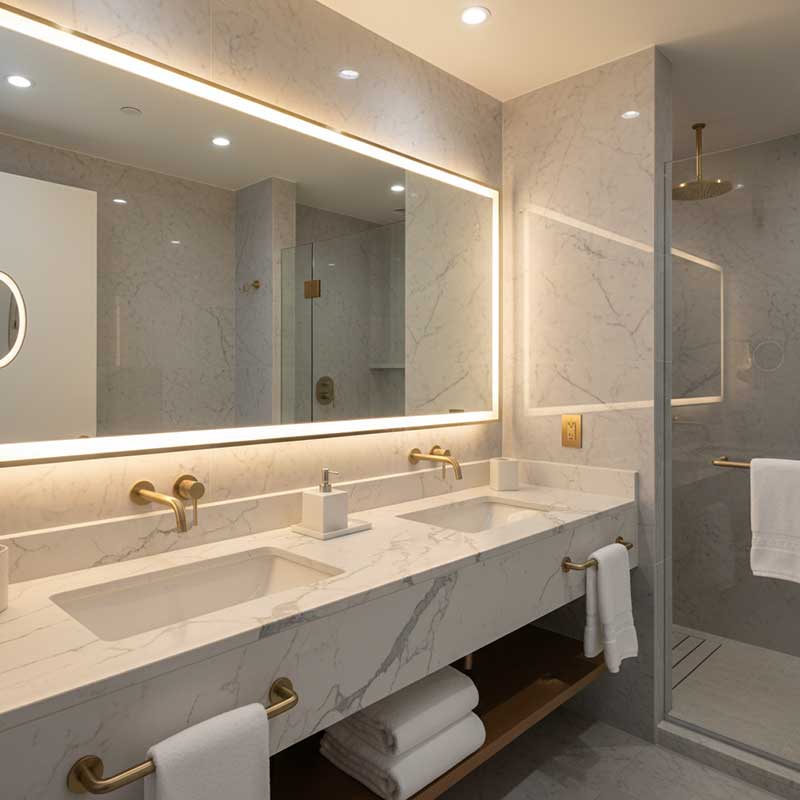
The bathroom is arguably the most demanding environment for any surface material in residential or commercial construction. Surfaces must endure persistent high humidity, frequent direct water contact, temperature fluctuations from hot and cold water use, and daily exposure to an array of personal care products — many of which contain acids, alcohols, dyes, peroxides, and other aggressive chemicals. Unlike kitchens, where surfaces are primarily challenged by heat and mechanical impact, bathrooms present a sustained assault of moisture and chemistry that few materials can withstand without degradation over time.
Engineered quartz stone — composed of approximately 90–94% ground natural quartz crystals bound with polymer resins and pigments — addresses every one of these challenges through its fundamental material architecture. The resulting composite is non-porous, dimensionally stable, chemically inert to most household substances, and virtually impervious to water. These properties make it the material of choice for an increasing number of architects, interior designers, hotel operators, and property developers worldwide.
To fully appreciate why quartz has overtaken natural stone in the bathroom vanity market, it helps to compare it against the alternatives that B2B buyers frequently evaluate. Natural marble, while visually stunning, has a water absorption rate of 0.2–0.6% (per ASTM C503 specifications) and is highly vulnerable to etching from acidic substances — a critical weakness in bathrooms where toothpaste, mouthwash, and citrus-based cleaners are common. Granite offers better moisture resistance (absorption typically 0.1–0.4%) but still requires periodic sealing and can harbor bacteria in its natural pore structure. Solid surface (acrylic) materials, while non-porous, score poorly on scratch resistance and can appear artificial in premium applications. Laminate surfaces remain the most economical option but suffer from edge-swelling when exposed to moisture and have limited design credibility in upscale projects.
Engineered quartz combines the aesthetic appeal of natural stone with engineering-grade performance: a water absorption rate below 0.02%, a Mohs hardness of 7 (compared to marble's 3–4), flexural strength exceeding 40 MPa, and a completely non-porous surface that never requires sealing. For B2B buyers, these quantifiable performance advantages translate into fewer warranty claims, lower lifecycle maintenance costs, and higher perceived value in the finished project — all critical factors in the sourcing decision.
2. Material Science: Composition & Bathroom-Specific Performance
Understanding the material science behind engineered quartz is essential for B2B buyers who need to evaluate product quality, anticipate performance in specific environments, and communicate material advantages to their downstream customers. The properties that make quartz exceptional in bathroom applications are a direct consequence of its composition and manufacturing process, which we cover in detail in our manufacturing process guide.
Composition Breakdown
A standard engineered quartz slab comprises three primary components. The dominant component, typically 90–94% by weight, is ground natural quartz (silicon dioxide, SiO₂) — one of the hardest and most chemically stable minerals on Earth, scoring 7 on the Mohs hardness scale. The second component, approximately 5–8%, is a polymer resin binder — usually unsaturated polyester or, in premium products, acrylic resin — which fills the spaces between quartz particles, eliminates porosity, and provides flexural strength. The third component, 1–2%, comprises pigments (metal oxides), recycled glass or mirror particles, and other additives that create the desired color and pattern effects.
This composition is engineered during a process called Breton compaction, where the raw materials are mixed, poured into a mold, subjected to vacuum vibro-compression at pressures exceeding 100 tonnes, and then cured at temperatures of 85–100°C. The vacuum step is critical for bathroom performance: by removing all air from the mixture before compression, the process creates a slab with near-zero porosity — typically less than 0.5% by volume compared to 1–3% for granite and 2–8% for marble.
Why Near-Zero Porosity Matters in Bathrooms
Porosity is the single most important material property for bathroom surface performance. A porous surface absorbs water molecules into its internal structure, which creates three cascading problems. First, absorbed water provides a medium for microbial growth — mold, mildew, and bacteria can colonize pore spaces that are inaccessible to surface cleaning. Second, water absorption causes dimensional instability — materials expand when wet and contract when dry, leading to micro-cracking, warping, and joint separation over repeated humidity cycles. Third, dissolved substances in the absorbed water (minerals, dyes, chemicals) become trapped within the pore structure, causing permanent staining that cannot be removed by surface cleaning.
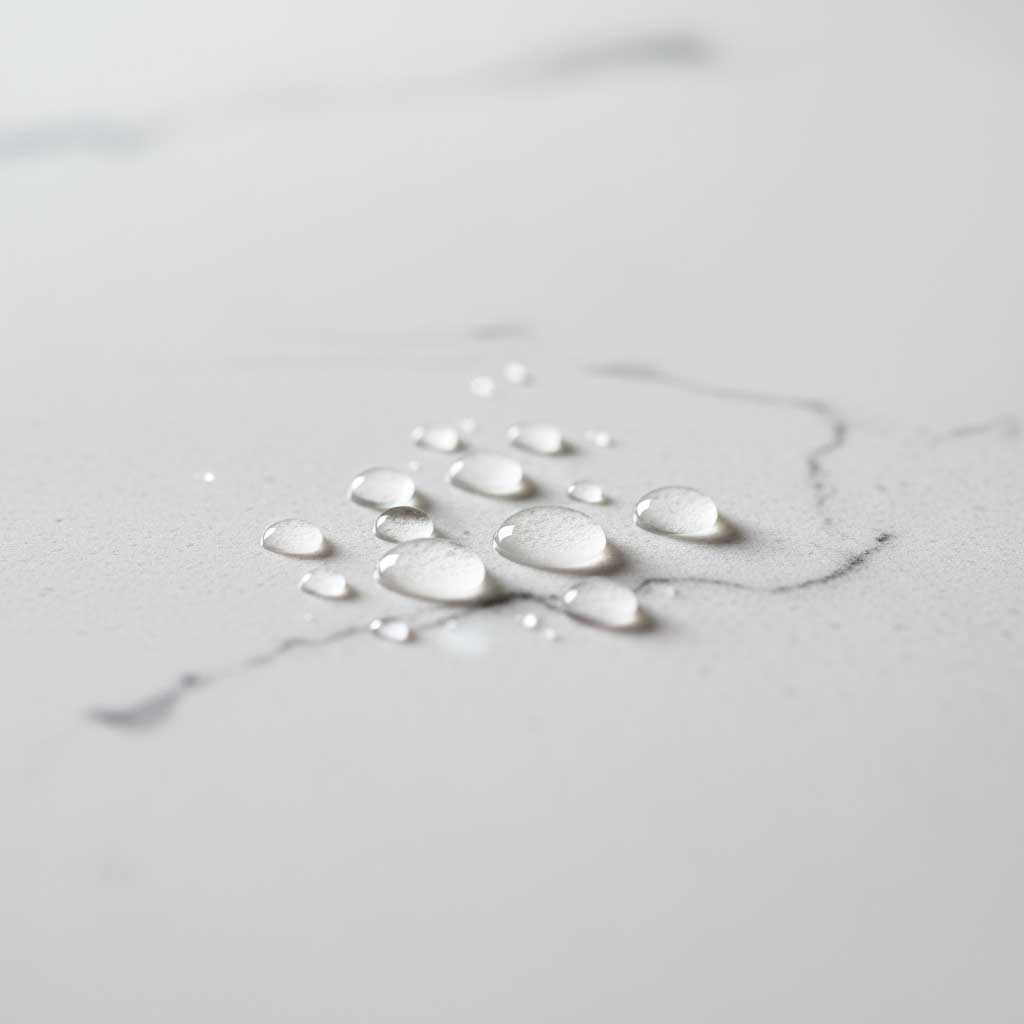
With a water absorption rate of less than 0.02% (as measured by ASTM C97 testing protocol or the equivalent European standard EN 14617-1), engineered quartz effectively eliminates all three of these moisture-related failure mechanisms. The surface remains dimensionally stable indefinitely, never hosts microbial growth within the material itself, and resists staining from even the most aggressive bathroom chemicals.
Resin Quality & Its Impact on Bathroom Performance
Not all engineered quartz is created equal, and the quality of the polymer resin binder has a significant impact on long-term bathroom performance. Premium resin systems — typically polyester or acrylic resins sourced from established chemical producers — offer superior UV stability, better resistance to chemical attack, and higher thermal stability than lower-cost alternatives. In budget quartz products, inferior resins can yellow over time under UV exposure (relevant for bathrooms with natural light), soften slightly when exposed to sustained heat, or degrade when exposed to strong chemicals.
For B2B buyers, this means that the price difference between a premium Chinese quartz slab ($45–70/m² FOB) and a budget product ($25–35/m² FOB) often reflects meaningful differences in resin quality that will affect long-term bathroom performance. When sourcing for hospitality or premium residential projects, specifying products that meet NSF/ANSI 51 certification (the U.S. standard for food-contact and hygiene-critical surfaces) is an effective way to ensure the resin system meets rigorous quality standards.
Request a chemical resistance test report from your supplier. Specifically, ask for results of the EN 14617-10 chemical resistance test, which exposes the surface to a range of reagents including hydrochloric acid, citric acid, sodium hydroxide, and acetone. A high-quality quartz product should show Class C3 or C4 resistance (no visible change) for all common bathroom chemicals. Products that show Class C1 or C2 results (surface marking or damage) may use inferior resin systems.
3. Standard Vanity Top Sizes by Global Market
Bathroom vanity top dimensions vary significantly by region, reflecting differences in bathroom architecture, building codes, consumer preferences, and sink types. For B2B buyers sourcing from China for international distribution, understanding these regional size standards is essential for inventory planning, slab yield optimization, and order specification accuracy.
North American Standards
The North American market (USA and Canada) uses imperial measurements, and vanity cabinetry follows standardized widths established by the Kitchen Cabinet Manufacturers Association (KCMA). Standard single vanity widths are 24", 30", 36", and 48" (610mm, 762mm, 914mm, 1219mm). Double vanity widths are 60" and 72" (1524mm and 1829mm). Standard depth is 22" (559mm), though a trend toward "compact depth" vanities at 18" (457mm) is growing for smaller bathrooms and powder rooms. Vanity tops typically overhang the cabinet by 1" (25mm) on the front and sides.
European Standards
European markets use metric measurements, and vanity sizes tend to be more compact due to smaller average bathroom sizes. Common single vanity widths are 600mm, 800mm, 1000mm, and 1200mm. Depths are typically 450–500mm, reflecting the European preference for wall-hung vanity units that project minimally from the wall. Double vanity tops range from 1200mm to 1600mm. The European market also shows strong demand for slim-profile vanity tops (12–15mm thickness) paired with modern, minimalist cabinetry.
Middle East & North Africa
MENA markets generally prefer larger, more generous vanity configurations, reflecting both cultural preferences for spacious bathrooms and the larger average bathroom sizes in Gulf Cooperation Council (GCC) countries. Single vanity tops of 900–1200mm wide are standard, with double vanity tops of 1500–2000mm common in premium residential projects. Depths of 550–600mm are standard. The MENA market also has notably high demand for extended vanity tops with integrated makeup/grooming areas extending to one side of the sink.
Southeast Asia & Australasia
These markets show a mix of compact and standard sizing. Australian vanity standards closely follow European norms (600, 750, 900, 1200mm widths at 450–500mm depth), while Southeast Asian markets often require custom sizing to suit diverse cabinetry designs. The wall-hung vanity format is increasingly popular across the region, particularly in urban apartments.
| Region | Single Vanity Width | Double Vanity Width | Standard Depth | Common Thickness |
|---|---|---|---|---|
| North America | 610, 762, 914mm | 1524, 1829mm | 559mm (22") | 20mm, 30mm |
| Europe | 600, 800, 1000mm | 1200, 1400, 1600mm | 450–500mm | 12mm, 20mm |
| Middle East / GCC | 900, 1050, 1200mm | 1500, 1800, 2000mm | 550–600mm | 20mm, 30mm |
| Australia / NZ | 600, 750, 900mm | 1200, 1500mm | 450–500mm | 20mm |
| SE Asia | 600, 800, 900mm | 1200, 1500mm | 480–550mm | 15mm, 20mm |
| Hotel Standard | 900, 1050mm | 1500, 1800mm | 550mm | 20mm |
Slab Yield Optimization
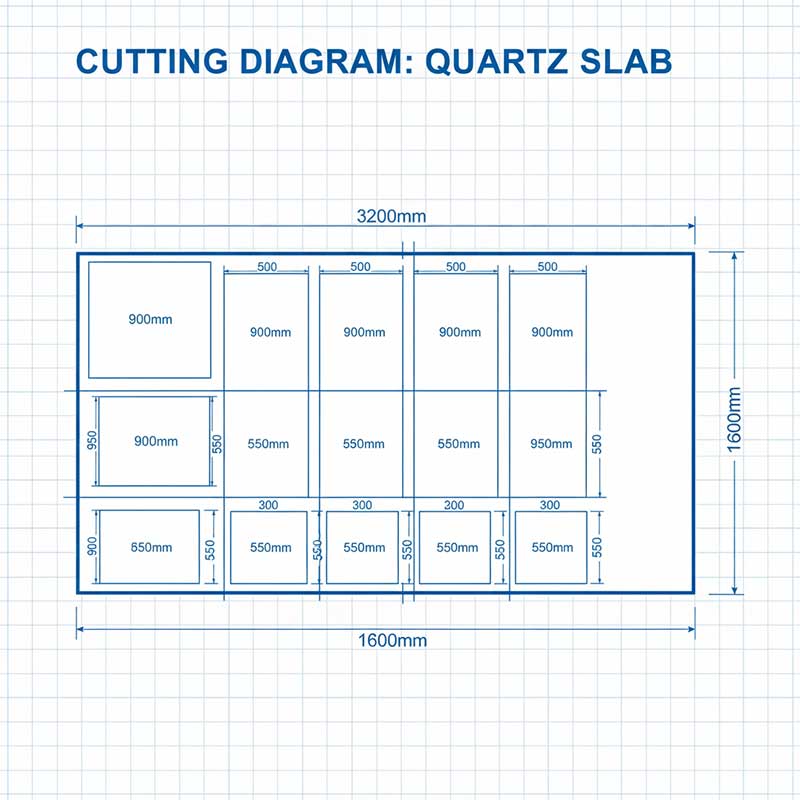
A standard full slab (3200 × 1600mm) can yield an impressive number of vanity tops when cutting is properly optimized. For example, a 900 × 550mm single vanity top can be cut approximately 9–10 pieces from one slab (3 columns across the 3200mm length × 2 rows across the 1600mm width, accounting for blade kerf and edge waste). For a 1500 × 550mm double vanity top, yield drops to approximately 4–5 pieces per slab. These yield calculations have significant implications for per-unit material cost, and B2B buyers serving the hospitality market — where hundreds of identical vanity tops may be required — should work with their supplier's engineering team to optimize cutting layouts before finalizing slab orders.
4. Thickness Options & Structural Considerations
Quartz vanity top thickness is both an aesthetic and structural decision. The chosen thickness affects visual weight, edge treatment options, support requirements, and cost. Chinese manufacturers typically offer three standard thickness options for vanity tops, with custom thicknesses available for large-volume orders. For a complete analysis of all thickness options, see our dedicated thickness and surface guide.
12–15mm (Slim Profile)
Slim-profile quartz vanity tops are increasingly popular in contemporary European and Japanese-influenced designs where a thin, minimalist aesthetic is desired. At 12–15mm, the vanity top appears to float above the cabinet, creating a light, architectural feel. However, this thickness requires full-perimeter support from the cabinet structure (the quartz cannot overhang unsupported edges by more than 25mm) and is not recommended for undermount sinks larger than 400mm wide, as the narrow material bridge around the sink cutout may be structurally insufficient. Slim-profile tops are best suited for vessel sinks or small undermount configurations.
20mm (Standard)
The 20mm thickness is the global industry standard for bathroom vanity tops and is the most commonly specified thickness for both residential and commercial projects. It provides an excellent balance of structural integrity, visual proportion, and cost-efficiency. At 20mm, the vanity top can support undermount sinks of all standard sizes, accommodate all standard edge profiles, and overhang the cabinet by up to 40mm without additional support. The 20mm thickness is also the standard specification for most international hotel brands and is the default option from virtually all Chinese quartz manufacturers.
30mm (Premium)
The 30mm thickness creates a substantial, luxurious appearance and is typically specified for high-end residential projects, luxury hotels, and commercial settings where a sense of material solidity is desired. The additional thickness allows for more elaborate edge profiles (such as ogee, dupont, or laminated mitered edges) and provides greater structural reserves around large undermount sink cutouts. The trade-off is approximately 50% higher material weight per unit (a 900 × 550 × 30mm vanity top weighs approximately 36 kg versus 24 kg at 20mm) and correspondingly higher freight costs — an important consideration for B2B buyers shipping container volumes internationally.
| Thickness | Weight (900×550mm) | Best Applications | Max Unsupported Overhang | Sink Compatibility |
|---|---|---|---|---|
| 12–15mm | ~14–18 kg | Contemporary, wall-hung vanities | 25mm | Vessel, small undermount |
| 20mm | ~24 kg | Universal standard | 40mm | All types |
| 30mm | ~36 kg | Luxury, hotel premium tier | 60mm | All types, large undermount |
A common industry practice is to use a 20mm slab with a laminated (built-up) edge — a strip of matching quartz bonded to the underside of the front edge to create the visual appearance of 40mm thickness. This approach reduces material cost and weight while achieving the visual solidity that premium projects demand. Most experienced Chinese fabricators can execute this laminated edge technique with seamless results.
5. Sink Integration Methods
Sink integration is one of the most critical specification decisions for bathroom vanity tops, affecting aesthetics, hygiene, fabrication complexity, cost, and installation logistics. B2B buyers should understand all available options to match project requirements accurately and communicate specifications clearly to Chinese manufacturing partners.
Undermount Sink (Most Popular)
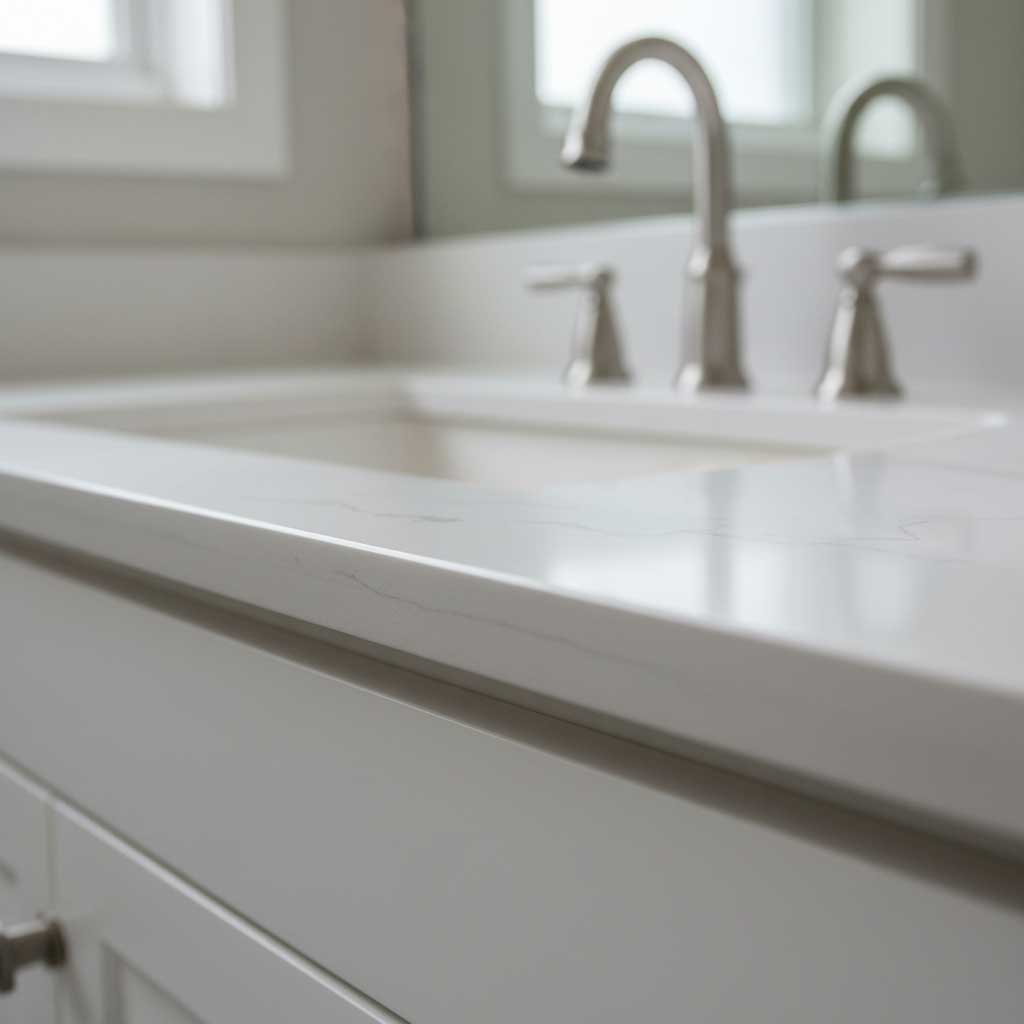
The undermount configuration — where the sink bowl is mounted beneath the countertop surface — is the dominant choice for quartz vanity tops in both residential and commercial applications worldwide. The quartz surface extends seamlessly to the sink opening, where the polished edge is visible, creating a clean and elegant appearance. Water and debris can be swept directly from the surface into the sink without catching on a raised rim, making undermount sinks the most practical option for daily cleaning.
From a fabrication perspective, undermount installation requires a precise cutout in the quartz top. The cutout dimensions must be slightly smaller than the outer rim of the sink bowl (typically 8–12mm smaller on each side) to provide a concealed mounting ledge. All edges of the cutout must be polished to at least a smooth matte finish to prevent moisture infiltration into any micro-imperfections. Standard undermount cutout shapes include rectangular, oval, D-shaped, and square profiles, with rectangular being the most popular for contemporary designs and oval for transitional styles.
When ordering pre-fabricated vanity tops from China, always provide the exact sink model number and manufacturer's cutout template to ensure dimensional accuracy. Common sink brands specified in international projects include Kohler, Duravit, TOTO, Villeroy & Boch, and Roca — your Chinese fabricator will need the specific cutout template for the exact model being used.
Vessel (Above-Counter) Sink
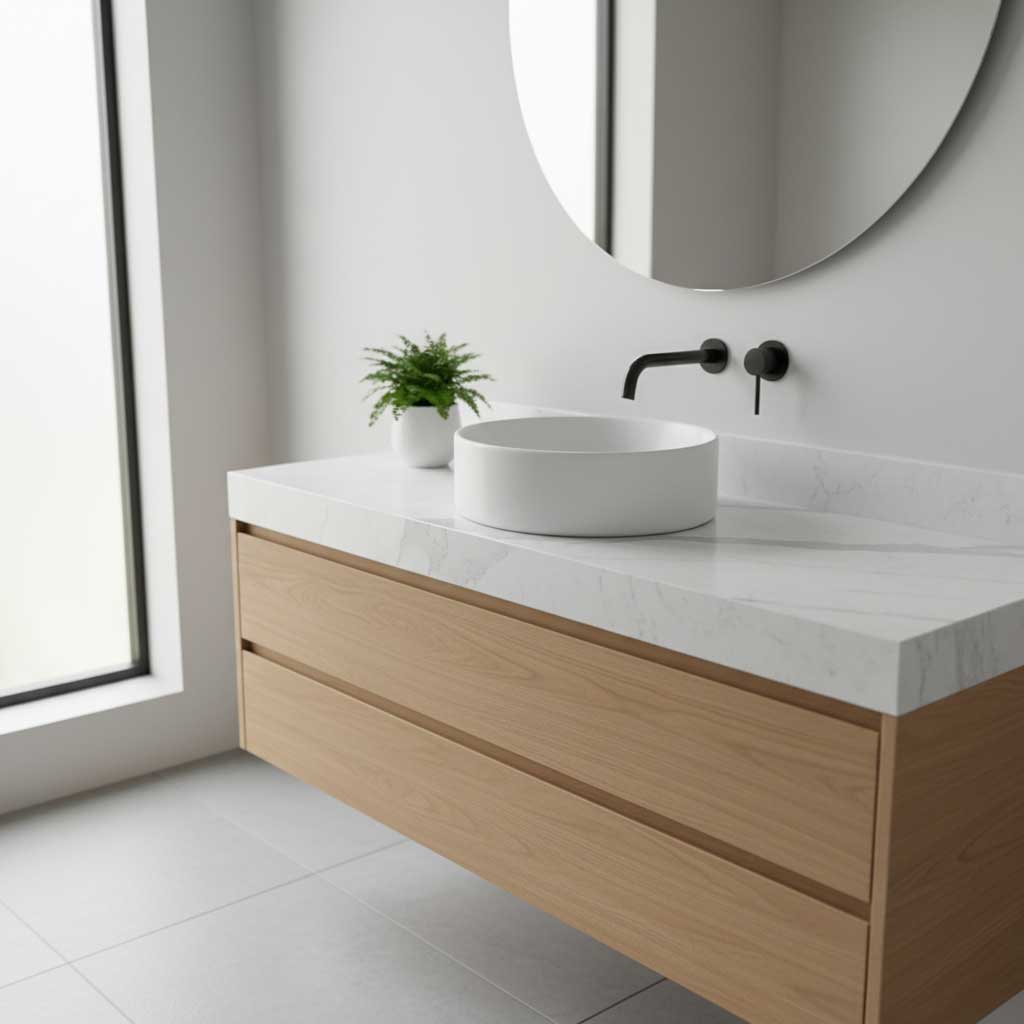
Vessel sinks sit atop the vanity surface, requiring only a small drain hole (typically 35–45mm diameter) through the countertop. This option has gained significant popularity in contemporary, boutique hotel, and designer residential projects where the sink itself is a decorative feature — vessel sinks are available in ceramic, natural stone, glass, copper, and concrete, offering dramatic design possibilities.
For the quartz vanity top, the vessel configuration is the simplest to fabricate (only a small drain hole rather than a large cutout), which reduces fabrication cost and virtually eliminates the risk of cutout-related cracking during manufacturing. The large, uninterrupted quartz surface is ideal for showcasing dramatic vein patterns and bold designs. The primary consideration is the vanity height: since a vessel sink adds 120–180mm of height above the countertop surface, the vanity cabinet should be proportionally shorter (typically 650–700mm instead of the standard 800mm) to maintain a comfortable overall height.
Semi-Recessed Sink
The semi-recessed configuration is a hybrid approach where the sink is partially dropped into the countertop (typically the rear half sits within a cutout) while the front portion projects forward beyond the vanity cabinet. This design is popular in compact European bathrooms where a full-depth vanity cabinet would restrict floor space. The quartz cutout for semi-recessed sinks follows the rear profile of the sink bowl, and the front edge of the countertop typically aligns with the midpoint of the sink. This option requires careful template coordination between the sink manufacturer and the quartz fabricator.
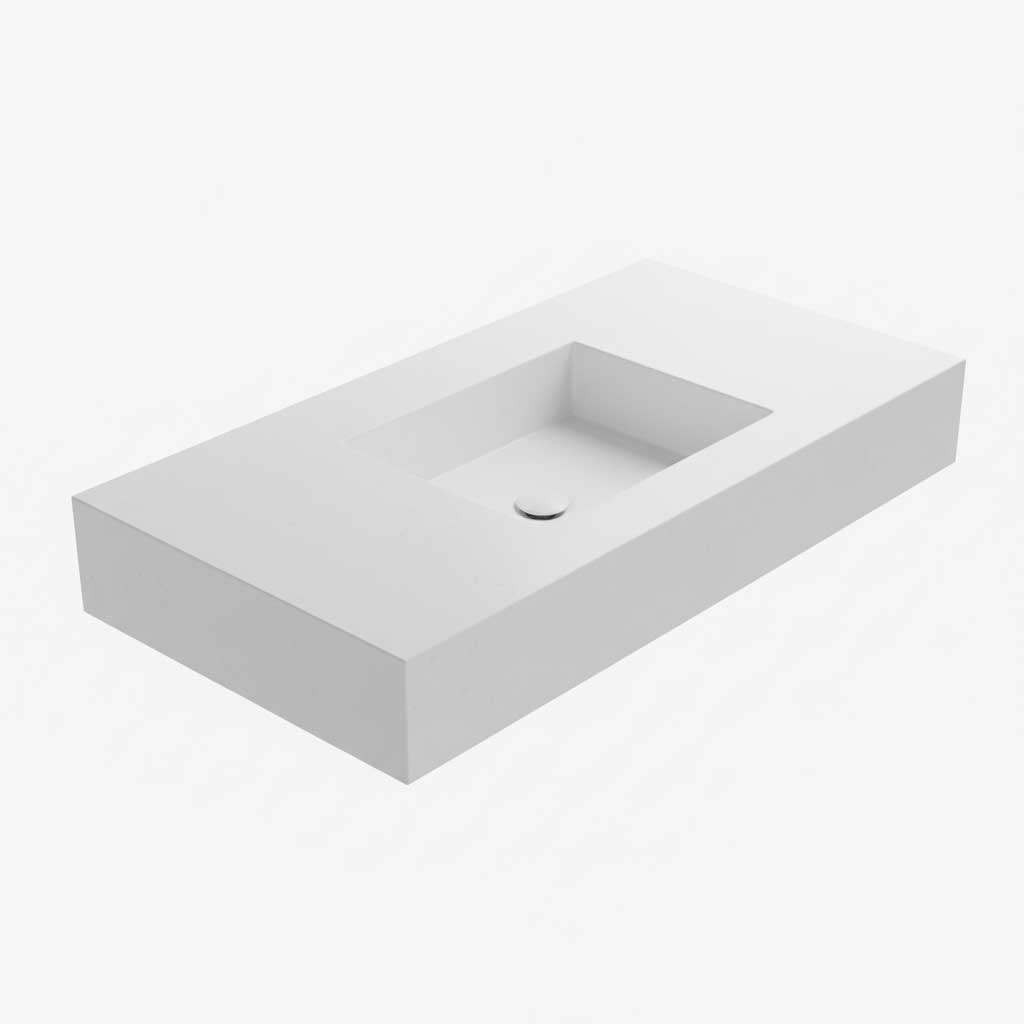
Integrated (Molded) Basin
The integrated or molded basin is a single-piece construction where the countertop surface and sink bowl are formed as one seamless unit. This eliminates any joint, seam, or transition between the surface and the basin — creating the most hygienic, easiest-to-clean configuration possible. There is no crevice or silicone joint where water, soap residue, or bacteria can accumulate.
Manufacturing integrated quartz basins is significantly more complex than producing flat countertop surfaces. The process requires specialized molds, multi-stage compaction, and highly skilled finishing to achieve smooth, consistent surfaces in the curved basin area. As a result, integrated basins typically carry a 40–60% cost premium over flat vanity tops with undermount sink cutouts, and MOQs are higher (often 200+ pieces for a custom basin shape). Lead times of 30–45 working days are common. Despite the higher cost, integrated basins are increasingly specified for luxury hospitality projects where the hygiene benefit and visual seamlessness justify the investment.
Drop-In (Self-Rimming) Sink
Drop-in sinks sit within a countertop cutout with a visible rim that rests on the quartz surface. While less aesthetically refined than undermount configurations, drop-in sinks are the simplest to install (the sink simply drops into the cutout from above) and are most commonly specified for budget hospitality and multi-family residential projects where installation speed and cost are prioritized. The cutout for a drop-in sink is slightly larger than the undermount equivalent, matching the inner dimensions of the sink rim. The visible rim does create a cleaning challenge, as the joint between the sink rim and the quartz surface can accumulate residue.
| Sink Type | Aesthetic | Hygiene | Fabrication Complexity | Cost Impact | Best For |
|---|---|---|---|---|---|
| Undermount | ★★★★★ | ★★★★☆ | Medium | Standard | Universal — residential, hotels |
| Vessel | ★★★★★ | ★★★☆☆ | Low | Lower (simple hole) | Boutique, designer projects |
| Semi-Recessed | ★★★★☆ | ★★★☆☆ | Medium-High | Moderate | Compact European bathrooms |
| Integrated Basin | ★★★★★ | ★★★★★ | High | +40–60% premium | Luxury hotels, premium projects |
| Drop-In | ★★★☆☆ | ★★☆☆☆ | Low | Lower | Budget hospitality, multi-family |
6. Moisture, Humidity & Chemical Resistance
The bathroom environment subjects surface materials to a combination of moisture stresses that are unique in their intensity and persistence. Understanding how engineered quartz performs under these specific conditions — and how it compares to alternative materials — is essential for B2B buyers who need to make defensible material selection decisions and communicate performance advantages to architects, designers, and end users. For broader environmental performance data, refer to our comprehensive climate performance guide.
Water Absorption: The Defining Metric
Water absorption rate, measured according to ASTM C97/C97M or the European equivalent EN 14617-1, is the single most important performance indicator for bathroom surfaces. This test measures the percentage of water (by weight) that a material sample absorbs when fully immersed for a defined period. Engineered quartz consistently tests below 0.02% — effectively zero absorption. For context, this means a 24 kg vanity top would absorb less than 5 grams of water even when completely submerged for 48 hours. In practical bathroom use, where exposure is limited to surface splashing and ambient humidity, the effective absorption is truly zero.
| Material | Water Absorption Rate | Sealing Required? | Mold/Mildew Risk | Dimensional Stability |
|---|---|---|---|---|
| Engineered Quartz | < 0.02% | Never | None (surface) | Excellent |
| Granite | 0.1–0.4% | Annual | Moderate (in pores) | Good |
| Marble | 0.2–0.6% | Semi-annual | High (in pores) | Fair |
| Solid Surface (Corian) | < 0.04% | Never | Low | Good |
| Ceramic Tile | 0.5–3.0% | Grout lines only | High (grout lines) | Good |
| Laminate (HPL) | Edge-vulnerable | Edge sealing | High (at edges) | Poor when wet |
Humidity Cycling Performance
Bathrooms experience daily humidity cycling — from ambient indoor humidity (typically 40–60% RH) to near-saturation (80–100% RH) during showering, and back again as ventilation removes moisture. Materials with even modest porosity undergo micro-scale expansion and contraction during each cycle, which over thousands of cycles can lead to micro-cracking, surface deterioration, and joint failure. Engineered quartz, with its near-zero porosity and coefficient of thermal expansion of approximately 11–15 × 10⁻⁶/°C (similar to concrete), is dimensionally stable through these cycles, maintaining consistent dimensions, flatness, and surface integrity indefinitely.
Chemical Resistance in Bathroom Environments
The range of chemicals that a bathroom vanity surface encounters daily is surprisingly broad and aggressive. The European standard EN 14617-10 classifies chemical resistance on a C0 (significant damage) to C4 (no visible effect) scale. Premium engineered quartz achieves C3–C4 ratings for virtually all common bathroom substances.
| Substance | pH | Quartz Resistance | Marble Resistance | Notes |
|---|---|---|---|---|
| Toothpaste | 7–8 (mildly alkaline) | C4 — No effect | C3 — Minor dulling | Contains mild abrasives |
| Mouthwash | 3–5 (acidic) | C4 — No effect | C1 — Etching | Acidic + dyes |
| Hair Dye | 9–11 (alkaline) | C3 — Removable stain | C0 — Permanent stain | Wipe promptly |
| Nail Polish Remover (acetone) | N/A | C3 — No damage if wiped within 5 min | C2 — Surface dulling | Avoid prolonged contact |
| Bleach (diluted household) | 12–13 (alkaline) | C3 — Safe for short contact | C1 — Etching/bleaching | Rinse after cleaning |
| Bathroom Cleaning Spray | 2–4 (acidic) | C4 — No effect | C0 — Severe etching | Most contain citric acid |
| Perfume / Cologne | Varies (alcohol-based) | C4 — No effect | C2 — Potential marking | Contains ethanol |
| Soap / Hand Wash | 9–10 (alkaline) | C4 — No effect | C3 — Film buildup | Regular cleaning removes residue |
While quartz resists most bathroom chemicals, certain concentrated industrial-strength products can damage the resin binder. Avoid prolonged contact (more than 5 minutes) with: undiluted concentrated bleach, pure acetone, methylene chloride (paint stripper), and strong drain-cleaning chemicals containing sulfuric or hydrochloric acid. If these substances contact the quartz surface accidentally, rinse immediately with water. This limitation is related to the polymer resin (5–8% of the composition) rather than the quartz crystals themselves.
7. Popular Designs & Color Trends for 2025–2026
Bathroom vanity top color and pattern trends evolve continuously, influenced by broader interior design movements, regional cultural preferences, and the ongoing advances in quartz manufacturing technology that allow increasingly realistic reproductions of natural stone and novel abstract designs. For B2B buyers, understanding current and emerging trends is essential for inventory selection, project bidding, and product development conversations with manufacturing partners.
White & Soft Marble Looks (Perennial Bestseller)
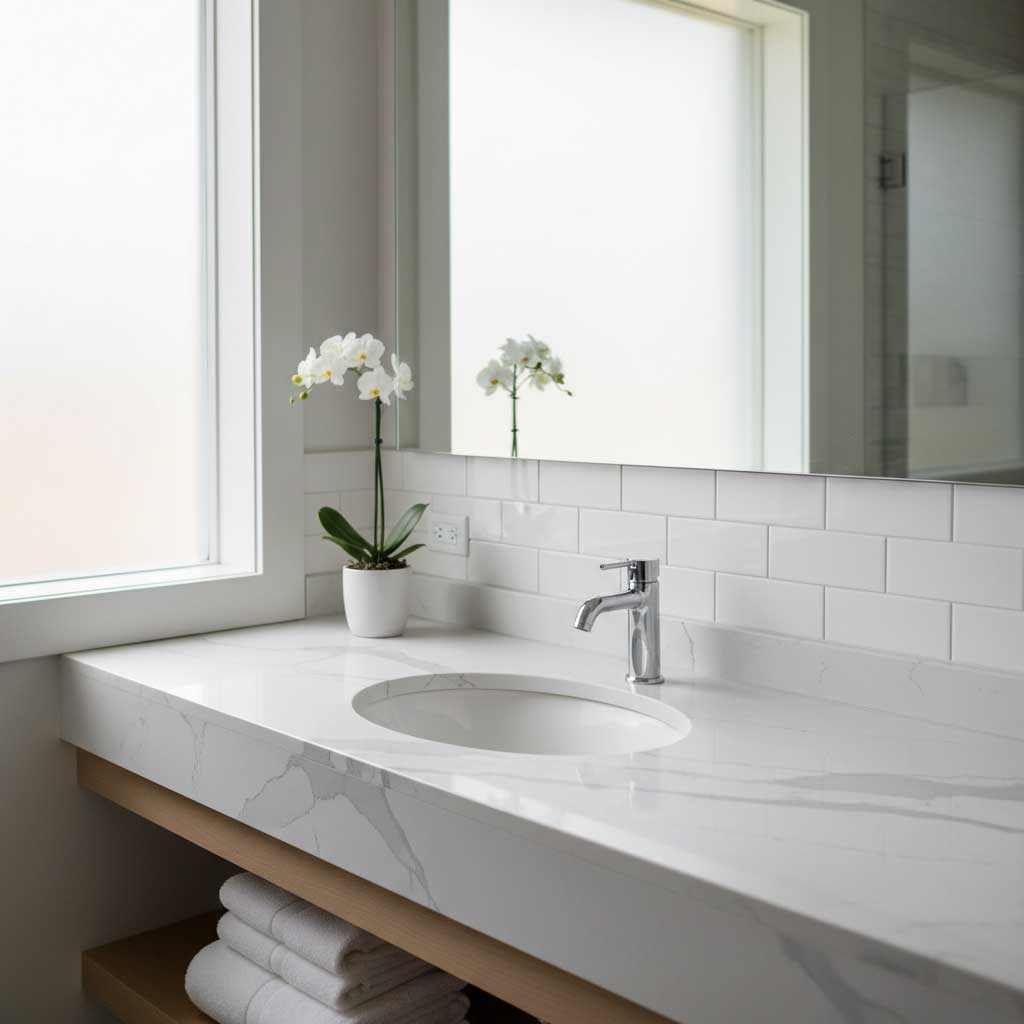
Soft Carrara-inspired designs — white or off-white backgrounds with gentle grey veining — remain the single most popular choice for bathroom vanities across virtually all markets and price segments. The appeal is both aesthetic (the clean, spa-like atmosphere these designs create) and practical (white surfaces make the bathroom feel more spacious and brighter, while subtle veining disguises water spots and light surface deposits between cleanings). In 2025–2026, the trend within the marble-look category is moving toward softer, more diffused veining patterns rather than the bold, dramatic vein structures that have been popular in kitchen applications. This shift reflects an understanding that the smaller scale of a vanity top benefits from more refined, understated patterning.
Calacatta Bold: High-Drama Veining
At the premium end of the market, Calacatta-inspired designs with bold, dramatic vein structures continue to gain ground — particularly for double-sink vanity tops (1500mm+) where the larger surface area provides sufficient canvas for dramatic veining to make a visual impact. These designs, which feature thick gold, grey, or dark brown veining on a bright white background, are the most popular choice for luxury hotel bathrooms and high-end residential master suites. The manufacturing of convincing Calacatta patterns requires advanced inkjet printing technology and careful vein flow management during slab production — a capability that distinguishes premium Chinese manufacturers from budget producers.
Warm Tones: Beige, Cream & Soft Gold
For bathrooms designed with warm-toned palettes — brushed brass or gold fixtures, warm wood cabinetry, earthy wall treatments — warm quartz tones provide essential palette harmony. Soft beige, warm cream, and gentle taupe quartz designs are particularly popular in Middle Eastern, South Asian, and Latin American markets where warm, earthy color palettes are culturally preferred. The 2025–2026 trend introduces subtle warm metallic veining (soft gold or copper tones) into these warm-base designs, creating a sophisticated effect that coordinates beautifully with brass hardware.
Dark & Dramatic: Charcoal, Black, Deep Navy
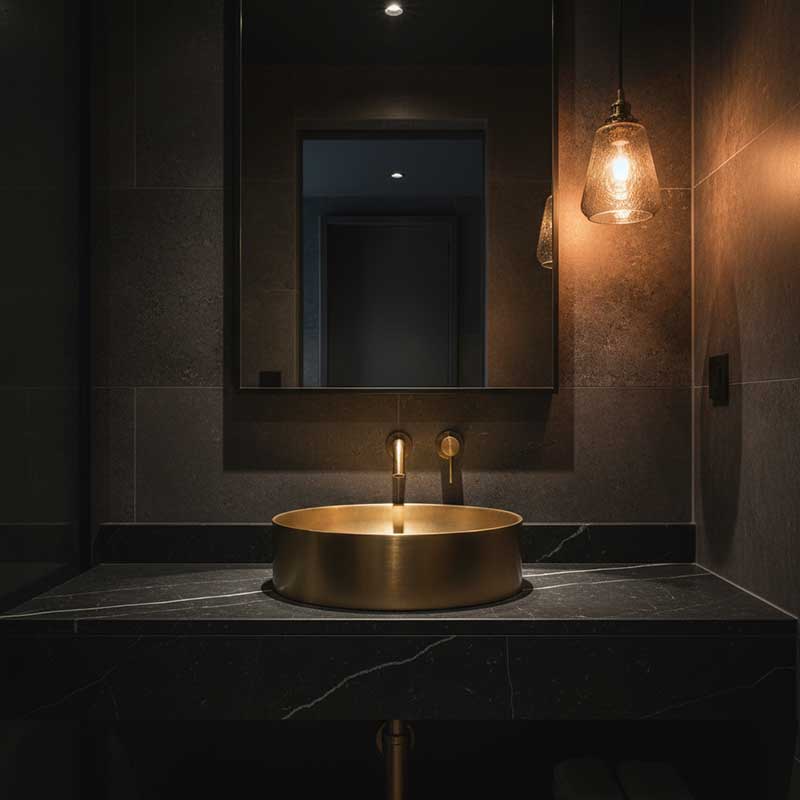
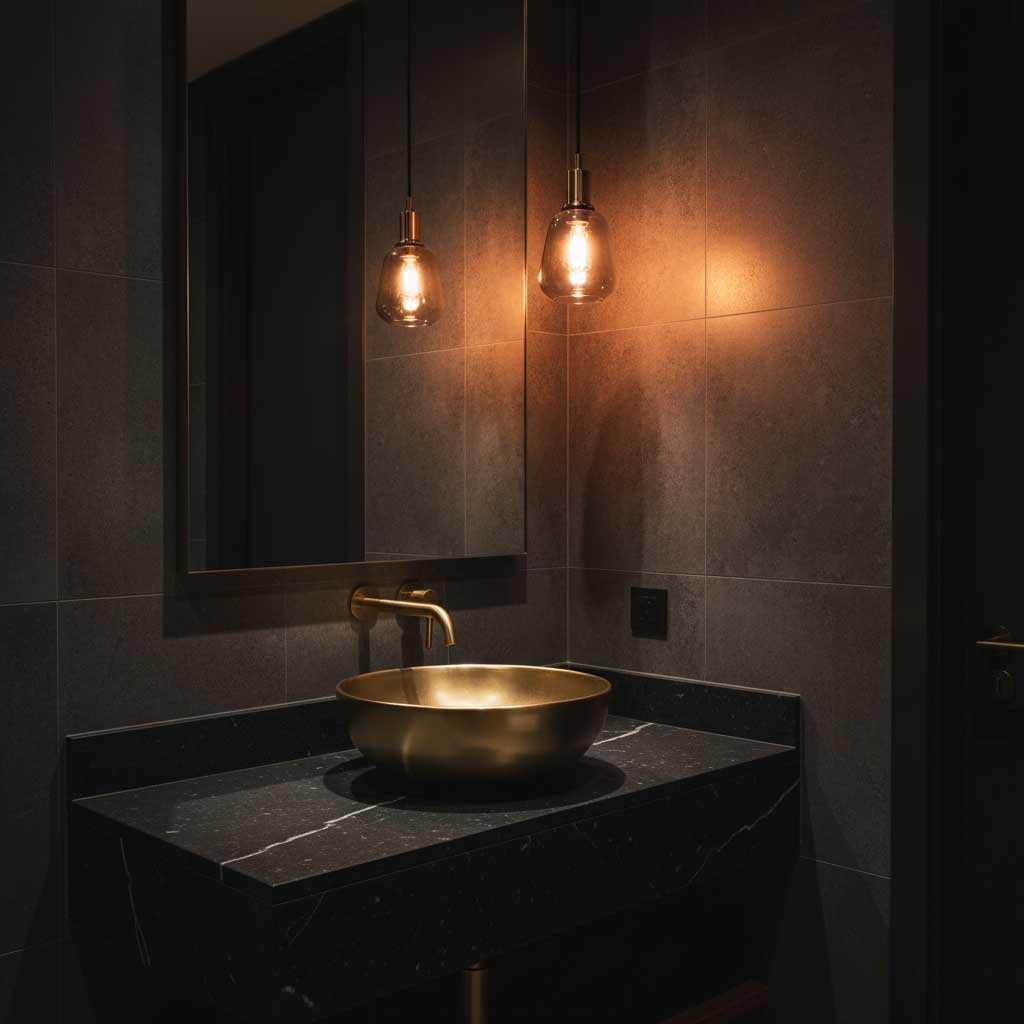
Dark quartz vanity tops create a striking, high-end appearance that is particularly effective in powder rooms (where the bold aesthetic makes a statement in a small space) and boutique hotel bathrooms (where design differentiation is a competitive advantage). Black quartz with subtle white or gold veining is the most popular dark option, followed by deep charcoal and, increasingly, dark navy blue. Dark vanity tops pair best with gold or brushed brass fixtures and light-colored walls to create visual contrast and prevent the space from feeling too enclosed.
Concrete & Industrial
The industrial design aesthetic continues to influence bathroom design, and quartz manufacturers have responded with concrete-look and terrazzo-inspired designs that capture the visual texture of these materials while providing the superior hygiene and durability of engineered quartz. These designs are popular in loft-style apartments, co-working space bathrooms, and modern hospitality concepts that embrace raw, authentic material aesthetics. The quartz advantage over actual concrete or terrazzo is significant: zero porosity (concrete is inherently porous), consistent color across production batches, and no need for surface sealing.
8. Surface Finish Options for Bathroom Vanities
The surface finish of a quartz vanity top significantly affects its tactile quality, visual appearance, light interaction, and practical maintenance characteristics. While polished finishes have historically dominated the market, the growing influence of organic and matte design aesthetics has expanded the range of finish options that B2B buyers should consider.
Polished (High Gloss)
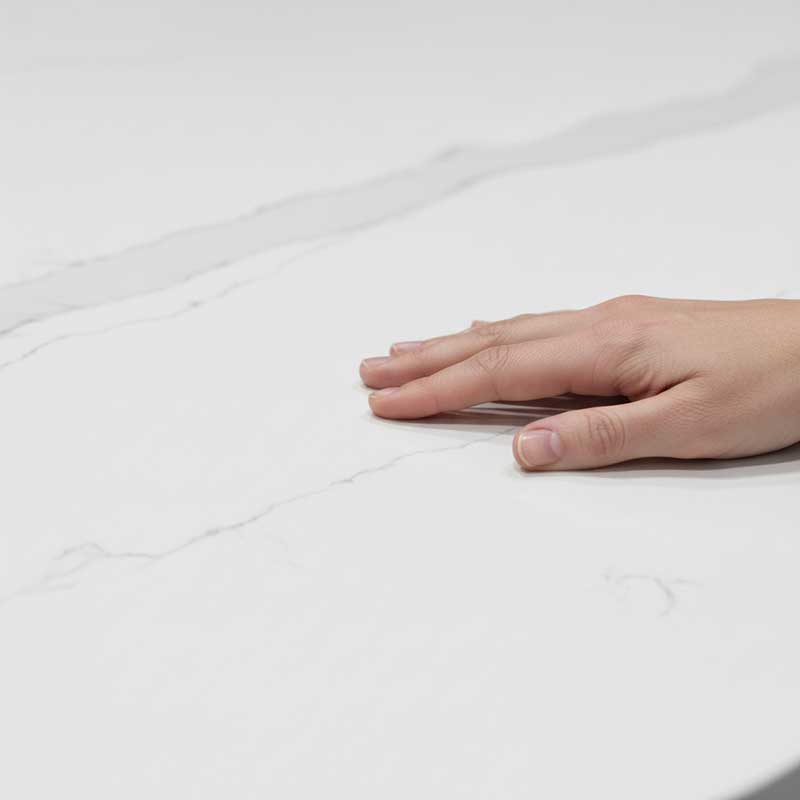
The polished finish remains the most popular option for bathroom vanities, delivering a mirror-like surface with a gloss level of 85–95 GU (gloss units). Polishing is achieved through a multi-stage abrasive process that culminates in diamond-grit pads of 3000+ grit, creating a surface that is both visually luminous and extremely smooth to the touch. In bathroom applications, the polished surface has a practical advantage: its extreme smoothness makes it the easiest to clean, as water, soap, and other residues cannot cling to the surface effectively. Polished quartz reflects light beautifully, which is particularly effective in bathrooms where it can amplify both natural and artificial lighting.
Honed (Matte)
The honed finish stops the polishing process before full gloss is achieved, creating a smooth but non-reflective surface with a gloss level of 20–40 GU. The matte appearance has an organic, sophisticated quality that is increasingly popular in contemporary and Scandinavian-influenced bathroom designs. Honed finishes tend to show fingerprints and water spots less visibly than polished surfaces (the absence of gloss means these marks lack the visual contrast they have on reflective surfaces), which is a practical advantage in busy bathrooms. However, the slightly less smooth surface can be marginally more challenging to clean, as residues have more surface texture to adhere to. For bathroom applications, honed finishes are most commonly specified for luxury and upscale projects where the aesthetic is prioritized.
Leathered (Textured)
The leathered finish creates a subtle, dimpled surface texture that mimics the tactile quality of soft leather. This is achieved by brushing the surface with diamond-tipped rollers after the honing stage, creating a consistent micro-texture that interacts with light in a uniquely warm, inviting way. Leathered finishes are the newest trend in premium bathroom design and are most commonly specified by high-end designers and luxury hotel brands seeking a distinctive, tactile experience. The textured surface is excellent at disguising fingerprints, water marks, and light scratches, but requires slightly more thorough cleaning to remove residues from the surface texture.
Brushed / Antiqued
Less common for bathroom vanities but worth noting, brushed and antiqued finishes create a weathered, vintage appearance that suits traditional, rustic, or Mediterranean-style bathrooms. These finishes are typically available as custom options from Chinese manufacturers and may require higher MOQs.
| Finish | Gloss (GU) | Maintenance Ease | Fingerprint Visibility | Design Style | Cost Premium |
|---|---|---|---|---|---|
| Polished | 85–95 | ★★★★★ | Visible | Classic, versatile | Standard |
| Honed | 20–40 | ★★★★☆ | Low | Contemporary, organic | +5–10% |
| Leathered | 10–25 | ★★★☆☆ | Very low | Luxury, boutique | +10–15% |
| Brushed | 15–30 | ★★★☆☆ | Very low | Traditional, rustic | +10–15% |
9. Edge Profile Specifications
The edge profile of a bathroom vanity top is a subtle but important design detail that affects the overall aesthetic character, perceived thickness, and safety of the finished piece. Unlike kitchen countertops where edge profiles are sometimes secondary to the surface pattern, bathroom vanity tops are often viewed at close range and from multiple angles, making the edge treatment more visually prominent.
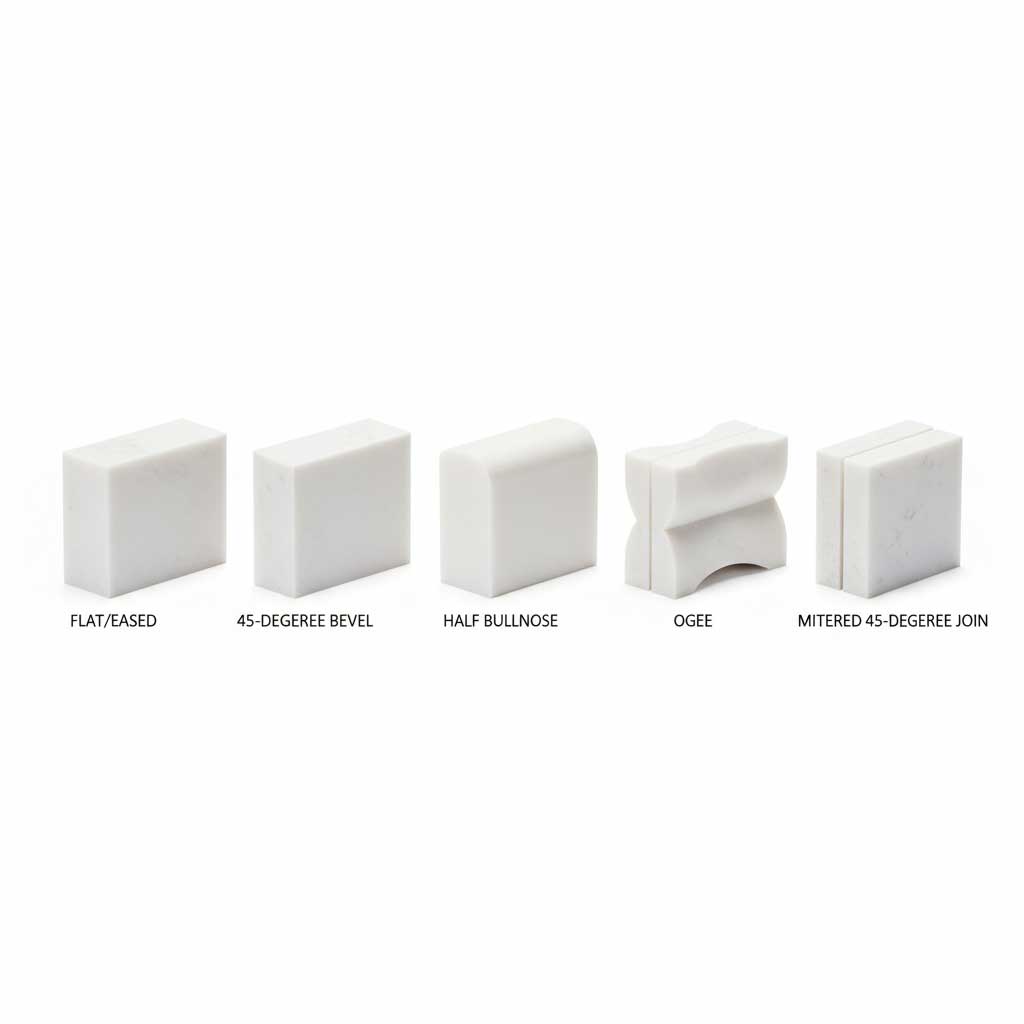
Flat / Eased Edge
The simplest and most economical profile: the slab edge is polished flat with only the sharp corners slightly rounded (eased) for safety. This creates a clean, minimalist appearance that suits contemporary and modern designs. The flat edge is the standard default for most Chinese manufacturers and carries no fabrication premium.
Beveled Edge
A 45-degree chamfer (typically 3–6mm wide) is cut along the top edge, creating a defined linear accent. The bevel catches light and creates a subtle visual frame around the vanity top. This profile is popular in transitional designs that balance modern and classic elements.
Full Bullnose
The entire edge is rounded into a complete half-circle profile. Full bullnose creates a soft, organic appearance and eliminates all sharp edges — making it the safest option for family bathrooms where children are present. It works best at 20mm or 30mm thickness where the rounded profile has sufficient visual weight.
Half Bullnose (Demi-Bullnose)
Only the top corner is rounded while the bottom remains square. This is one of the most popular profiles for bathroom vanities as it provides a gentle, approachable top edge while maintaining a clean, defined underside. It pairs well with both modern and traditional vanity cabinet styles.
Ogee
An S-shaped decorative profile that creates an elegant, traditional appearance. The ogee profile is most commonly specified for luxury, classic, or French-provincial style bathrooms and is best executed at 30mm thickness where the curve proportions are most visually satisfying. Ogee edges require CNC machining and carry a moderate fabrication premium.
Mitered Edge
Two pieces of quartz are joined at a 45-degree angle to create the appearance of a much thicker slab (e.g., two 20mm pieces mitered to appear as 40mm). The mitered edge creates a dramatic, substantial visual weight and is popular for luxury hotel vanities and premium residential projects. This is the most complex and expensive edge treatment, requiring precise angle cutting and seamless adhesive bonding.
10. Hospitality & Hotel Project Specifications
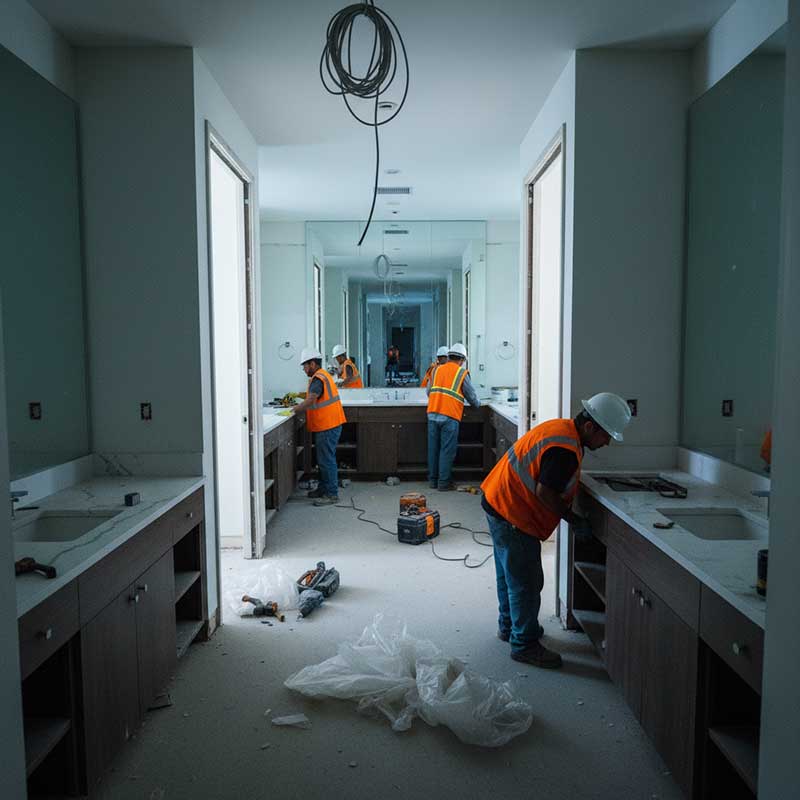
Hotel and hospitality projects represent one of the largest and most consistent B2B market segments for bathroom vanity tops. A single midscale hotel with 250–400 rooms may require 300–800 vanity tops (including guest rooms, suites, and public restrooms), making specification accuracy, supply consistency, and competitive pricing critical for successful project bidding and execution.
Understanding Hotel Brand Standards
International hotel brands — from economy chains to ultra-luxury collections — maintain detailed material specification documents (variously called "Design Standards," "Brand Standards," "Technical Design Guide," or "FF&E Specifications") that define acceptable materials, dimensions, finishes, performance criteria, and testing requirements for every surface in the guest room and public areas. These documents are typically provided to approved design firms and FF&E procurement companies, and they represent the authoritative specification that must be met for brand approval.
When bidding on a hotel project, always request the brand's specification document early in the process. Do not assume that generic "hotel-grade" quartz will meet requirements — different brands have specific and sometimes unique requirements. For example, some luxury brands require a specific minimum surface hardness test result (Mohs 6+ or ASTM C241 abrasion resistance), while others mandate GREENGUARD Gold certification for indoor air quality compliance in guest rooms.
Hotel Tier Specifications
| Specification | Economy / Select-Service | Upscale / Full-Service | Luxury / Ultra-Luxury |
|---|---|---|---|
| Vanity Width (single) | 750–900mm | 900–1050mm | 1050–1500mm |
| Vanity Width (double/suite) | N/A or 1200mm | 1500mm | 1800–2400mm |
| Thickness | 20mm | 20mm | 20–30mm (or mitered) |
| Surface Finish | Polished | Polished or Honed | Honed or Leathered |
| Sink Type | Undermount ceramic | Undermount ceramic | Undermount or Integrated |
| Edge Profile | Flat / Eased | Beveled or Half Bullnose | Ogee, Mitered, or Custom |
| Backsplash | 100mm coved | 100–150mm flat | Full-height (wall-to-mirror) |
| Color Consistency | Delta E ≤ 2.0 | Delta E ≤ 1.5 | Delta E ≤ 1.0 |
| Certifications | CE or equivalent | NSF 51 + CE | NSF 51 + GREENGUARD + brand tests |
ADA & Accessibility Compliance
For projects in the United States and many international markets, a percentage of guest rooms must meet ADA (Americans with Disabilities Act) accessibility standards — or the local equivalent (DDA in the UK, AS1428 in Australia). ADA-compliant vanity tops must be installed at a maximum height of 34" (864mm) to the top surface, with knee clearance of at least 27" (686mm) below. This typically means the vanity top is mounted on a wall-hung bracket system without a traditional enclosed cabinet below. The quartz top must be fabricated to accommodate this mounting system, and edges must have no sharp protrusions. B2B buyers should clarify the required percentage of ADA rooms early in the project specification phase, as these vanity tops may have different dimensions and mounting requirements than standard units.
Fire Performance
Building codes in most jurisdictions classify engineered quartz as a non-combustible or limited-combustible material (Class A / Class 1 fire rating per ASTM E84, or Euroclass A1/A2 per EN 13501-1). For hospitality projects, this fire rating classification may need to be documented on the material submittal. Chinese manufacturers can typically provide fire test reports upon request — ensure the report references the specific product being supplied rather than a generic quartz result.
Sustainability & Green Building Credits
Hotel projects pursuing LEED (Leadership in Energy and Environmental Design) certification or other green building ratings may require quartz vanity tops to contribute toward credits in categories such as Materials & Resources (regional material sourcing, recycled content), Indoor Environmental Quality (low-VOC materials), and Innovation. Engineered quartz can contribute to several of these credits: some Chinese manufacturers incorporate up to 20% pre-consumer recycled content (recycled quartz from production waste), and products with GREENGUARD Gold certification demonstrate compliance with strict VOC emission limits.
11. Quality Control & Testing Standards
For B2B buyers sourcing quartz vanity tops from China — whether as full slabs or pre-fabricated finished pieces — quality control is the single most critical factor in ensuring product satisfaction and avoiding costly project delays, returns, or warranty claims. A comprehensive QC approach encompasses factory qualification, production monitoring, and pre-shipment inspection. For additional information on certifications and compliance, see our import certifications guide.
Key International Standards for Quartz
Several international standards govern the testing and classification of engineered quartz stone. The most relevant for bathroom vanity applications include EN 14617 (European standard for agglomerated stone, comprising multiple parts covering different properties such as flexural strength, water absorption, chemical resistance, and abrasion), ASTM C1364 (Standard Specification for Engineered Quartz, covering physical requirements for products intended for countertop use), NSF/ANSI 51 (hygiene and food-contact safety), and ISO 10545 (often referenced for abrasion and chemical resistance testing). Request test reports referencing these specific standards from your supplier to verify performance claims.
Color Consistency: Delta E Measurement
Color consistency is particularly critical for bathroom vanity tops in hotel projects where hundreds of identical units are installed across guest rooms. Any visible color variation between rooms is immediately noticeable and unacceptable. Color consistency is quantified using the Delta E (ΔE) metric from the CIE L*a*b* color space, where ΔE represents the total color difference between two samples. A ΔE of 1.0 is at the threshold of human perception; ΔE ≤ 1.5 is considered "visually identical" by industry standards; and ΔE ≤ 2.0 is the minimum acceptable for commercial projects. Luxury hotel projects typically specify ΔE ≤ 1.0.
To achieve this consistency, reputable Chinese manufacturers produce the full order quantity from a single production batch (same raw material lot), monitor color during production using spectrophotometer equipment, and retain reference samples (control samples) from the approved sample phase against which production pieces are measured. When placing large vanity top orders, include the Delta E tolerance explicitly in your purchase order and request batch production.
Dimensional Tolerances
For pre-fabricated vanity tops, dimensional accuracy is critical because the pieces must fit precisely into pre-built cabinet structures and align with pre-plumbed sink drain locations. Industry-standard dimensional tolerances for pre-fabricated vanity tops are ±1.0mm for length and width, ±0.5mm for thickness consistency across the surface, ±1.0mm for sink cutout position, and ±0.5mm for sink cutout dimensions. These tolerances should be clearly specified in the purchase order and verified during pre-shipment inspection.
Pre-Shipment Inspection Protocol
For high-value vanity top orders, engaging a third-party inspection service (such as SGS, Bureau Veritas, or Intertek) to conduct a pre-shipment inspection at the Chinese factory is strongly recommended. The inspection should cover visual quality (checking for surface defects, chips, scratches, and color consistency), dimensional accuracy (measuring all pieces against specifications), edge quality (checking for roughness, chips, or inconsistent profiles), packaging integrity (ensuring adequate protection for international shipping), and quantity verification.
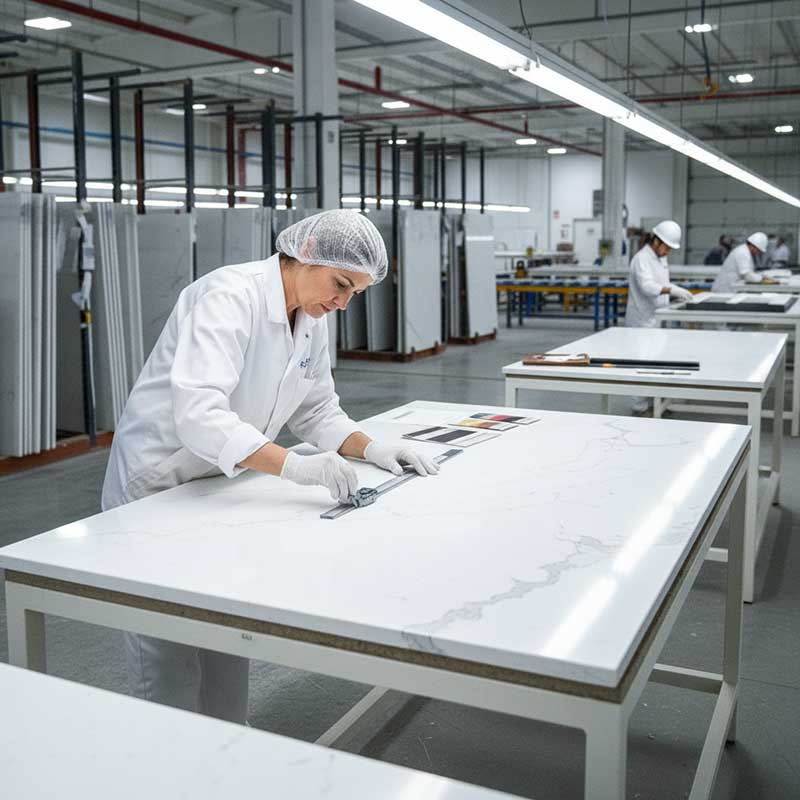
Before committing to full production, always request physical approval samples (not just digital images). A reputable manufacturer will produce 2–3 sample pieces that represent the actual production quality, color, and finish. Inspect these samples physically, approve them formally in writing, and retain one sample as the "golden reference" for your pre-shipment inspection. Any production deviation from the approved sample gives you contractual grounds for rejection or renegotiation.
12. Installation Best Practices for Humid Environments
While the quartz vanity top itself is impervious to bathroom moisture, the overall vanity assembly is a system of multiple components — including the cabinet substrate, adhesive, silicone sealant, plumbing connections, and wall interface — each of which must be properly specified and executed to prevent moisture-related problems. Poor installation practice can undermine the excellent performance of the quartz surface by allowing moisture to damage the supporting structure beneath.
Cabinet Substrate Requirements
The vanity cabinet that supports the quartz top must be constructed from moisture-resistant materials. Standard MDF (medium-density fiberboard) and particle board will absorb moisture, swell, and deteriorate in bathroom environments — this is one of the most common causes of vanity failure in budget projects. Recommended substrates include marine-grade plywood (moisture-resistant adhesive, rated for wet environments), PVC board or PVC-wrapped MDF (fully sealed against moisture penetration), high-moisture-resistant (HMR) particle board (acceptable for well-ventilated bathrooms but not recommended for enclosed, poorly ventilated spaces), and stainless steel or aluminum frames (for wall-hung vanity configurations).
Adhesive & Bonding
Quartz vanity tops should be bonded to cabinet substrates using high-quality moisture-rated silicone adhesive — not standard construction adhesive, which can degrade in humid environments. Apply silicone in a continuous bead around the cabinet perimeter and in a zigzag pattern across the support surface. The quartz top should rest on small silicone pads (2–3mm thick) at support points to allow for the slight thermal expansion/contraction that occurs with temperature changes. Avoid rigid epoxy bonding, which does not accommodate thermal movement and can cause stress fractures.
Sink Cutout Sealing
The sink cutout area is the most vulnerable part of any vanity installation because it creates an exposed edge where water can contact the adhesive joint between the quartz surface and the sink. Apply a continuous bead of food-grade silicone sealant around the entire perimeter of the sink cutout before setting the undermount sink. The silicone must form a complete, unbroken seal — any gap will allow water to migrate into the cabinet structure below. Use a color-matched or clear silicone for a clean appearance.
Wall Interface & Backsplash
The joint between the vanity top and the wall must be sealed with silicone to prevent water running behind the vanity and into the wall structure. If a separate backsplash piece is used (rather than wall tile continuing down to the countertop), it should be bonded to the wall with moisture-rated adhesive and the top edge sealed with silicone. In high-moisture environments (e.g., vanity tops directly adjacent to showers or bathtubs), a full-height quartz backsplash from the countertop to the mirror is recommended for maximum moisture protection.
1. Verify cabinet substrate is moisture-rated (marine ply, PVC, or HMR board). 2. Confirm all cabinet edges and cutouts are sealed against moisture. 3. Use moisture-rated silicone adhesive for all bonding. 4. Place silicone pads at support points for thermal movement. 5. Apply continuous silicone seal around sink cutout before sink installation. 6. Seal wall-to-vanity joint with silicone. 7. Ensure adequate bathroom ventilation (exhaust fan) to manage humidity levels. 8. Allow 24 hours for silicone to cure before first use.
13. Ordering, Customization & Logistics from China
When sourcing bathroom vanity tops from Chinese manufacturers, B2B buyers have two primary procurement models, each with distinct advantages depending on order volume, size diversity, and downstream distribution model. Understanding the logistics, lead times, and cost structures of each model is essential for making the optimal sourcing decision.
Model 1: Full Slab Orders (For Local Fabrication)
Ordering full slabs (standard sizes: 3200 × 1600mm, 3000 × 1400mm, or jumbo 3200 × 1800mm) and having them fabricated into vanity tops by local stone fabricators is the most common approach for quartz distributors, stone dealers, and large contractors who serve diverse project requirements. This model offers the lowest per-square-meter material cost (eliminating the Chinese factory's fabrication labor and individual packaging cost), maximum flexibility to cut any size, shape, or configuration from inventory, the ability to stock slabs for multiple projects and respond to custom orders, and local quality control over the finished product.
The trade-off is the additional cost of local fabrication (cutting, polishing, cutout machining — typically $80–200 per vanity top depending on complexity and market labor rates), the need for a reliable local fabrication partner with CNC capability, and higher material waste compared to factory-optimized cutting.
Full slab orders typically have MOQs of 50–100 slabs per color (one container can hold approximately 35–40 slabs depending on thickness), with lead times of 15–20 working days for production plus 25–35 days for ocean freight to most international ports.
Model 2: Pre-Fabricated (Cut-to-Size) Vanity Tops
For hotel projects, multi-family residential developments, and any application requiring large volumes of identical vanity tops, ordering pre-fabricated pieces directly from the Chinese factory is often the more cost-effective and quality-consistent approach. The factory cuts each vanity top to exact dimensions, machines the sink cutout (if specified), polishes all edges to the specified profile, applies quality control inspection to every piece, and packages each unit individually with foam edge protection and wooden crate containment.
Pre-fabricated vanity tops eliminate local fabrication costs entirely, ensure perfect dimensional consistency across hundreds or thousands of units (factory CNC accuracy is typically ±0.5mm), and arrive ready for immediate installation. The trade-off is a higher per-unit price from the factory (reflecting the fabrication labor), higher MOQs (typically 100–200 pieces per size/color combination), longer lead times (20–30 working days for production), and no flexibility to adjust dimensions after order placement.
| Factor | Full Slabs | Pre-Fabricated Tops |
|---|---|---|
| Material Cost | Lower ($45–70/m² FOB) | Higher (includes fabrication) |
| Local Fabrication Needed | Yes ($80–200/piece) | No — ready to install |
| Size Flexibility | Any size from stock | Fixed at order time |
| MOQ | 50–100 slabs/color | 100–200 pieces/size/color |
| Lead Time (production) | 15–20 working days | 20–30 working days |
| Dimensional Consistency | Depends on local fabricator | Factory CNC — ±0.5mm |
| Best For | Distributors, diverse projects | Hotels, standardized projects |
Packaging & Shipping Specifications
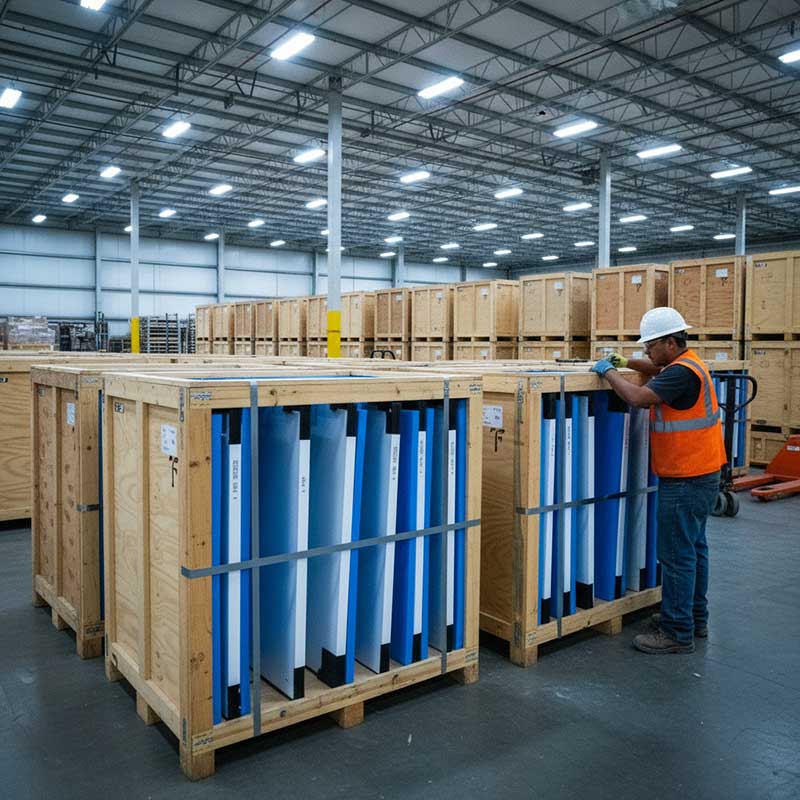
Proper packaging is critical for international shipping of quartz products, which are heavy (approximately 50 kg/m² at 20mm thickness) and brittle when subjected to impact. Full slabs are typically packed vertically in A-frame wooden crates with foam interlayers between slabs and steel banding for container transit. Pre-fabricated vanity tops should be individually wrapped in protective foam, with edge protectors on all corners, and packed vertically in wooden crates with internal dividers. The crate must be rated for international ocean freight and fumigated per ISPM 15 regulations for wood packaging. Request photos of the packaging before shipment and specify packaging requirements in your purchase order.
Payment & Trade Terms
Standard payment terms for Chinese quartz manufacturers follow a 30/70 structure: 30% deposit upon order confirmation and 70% balance payment against copy of Bill of Lading (B/L) or upon pre-shipment inspection approval. For established business relationships, some manufacturers may offer more favorable terms. Trade terms are typically FOB (Free on Board — Chinese port, usually Xiamen, Shenzhen, or Nansha) or CIF (Cost, Insurance, and Freight — delivered to the buyer's destination port). CIF terms simplify the import logistics for buyers who don't have established freight forwarding relationships.
Whether you need full slabs for local fabrication or pre-fabricated vanity tops ready for installation, we provide competitive CIF pricing with full customization. Send us your project requirements — including dimensions, sink specifications, edge profiles, finish, color, and quantity — and we'll provide a detailed quotation within 12 hours. Request your free quote →
14. Cost Analysis & ROI for B2B Buyers
The economics of quartz bathroom vanity tops extend well beyond the initial material purchase price. A complete total cost of ownership (TCO) analysis — encompassing material, fabrication, installation, maintenance, replacement, and lifecycle costs — demonstrates why quartz offers compelling economic value even when its initial price is higher than some alternatives.
Initial Material Cost Comparison
As a general reference, FOB pricing from Chinese manufacturers for quartz bathroom vanity applications falls into these approximate ranges (as of early 2025). Budget tier products (solid colors, simple patterns) range from $25–40/m², mid-range products (standard marble-look designs, good resin quality) from $45–65/m², and premium products (advanced vein patterns, premium resin, certified) from $65–100/m². For comparison, imported Italian quartz (Caesarstone, Silestone) typically retails at $80–200/m² at wholesale distribution level, natural marble ranges from $50–300/m² depending on variety, and solid surface (Corian-type) costs $60–120/m² for premium brands.
Total Installed Cost
For a standard single vanity top (900 × 550 × 20mm = 0.495 m²), the total installed cost using Chinese-sourced mid-range quartz breaks down approximately as follows: material cost (CIF to destination port) of $35–50 per piece, local fabrication (if ordering slabs, not pre-fab) of $80–150 per piece, installation labor of $50–100 per piece, and silicone, adhesive, and consumables of $10–20 per piece. The total installed cost ranges from approximately $175–320 per vanity top, compared to $300–600+ for an equivalent Italian quartz vanity top or $250–800 for natural marble (depending on stone variety and market).
Lifecycle Cost Advantage
Where quartz delivers its most compelling economic advantage is in lifecycle costs over the typical 15–20 year lifecycle of a hospitality or commercial project. Quartz requires zero sealing treatments over its lifetime (natural stone requires re-sealing every 6–12 months at $15–30 per vanity top per treatment). It experiences near-zero staining-related replacements (marble vanity tops in hotel environments typically require replacement every 5–8 years due to etching and staining). It has minimal maintenance labor (the non-porous surface cleans quickly and effectively with standard products, reducing housekeeping time per room). And its color and finish stability means it maintains its as-installed appearance indefinitely, unlike natural stone which develops patina and wear patterns.
For a 300-room hotel, the lifecycle cost savings of quartz versus natural marble over a 15-year period can be substantial — potentially $100,000–200,000 when factoring in avoided re-sealing, reduced replacement, and lower maintenance labor. These lifecycle economics are increasingly recognized by hotel operators, property developers, and asset managers who evaluate materials on TCO rather than initial purchase price alone.
15. Frequently Asked Questions
Can quartz vanity tops withstand the constant humidity in a bathroom?
Absolutely. With a water absorption rate of less than 0.02%, engineered quartz is effectively impervious to humidity and moisture. Unlike natural stone, wood, or laminate surfaces, quartz will not absorb moisture, swell, warp, discolor, or develop mold — even in poorly ventilated bathrooms with very high humidity levels. The material maintains its dimensions, color, and surface quality indefinitely regardless of moisture exposure.
What is the minimum order quantity (MOQ) for pre-fabricated vanity tops?
MOQs vary by manufacturer, but typical minimums for pre-fabricated vanity tops are 100–200 pieces per size/color combination. For full slab orders, MOQs are typically 50–100 slabs per color (enough to fill approximately one container). Some manufacturers offer lower MOQs (as low as 50 pieces for pre-fabricated tops) for premium colors or established customer relationships.
How do I ensure color consistency across a large hotel order?
Request that the entire order be produced in a single production batch from the same raw material lot. Specify the maximum acceptable Delta E value in your purchase order (ΔE ≤ 1.5 for standard projects, ΔE ≤ 1.0 for luxury). Approve physical production samples before full production, retain reference samples, and conduct pre-shipment inspection with color comparison against the reference sample.
Is quartz suitable for bathroom vanities in tropical, high-humidity climates?
Yes — quartz is one of the best materials for tropical and high-humidity environments. Its zero-porosity surface prevents any moisture-related degradation regardless of climate zone. We discuss tropical and coastal performance in detail in our climate performance guide.
Can quartz vanity tops be used with heated bathroom environments (underfloor heating)?
Quartz is compatible with underfloor heating systems, though the heating elements should not be positioned directly beneath the vanity cabinet. The quartz surface itself can safely tolerate temperature fluctuations within the normal bathroom range (15–45°C) without any dimensional change or surface degradation.
What certifications should I require from my Chinese quartz supplier?
At minimum, request CE marking (for European market compliance), NSF/ANSI 51 certification (for hygiene compliance), and test reports per EN 14617 or ASTM C1364. For green building projects, GREENGUARD Gold certification demonstrates low-VOC compliance. For specific hotel brand projects, check the brand's specification document for any additional testing requirements.
How are pre-fabricated vanity tops packaged for international shipping?
Each vanity top is individually wrapped in protective PE foam, with rigid edge protectors on all corners. Multiple units are packed vertically (on edge) in wooden crates with internal dividers, and the crate is strapped with steel banding. All wood packaging must comply with ISPM 15 fumigation requirements for international shipping. A 20ft container can typically hold 200–350 pre-fabricated single vanity tops depending on dimensions and packaging method.
What is the typical lead time from order to delivery?
Production time for full slab orders is typically 15–20 working days, and 20–30 working days for pre-fabricated vanity tops (due to the additional fabrication steps). Ocean freight from Chinese ports (Xiamen, Shenzhen, Nansha) to major international destinations ranges from 20–40 days depending on the route. Total door-to-port timeline is typically 6–10 weeks from order confirmation to arrival at destination port.