The Industrial Aesthetic Is Taking Over European Kitchen Design
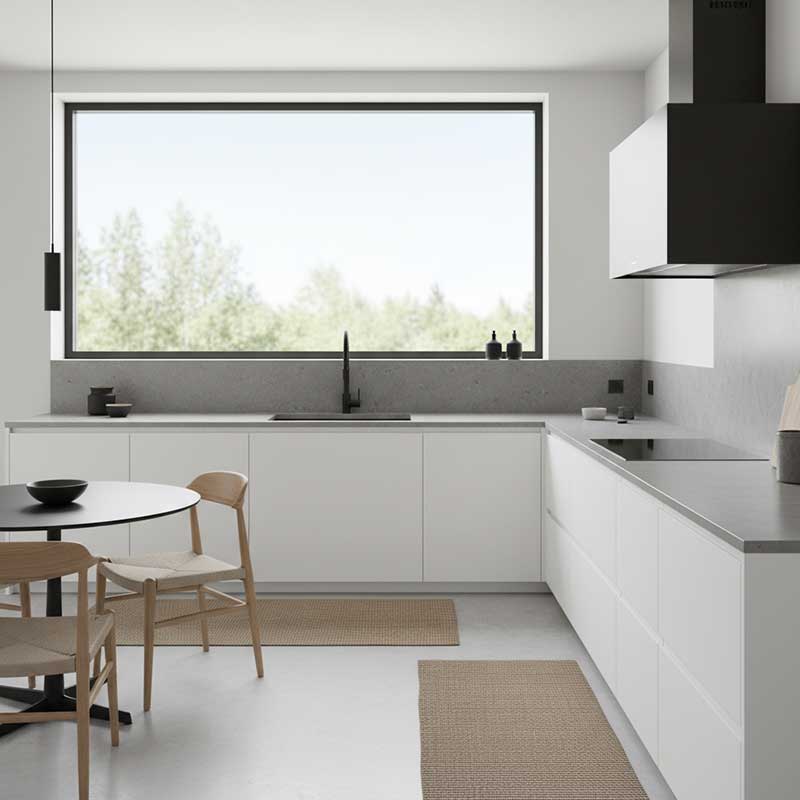
Walk into a kitchen showroom in Berlin, Copenhagen, Manchester, or Amsterdam right now, and you’ll notice something: the all-white, marble-look kitchen that has dominated design for the past decade is sharing the stage with something very different. Grey, matte, understated, and deliberately imperfect-looking surfaces are everywhere — inspired by the raw, industrial aesthetic of polished concrete. And for the engineered quartz industry, this trend is creating one of the fastest-growing product categories in the European market.
According to Dezeen, industrial-inspired interiors and minimalist material palettes continue to influence residential kitchen design across Europe, particularly in urban markets. Meanwhile, the Houzz UK design trends report has repeatedly highlighted demand for grey-toned kitchens, matte finishes, and durable low-maintenance surfaces — all of which align closely with the rise of concrete-look quartz.
As a manufacturer, we’ve watched concrete-look quartz grow from a niche request to a mainstream category over the past two years. Our shipments of concrete-style quartz to European distributors increased significantly in 2025 compared to the prior year, and the trajectory through early 2026 suggests even faster growth. In this article, we’ll explore why this trend is resonating so strongly in Europe, what specific products and finishes are performing best, and what distributors and designers should be thinking about as they incorporate concrete-look quartz into their offerings.
Why Europe Is Leading This Trend
The concrete-look trend didn’t emerge in a vacuum. It’s the convergence of several broader design and cultural movements that happen to be particularly strong in European markets.
The Scandinavian Design Influence
Scandinavian design — with its emphasis on minimalism, functionality, natural materials, and understated elegance — has been a dominant force in European interior design for years. Industry platforms such as ArchDaily consistently document the continued popularity of restrained palettes and tactile, natural-inspired finishes. The concrete aesthetic aligns perfectly with these principles. It’s visually quiet, it pairs well with natural wood and greenery, and it doesn’t compete for attention in a room.
In Sweden, Denmark, Norway, and Finland, concrete-look quartz has become a natural extension of the existing design language that homeowners and designers already embrace — especially in open-plan kitchens where countertops act as both functional surfaces and visual anchors.
The German Industrial Design Tradition
Germany has its own longstanding appreciation for industrial aesthetics, rooted in the Bauhaus tradition and a cultural preference for materials that look functional and honest. German kitchen design — dominated by brands like SieMatic, Poggenpohl, and Bulthaup — has increasingly embraced raw, tactile surface finishes that evoke industrial workshops and professional kitchens.
Concrete-look quartz fits this design direction while offering the practical advantages that German consumers value: low maintenance, consistent quality, and long lifespan. Compared with real concrete, engineered quartz delivers superior density, stain resistance, and dimensional stability, as outlined by the NSF material performance standards for non-porous surfaces.
The Urban Loft Revival in the UK
In the UK, particularly London and other major cities, the urban loft aesthetic — exposed brick, steel beams, polished concrete floors — has expanded from commercial conversions into new-build apartments and house renovations. A concrete-look quartz countertop complements this style perfectly, providing the visual character of poured concrete without the porosity, staining, and maintenance issues that real concrete surfaces present in kitchen environments.
What Makes a Good Concrete-Look Quartz Product
Not all concrete-look quartz is created equal. The best products in this category succeed by capturing the essential visual qualities of real concrete — tonal variation, subtle texture, a sense of depth and materiality — while maintaining the performance benefits that make engineered quartz superior to actual concrete as a kitchen surface.
Color and Tonal Variation
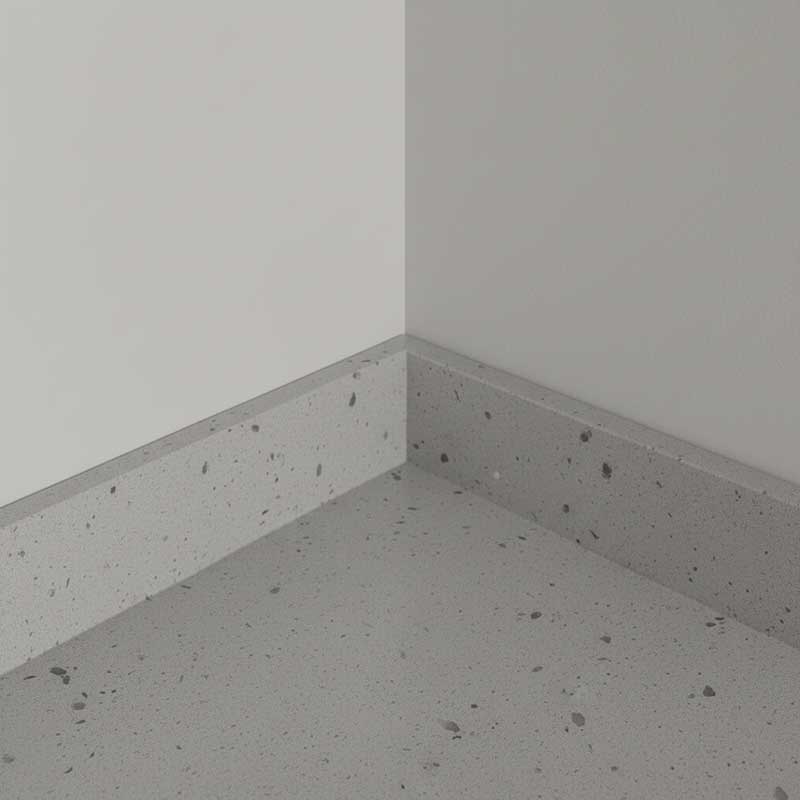
Real concrete isn’t a single, flat color. It has subtle shifts in tone — lighter and darker areas, slight mottling, and a sense of visual depth. The best concrete-look quartz products replicate this with multi-tonal grey blends that avoid looking flat or artificial. A uniform, single-shade grey slab looks more like painted stone than architectural concrete. The magic is in the variation.
Surface Finish: Matte and Honed Over Polished
Concrete doesn’t shine. A polished finish on a concrete-color quartz slab immediately breaks the illusion. For this product category, matte and honed finishes are essential. A matte finish (also called suede or leathered finish) provides a soft, low-sheen surface that closely mimics the tactile quality of polished concrete.
For manufacturers committed to true engineered quartz standards — including 93%+ natural quartz content and vacuum high-pressure molding — you can explore our full Premium Quartz Stone Products collection. These slabs are manufactured with strict control of resin ratios, curing temperature, and density to ensure durability, stain resistance, and long-term performance.
The Color Range That Sells
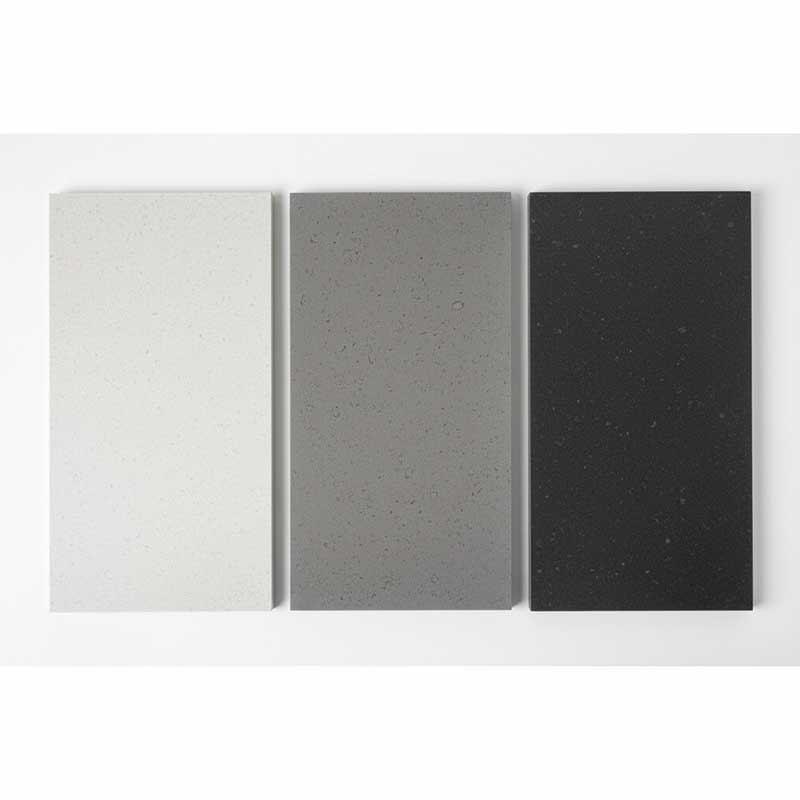
The concrete-look quartz market typically breaks down into three core segments: light grey (fresh concrete), medium grey (aged concrete), and dark grey (deep industrial tone). Light and medium grey together usually represent the majority of European demand, especially in Scandinavian and Central European markets where balanced, neutral palettes dominate.
For designers seeking a more expressive, geological-inspired alternative within the neutral spectrum, our Earthen Sky Layered Quartz Slab (QCS-03) offers layered brown, grey, and subtle blue tones in a jumbo 3200×1600mm format. While not strictly concrete-look, it complements industrial palettes beautifully by introducing natural stratification and warmth to modern interiors.
Real Concrete vs. Concrete-Look Quartz: Why Quartz Wins in the Kitchen
Some designers and homeowners initially consider using actual concrete or microcement for their kitchen countertops to achieve the concrete look. While real concrete can look beautiful when freshly installed, it presents significant practical challenges in a kitchen environment.
Poured concrete is porous and must be sealed regularly to prevent staining from oil, wine, coffee, and acidic foods. Even with sealing, concrete surfaces can develop discoloration over time. Concrete is also susceptible to cracking due to thermal expansion and structural movement.
Engineered quartz, by contrast, is non-porous, highly stain-resistant, and requires no sealing. With a water absorption rate typically below 0.02% and Mohs hardness around 7, high-quality quartz slabs provide long-term durability suitable for heavy kitchen use. This combination of industrial aesthetic and performance makes concrete-look quartz a more practical solution for modern European homes.
Application Ideas Beyond Kitchen Countertops
While kitchen countertops are the primary application driving concrete-look quartz sales in Europe, the aesthetic works beautifully in several other settings. Bathroom vanity tops, shower walls, hotel reception desks, restaurant countertops, and retail display surfaces all benefit from the understated sophistication of concrete-inspired finishes.
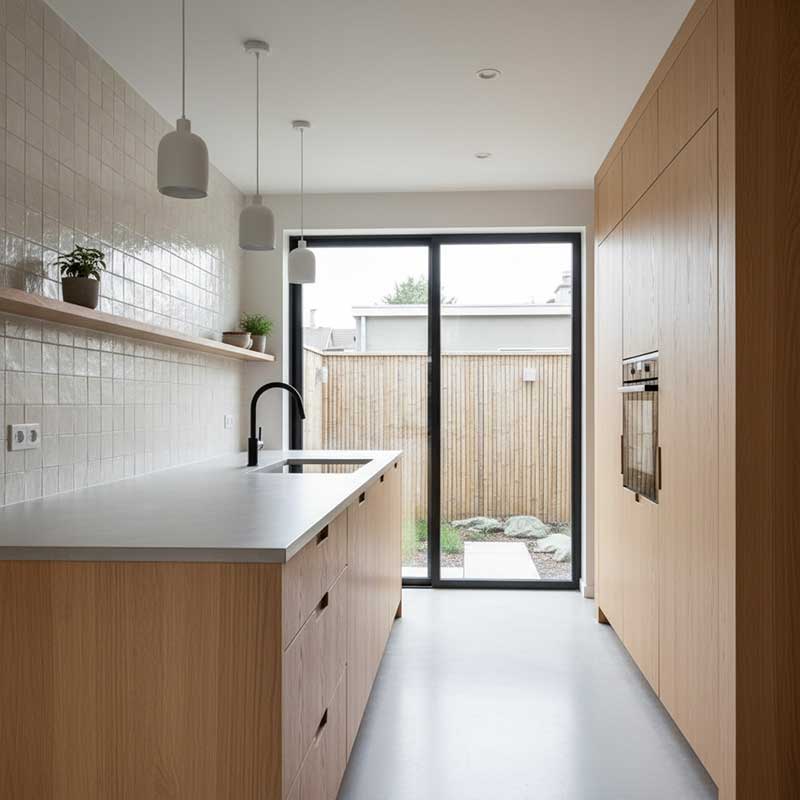
Concrete-look quartz pairs exceptionally well with matte black fixtures, brushed steel, oak cabinetry, walnut panels, and warm LED lighting. The key is balancing cool grey tones with warmer textures to avoid a sterile appearance.
Sourcing Advice for European Distributors
If you’re a European quartz stone distributor who hasn’t yet added concrete-look products to your range, now is the time to evaluate reliable manufacturing partners. Pay close attention to matte finish consistency, slab density, curing standards, and jumbo slab availability (3200×1600mm or larger), which is increasingly preferred for oversized islands and full-height backsplashes.
When evaluating suppliers, confirm that slabs are produced under vacuum high-pressure molding conditions with controlled resin content (typically 7–10%) to ensure durability and structural stability. You can review our full technical specifications and product portfolio in the QuartzCrafts Product Collection.
The concrete-look quartz trend represents more than a passing aesthetic shift — it reflects broader architectural and cultural movements toward minimalism, authenticity, and performance-driven materials. For manufacturers and distributors who can deliver the right balance of design credibility and technical quality, it remains one of the most promising growth categories in the European quartz market.